However, gaps remain between policy intentions and practical implementation, especially in land and credit policies and the effectiveness of implementation. These gaps must be narrowed if the private sector is to become a genuine driver of economic growth.
Ho Chi Minh City currently has approximately 350,000 active private enterprises, accounting for around 30% of all private enterprises nationwide. At this scale, the private sector plays an important role in driving growth, creating jobs, and enhancing the city's competitiveness.
From management to enabling development
Resolution 68 has begun to bring about positive changes in practice, helping to address difficulties in production and business activities and strengthen business confidence. Ly Kim Chi, Chairwoman of the Ho Chi Minh City Food and Foodstuff Association, said the greatest value of Resolution 68 lies not only in reaffirming the role of the private sector but, more importantly, in bringing about a significant shift in the way the state formulates and implements management policies. In particular, the resolution has strongly promoted a shift from management to enabling development, from ex ante inspection to ex post inspection, from procedural control to risk-based management, and from a mindset of control to one of partnership, encouragement, and service to businesses.
The greatest value of Resolution 68 lies not only in reaffirming the role of the private sector but, more importantly, in bringing about a significant shift in the way the state formulates and implements management policies.
Ly Kim Chi,
Chairwoman of the Ho Chi Minh City Food and Foodstuff Association
Drawing on their practical experience, many businesses have acknowledged the city's determination to improve the investment environment, resolve long-standing project bottlenecks, accelerate administrative reform and digital transformation, and strengthen dialogue with the business community. Following the expansion of its development space, the city has gained additional advantages in industry, seaports, logistics, services, finance, and markets. The reorganisation of urban and economic space, together with appropriate planning, is expected to create further opportunities for businesses to participate more deeply in the city's development.
Pham Van Triem, Chairman of the Board of Directors of Tan Phuoc Thinh Company and Chairman of the Ho Chi Minh City Association of Small and Medium Enterprises, said that, after more than a year of implementing Resolution 68, the most notable positive change from the perspective of small and medium-sized enterprises (SMEs) has been in the recognition and standing of the private sector. Businesses had a clearer sense of the message that the private sector was an important driver of the economy. At the same time, the state was moving more decisively away from a management-oriented mindset towards one focused on enabling development, providing services, and working alongside businesses.
The city is gradually translating these shifts in thinking into action through programmes, support mechanisms, and measures to improve the business environment. According to Nguyen Manh Cuong, Vice Chairman of the Ho Chi Minh City People's Committee, following the issuance of Resolution 68 and the stabilisation of the two-tier local government model, the city moved quickly to implement the tasks needed to put the resolution into practice.
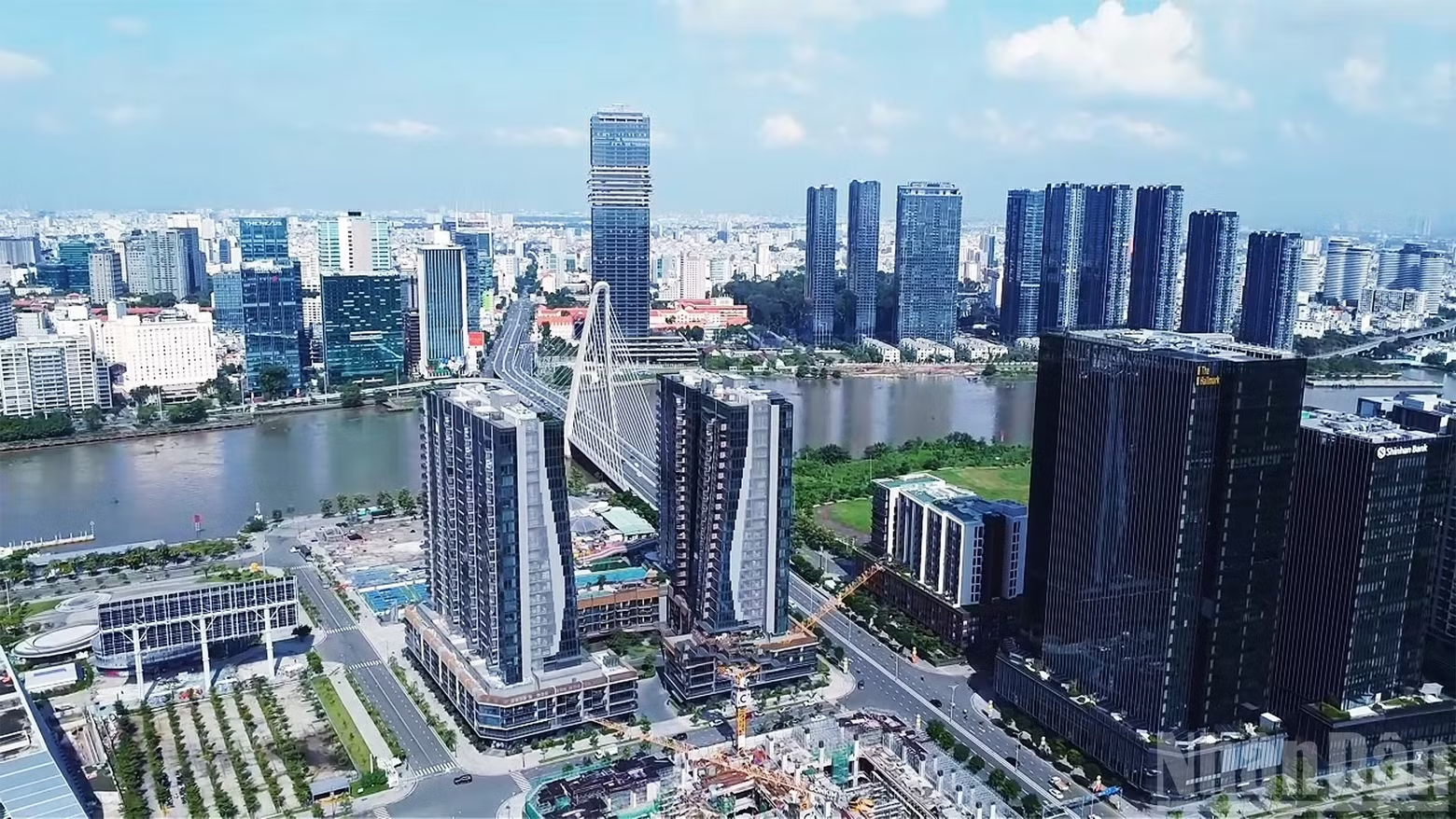
Decision No. 2205/QD-UBND, issued by the municipal People's Committee, has set the target of reaching 750,000 active private enterprises by 2030, rising to an estimated 1.05–1.25 million by 2045. By 2030, the private sector is expected to contribute 55–58% of the city's gross regional domestic product (GRDP) and account for 50–55% of total budget revenue. To achieve these targets, administrative reform has been identified as a key priority, with the aim of cutting administrative processing times by at least 30% and reducing the costs of legal compliance by 30%.
Alongside efforts to improve the investment environment, the city continues to maintain interest-rate support for investment projects in priority areas of socio-economic development. It is also implementing policies exempting eligible income from personal income tax and corporate income tax for innovative start-up activities that generate income. For businesses investing in logistics, cold-storage facilities, and frozen-storage warehouses, interest-rate support can reach 50%, helping to reduce costs and improve supply chain management capacity.
These policies demonstrate that the approach to the private sector is gradually shifting from general support towards creating conditions that enable businesses to invest, innovate technologically, and expand their operations. The state is focusing on improving the institutional framework, simplifying procedures, and enhancing transparency, while businesses are being given greater scope to take the initiative in investment and development.

Measuring effectiveness through implementation results
Despite these positive developments, businesses argue that bottlenecks remain in the implementation of Resolution 68 and must be addressed if the policies are to deliver their full benefits. Land remains one of the major challenges facing businesses, particularly SMEs. Difficulties in accessing suitable land, high land costs, and lengthy procedures relating to planning, construction, and investment are affecting businesses' ability to expand production and operations. Access to capital remains another major obstacle, especially for SMEs.
To ensure that Resolution 68 continues to deliver effective results in practice, Ly Kim Chi said the spirit of the resolution should serve as a benchmark when drafting and reviewing bills, decrees, and circulars related to production and business activities. Policies must not only serve legitimate regulatory objectives but also be stable, transparent, easy to understand and implement, and applied in a consistent manner. In addition, meaningful consultation with the business community and trade associations should continue from the earliest stages of policy development, alongside efforts to modernise the methods of state management.
The impact of Resolution 68, therefore, should not be measured solely by the number of procedures cut or the volume of capital disbursed. It must also be reflected in the level of confidence among businesses and investors. When property rights are protected, policies remain stable, procedures have clearly defined processing deadlines, officials are willing to take responsibility, and mistakes made during implementation are addressed through transparent guidance on corrective action, then businesses will have greater confidence to invest, expand their operations, and develop long-term plans.
In the next phase, the implementation of Resolution 68 needs to shift decisively from a focus on “issuing policies” to “measuring implementation outcomes”. Every difficulty faced by a business should be clearly defined, with the responsible authority, resolution deadline, and final outcome specified. This is not merely a matter of shortening certain administrative procedures; it represents a fundamental change in the approach to the private sector.
At the first congress of the Ho Chi Minh City Young Entrepreneurs Association for the 2026–2029 term, held recently, Nguyen Van Duoc, Chairman of the Ho Chi Minh City People's Committee, emphasised that the city was committed to doing everything within its power to create a transparent, fair, and business-friendly investment environment. The city would continue to reform institutions, remove bottlenecks, unlock resources and create the most favourable conditions possible for business development.
“When businesses encounter difficulties, the authorities will not stand aside; they will work alongside them to resolve the problems. The city regards residents and businesses as the centre of its governance, the principal stakeholders, and the beneficiaries of public services. Businesses are a resource and a driving force for development, and their success is a victory for Ho Chi Minh City,” he said.
Having previously required businesses to adapt to the administrative apparatus, Ho Chi Minh City is now seeking to build a service-oriented administration that places residents and businesses at the centre of public service delivery. As the gap between policy and implementation continues to narrow, measures designed to support the private sector will be better positioned to translate into tangible drivers of investment, production, business activity, and long-term economic growth.