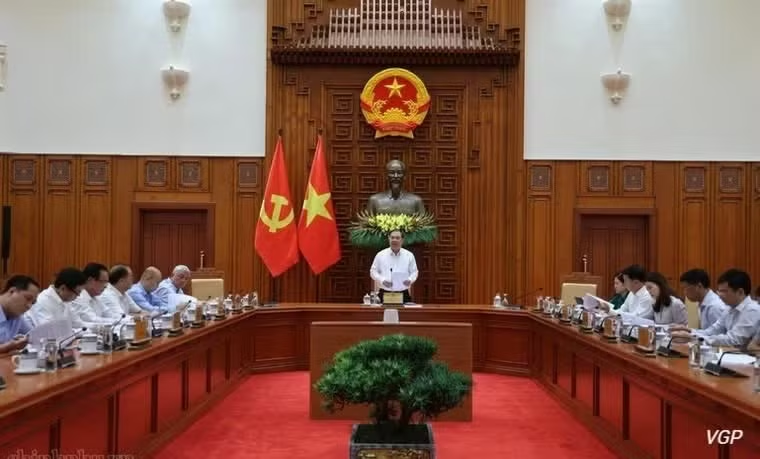
Standing Deputy Prime Minister Pham Gia Tuc has called for the diversification of export-import markets, more effective trade governance and stronger measures to prevent trade fraud and violations in cross-border commerce while drafting a government resolution on balanced trade promotion.
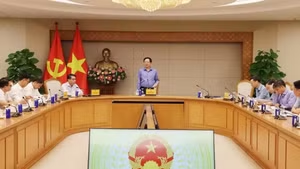
Chairing a meeting with ministries and agencies on November 3 to discuss the draft resolution, Tuc stressed the need for the document to address key and urgent issues, with practical and effective solutions that can be implemented immediately after its issuance.
He said the resolution must closely follow resolutions and conclusions of the Party Central Committee and the Politburo, as well as directives from competent authorities.
In particular, Conclusion No. 106-KL/TW dated October 15, 2026, issued by the 14th Party Central Committee on socio-economic development and State budget performance in 2026 and plans for 2027, calls for diversifying export and import markets while increasing added value, engaging more deeply in regional and global supply chains, and reducing dependence on a small number of markets.
The Deputy PM called for timely handling of trade and tariff issues and effective solutions to address trade deficit. He also asked the drafting agency to continue reviewing the scope, title and content of the draft to ensure a balanced approach to trade governance that takes into account both trade surplus and deficit.
Tasks and solutions must be feasible, effective and substantive, contributing to market diversification, improved trade governance, proactive risk prevention and the prevention of fraud and legal violations in import-export activities, he said.
According to Deputy Minister of Industry and Trade Luong Hoang Thai, the ministry has worked with relevant agencies to prepare a draft government resolution on a master plan to promote balanced trade, prevent risks of excess capacity, combat trade circumvention and illegal transshipment, and control goods produced using forced labour. The plan aims to improve the management of import-export activities, proactively prevent trade risks and diversify markets.
The draft sets targets for export growth management, a reasonable trade balance, market diversification, stronger control over goods origin and the prevention of trade fraud. It outlines seven groups of key tasks and solutions, including tighter review and management of foreign investment projects that may pose risks of trade fraud, more effective inspection and verification of goods origin, and promotion of sustainable trade. It also proposes facilitating imports of goods, machinery, equipment and technology in line with the plan's objectives and the economy's development needs.
Other measures include expanding export markets, making better use of signed free trade agreements and exploring new markets; strengthening information provision and early warnings; and helping businesses comply with international trade regulations and respond proactively to trade defence measures.
The draft also emphasises improving State management capacity, strengthening coordination and data sharing among relevant agencies, and reviewing and refining legal regulations on investment, trade and related fields.
At the meeting, representatives of ministries and agencies broadly agreed on the need for the resolution, while recommending further review of its targets and task assignments to ensure they match the functions and authority of each agency and are practical to implement. They stressed that stronger controls should go hand in hand with facilitating legitimate production and business activities.
Participants also called for better inter-agency coordination in handling trade defence issues, closer alignment of labour policies with international standards, improved international cooperation and data sharing on imports and exports, and more effective monitoring of cross-border supply chains and goods traceability.
They stressed the need to clarify definitions of trade defence circumvention and illegal transshipment to distinguish such violations from legitimate transport and transit activities.