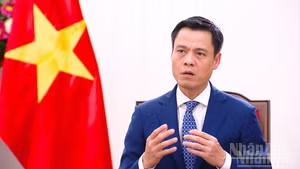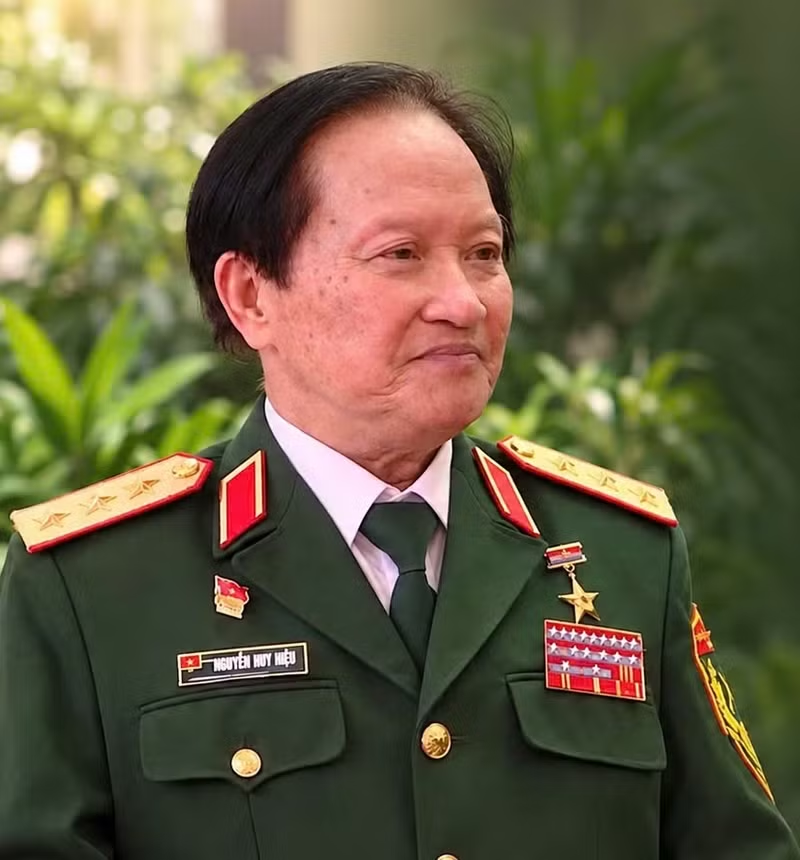
On the implementation of Politburo Directive No. 07-CT/TW (dated July 13, 2026) on “Promoting the study and practice of Ho Chi Minh's thought, ethics, methods, and style in a new stage of development”, a reporter from Nhan Dan Newspaper had an interview with Nguyen Huy Hieu, Senior Lieutenant General, Academician, Hero of the People's Armed Forces, former member of the Party Central Committee, and former Deputy Minister of National Defence, to clarify these requirements in the light of practical experience in the military.
Q: Dear Senior Lieutenant General, Directive No. 07-CT/TW emphasises “practice” and adds Ho Chi Minh's “methods.” Drawing from your experience in combat, command, and military research, how do you view the significance of these requirements?
A: In my view, Ho Chi Minh's thought, ethics, methods, and style must be considered as an integrated whole. Thought defines objectives; ethics helps people maintain the right motives; methods organise action; and style is reflected in the way people work and conduct themselves. When applied in practice, these aspects complement one another.
Through my years of combat and service, I have come to understand that a sound policy must be translated into an appropriate method of organisation to generate strength. On the battlefield, a commander must understand the mission, terrain, forces, and enemy situation, know the troops and anticipate how events may unfold. The greater the determination, the more thorough the preparations and the more scientific the assessment must be.
From this perspective, the requirement to put learning into practice places responsibility on officials to deliver concrete results. Officials must know how to apply what they have learnt to solve problems within their remit. Dedication must be accompanied by competence, and a sense of responsibility must be demonstrated through results.
For the military, learning from Uncle Ho helps to improve training quality, combat readiness, organisational and management capabilities, and the close bonds between the armed forces and the people. These tasks require both strong character and intellect. Only when officials have the right motives, are willing to learn, and remain closely connected with practical realities can they find appropriate ways of working.
I believe the depth of learning from Uncle Ho lies in the ability to apply these values to every decision, thereby carrying out the tasks of building and defending the Fatherland more effectively.
Q: You emphasise that learning from Uncle Ho means setting an example, matching words with deeds, and practising diligence, thrift, integrity, uprightness, and impartiality. What significance do these requirements have for leadership and command, and for preserving the qualities of the “Uncle Ho's Soldiers”?
A: For a unit to be strong, there must be unity of will and action. Discipline and organisation are vital, but officials must also earn trust through their character, competence, and treatment of the troops.
When assigning tasks to subordinates, a commander must understand the conditions required for their implementation, make the necessary preparations, and take responsibility for their decisions. When difficulties arise, officials must be present to analyse the situation and find solutions together. When shortcomings occur, they must examine the responsibility of the leadership and command before assessing the responsibility of individuals.
In my view, matching words with deeds also means consistency between what officials demand of others and what they themselves do. If they want troops to report honestly, they must respect the truth, even when it reveals that work has fallen short of expectations. If they want to encourage creativity, commanders must listen to proposals and consider them fairly.
Setting an example therefore has an educational effect, builds credibility, and encourages a stronger sense of responsibility. When troops see their officials maintaining discipline, working wholeheartedly, and treating people fairly, they will have greater trust in them and become more self-motivated in carrying out their duties.
Closely linked to this example is the fundamental principle of placing the interests of the Fatherland, the people, and the collective above personal interests. This is most clearly demonstrated when officials face a choice: take on difficult tasks or avoid responsibility; assess people on the basis of their contributions or their relationships; report the facts accurately or try to make achievements appear better than they are.
Individualism can distort these choices. Those who put their own interests first will find it difficult to treat comrades impartially or make decisive choices in the common interest. In the military, this can also undermine unity, discipline, and trust within a unit.
Resolution No. 847-NQ/QUTW (dated December 28, 2021) by the Central Military Commission on promoting the qualities of “Uncle Ho's Soldiers” and resolutely combating individualism in the new situation, provides an important basis for linking personal development with the responsibilities of every soldier.
I believe diligence, thrift, integrity, and uprightness must be practised in the management and use of resources. Every sum of money and every piece of equipment represent the efforts of the people. Officials must value these resources and use them efficiently, while ensuring that the troops have all the necessary conditions to carry out their missions and maintain their well-being.
Impartiality also requires a forthright attitude towards shortcomings. Deficiencies must be corrected, and violations must be dealt with in accordance with regulations. Comradeship and mutual support in helping one another to improve must go hand in hand with this rigour. Preserving the title of “Uncle Ho's Soldiers” is a responsibility to the generations who sacrificed their lives and to the trust and affection the people place in the armed forces today.
Q: Drawing on the story of Sau Ngau giving a map to the 27th Regiment, what would you like to emphasise about staying close to the people, listening to them, and harnessing the strength of great national unity in building and defending the Fatherland today?
A: I have often recounted the story of the map that Sau Ngau gave our unit on the night of April 29, 1975. At the time, the 27th Regiment was preparing to advance into Saigon. The handwritten map and her directions provided us with additional important information about the area.
This story shows that the people contribute their intellect, knowledge, and initiative to the common cause. Commanders have a responsibility to value these contributions and assess them against the actual situation when organising the implementation of their missions.
In my view, staying close to the people begins with understanding them; to understand them, we must listen, know how to ask questions, and be willing to learn what we do not know. Even officials with extensive knowledge and experience must remain open to what they can learn from people's daily lives. If they listen only to views that accord with their own thinking, they can easily overlook important issues.
Today, close military-civilian ties must be strengthened by strictly observing mass mobilisation discipline, respecting local customs, providing assistance that meets people's needs, and honouring commitments. When supporting local communities, the military must consult and coordinate with residents so that they can participate and help sustain the results achieved.
I believe trust is built through such concrete actions. When people see that soldiers act responsibly, they are willing to share information and work with them. This provides a foundation for building a people's support posture and harnessing the strength of the people in defending the Fatherland.
Today, science and technology are developing at a rapid pace, while the task of building the military and defending the Fatherland presents new challenges. Modern weapons and equipment must be matched by personnel with strong courage, knowledge, and the ability to master them. The unity and support of the people provide the social foundation for carrying out these tasks.
Putting President Ho Chi Minh's thought on great national unity into practice must begin with valuing every individual's contribution and creating conditions for all forces to work towards common goals.
Unity must be strengthened through democracy, frank feedback and a responsibility to correct shortcomings. When legitimate concerns are heard and addressed, collective unity becomes more solid.
At the national level, people's livelihoods, stability at the grassroots level, economic potential, and defence capacity are closely interconnected. Strengthening public trust therefore also contributes to the strength needed to defend the Fatherland. Every service member must understand that each appropriate action they take contributes to this foundation.
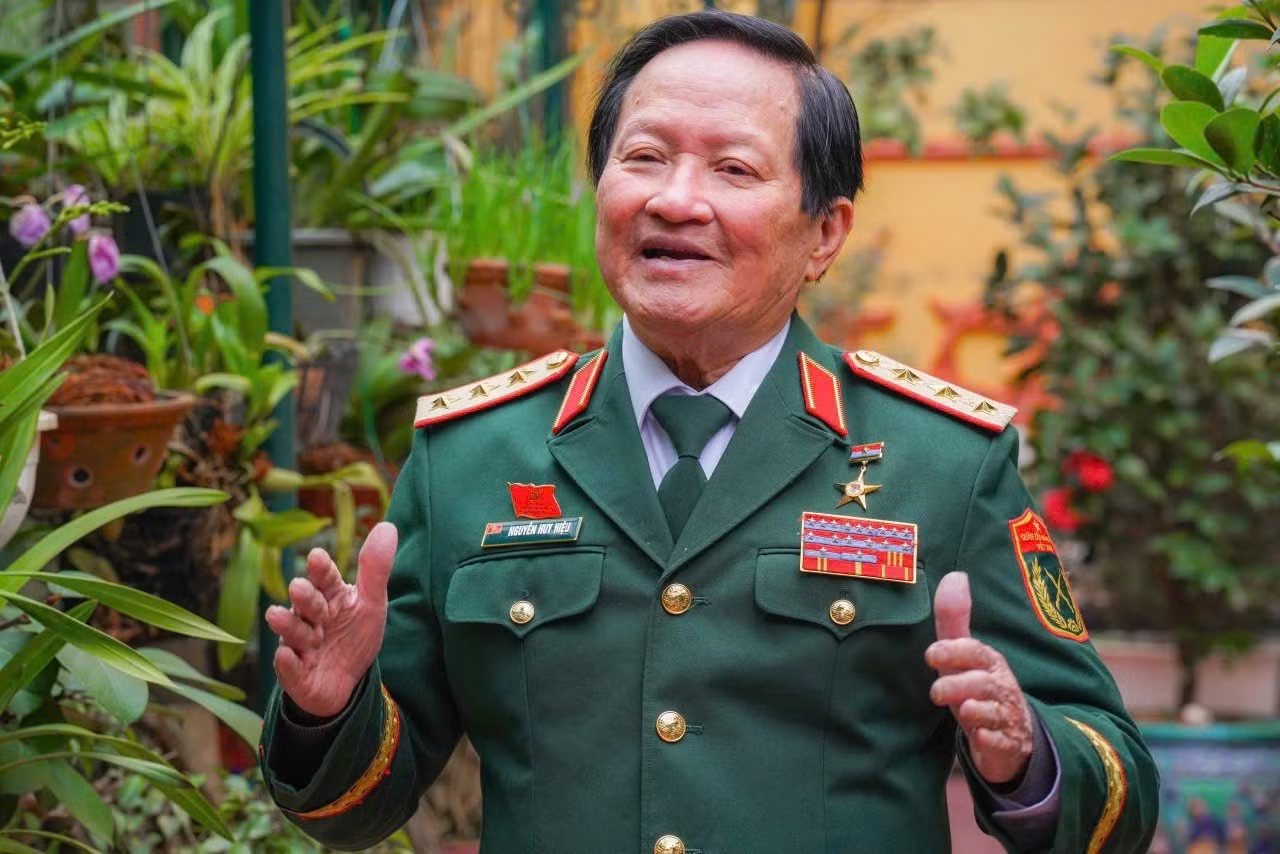
Q: You have also highlighted the importance of learning from President Ho Chi Minh in valuing talented people who possess both virtue and ability. In your view, how should these qualities be identified, nurtured, and brought into full play to meet the requirements of building a modern military?
A: In my view, virtue and talent must be assessed in relation to the tasks to be performed. Virtue means loyalty, integrity, impartiality, and responsibility towards the people and one's comrades. Talent means understanding issues, anticipating developments, organising forces, applying knowledge, and achieving results. Both qualities determine the quality of an official.
As I progressed in my career, my commanders and teachers gave me opportunities to study and conduct research. Drawing on my own experience, I understand that identifying talent must go hand in hand with training and assigning appropriate responsibilities. If potential is recognised but no environment is provided for development, it will be difficult for that potential to flourish.
Today's requirements demand that officials continue learning, master new knowledge, and know how to draw lessons from practical experience. Experience is invaluable, but it must be reassessed in the context of new conditions. Young officials need opportunities to demonstrate their abilities through their work and must be assessed fairly.
Making the best use of talent also places demands on those responsible for personnel management. They must listen, distinguish well-founded proposals from arbitrary approaches, assign tasks, monitor implementation, and accept responsibility within their own remit.
I believe an environment that values honesty, competence, and results will encourage people to contribute. Those with both virtue and talent should be assigned roles that make the best use of their strengths, while continuing to cultivate their character and remain subject to organisational oversight. This is how intellectual potential can be harnessed in the service of the common mission.
Q: To ensure that Directive No. 07-CT/TW is implemented in a meaningful and substantive way, what needs to be done to turn personal commitments to self-improvement into practical changes in every agency, unit, and individual official or soldier?
A: I believe the process must begin with the practical issues that need to be addressed. Every agency and unit must identify weak areas, delayed tasks and unresolved concerns in order to determine responsibilities and appropriate solutions. Officials must reflect on what they need to change in their leadership, command, and working methods.
A plan is meaningful only when it helps an organisation take action. It is therefore necessary to specify what needs to be done, who is responsible, what conditions are required, and when the work must be completed, followed by checks to ensure that results are achieved. In the military, progress can be assessed through training quality, mission performance, discipline, resource management, and relations with the people.
Learning from Uncle Ho is a lifelong endeavor. For service members, perseverance is reflected in resolve in the face of difficulties, a willingness to learn, discipline in action, and responsibility towards the people. This is also how the qualities of “Uncle Ho's Soldiers” can continue to be strengthened under new conditions.
Nguyen Huy Hieu
Senior Lieutenant General, Academician, Hero of the People's Armed Forces
Alongside individual commitment, inspection and supervision must be maintained, with responsibilities clearly defined. Commanders must be subject to organisational oversight, while subordinates must have opportunities to offer feedback, report difficulties, and have their concerns considered fairly. These measures help prevent shortcomings at an early stage and establish sound working practices.
The key is to maintain honesty in assessments. When work falls short, the causes must be identified; when problems persist, responsibility at each stage must be examined. Accurate reporting gives senior leaders a sound basis for issuing instructions and enables units to make their own adjustments. Without facing the truth, progress will be difficult.
Learning from President Ho Chi Minh is a lifelong endeavor. For service members, perseverance is reflected in resolve in the face of difficulties, a willingness to learn, discipline in action, and responsibility towards the people. This is also how the qualities of “Uncle Ho's Soldiers” can continue to be strengthened under new conditions.
Thank you very much!