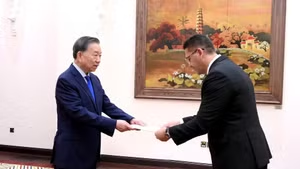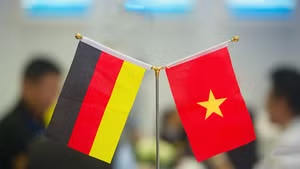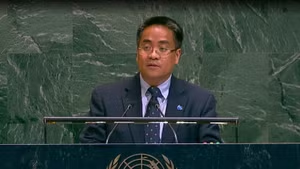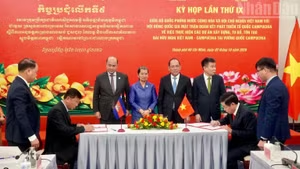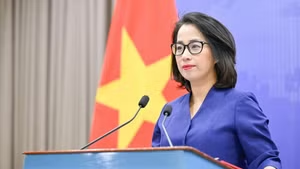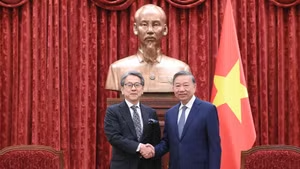
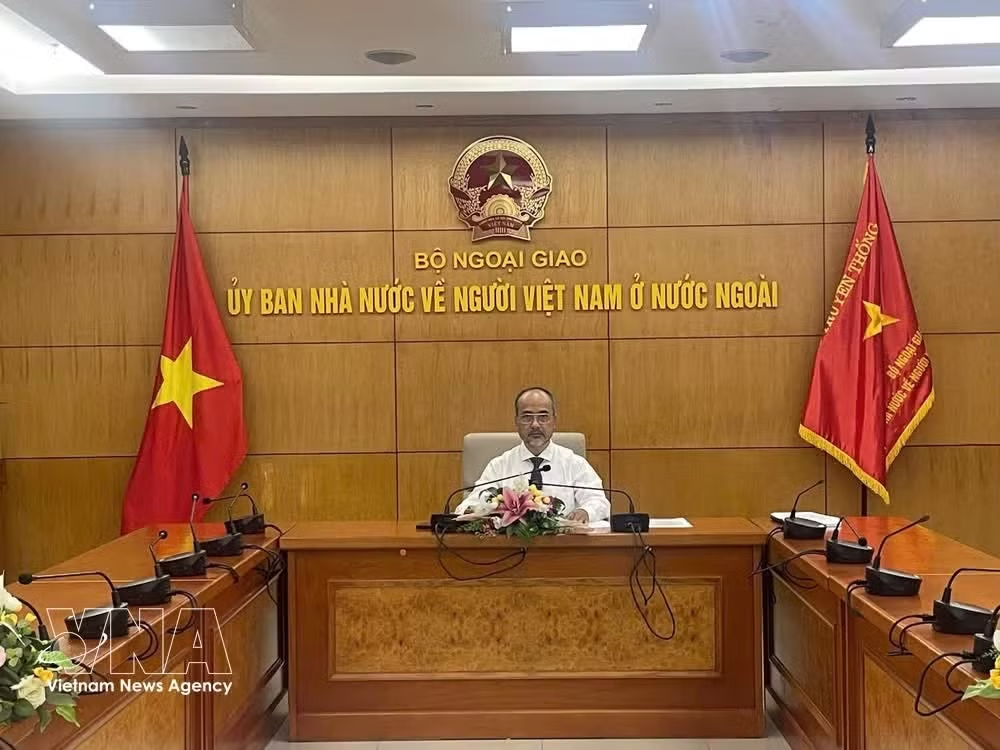
His comments came ahead of Party General Secretary and State President To Lam’s official visit to Thailand from May 27–29, a state visit to Singapore from May 29–31 and a scheduled keynote address at the Shangri-La Dialogue, and a state visit to the Philippines from May 31–June 1.
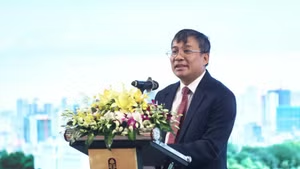
Kien said Thailand, Singapore and the Philippines are geographically close to and share cultural similarities with Viet Nam. While the Vietnamese communities in these countries differ in size, history and makeup, they have all made tangible contributions to bilateral friendship and cooperation across multiple fields, helping boost mutual understanding and deepen friendly relations in recent years.
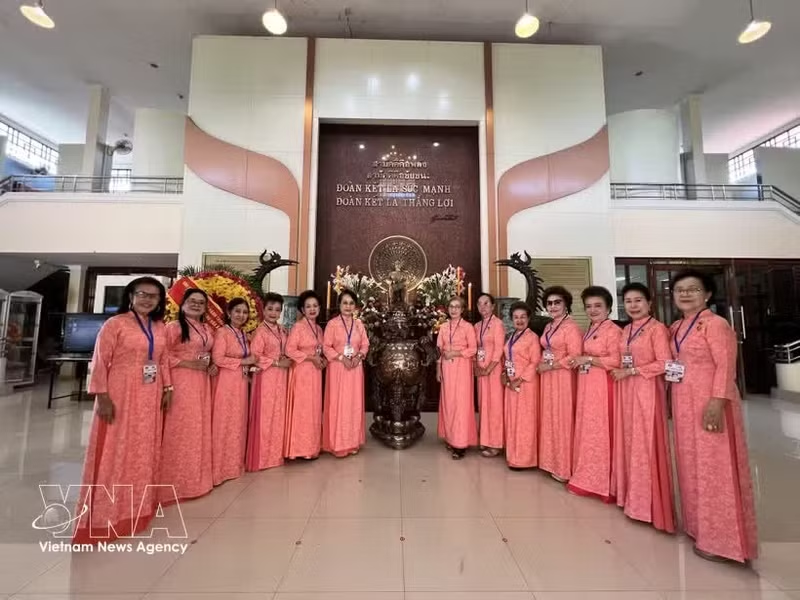
The Vietnamese community in Thailand numbers more than 100,000 and has integrated deeply into local society. Across generations, it has preserved cultural identity through traditional festivals, Vietnamese language use and community associations. Memorial sites dedicated to President Ho Chi Minh, jointly maintained by OVs and Thai authorities, have helped enhance cultural and historical awareness between the two peoples. The Vietnamese towns recently established in Udon Thani and Nakhon Phanom have added to local cultural life and drawn Thai visitors to Vietnamese culture. In the economic sphere, some OVs have invested directly in Viet Nam and acted as bridges for trade promotion, with several communities recognised for their contributions to local socio-economic development.
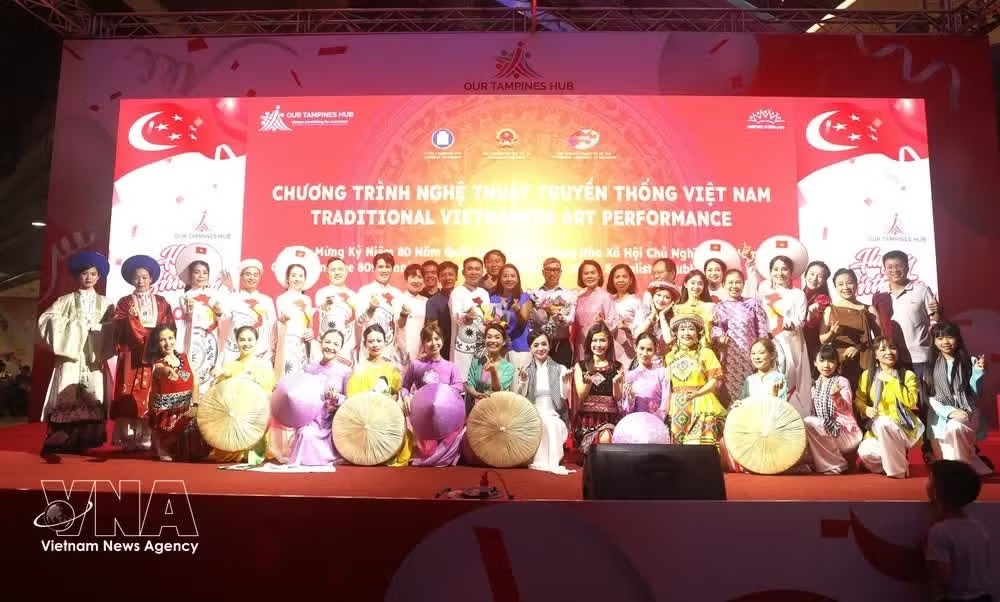
Similarly, the Vietnamese community in Singapore is relatively young and boasts great strength thanks to many members being professionals, intellectuals and scientists working at top universities, research institutes and multinational corporations. Many have returned to Viet Nam or collaborate with domestic partners in science, technology, innovation and digital transformation, feeding into national development. The community also mounts high-profile cultural events such as Lunar New Year celebrations, Mid-Autumn Festival and social exchanges. Its presence in Singapore’s Chingay Parade has projected a positive image, enriching the city state’s multicultural landscape as well as bilateral ties.
The Vietnamese community in the Philippines is relatively small, numbering a few thousand and diverse in composition. Yet it has become increasingly active in trade, education and people-to-people exchanges. Educated professionals, entrepreneurs and skilled workers are seen as having strong potential to further drive economic and trade relations between the two countries.
Across all three countries, OVs have actively backed the Party and State's policies and guidelines and taken part in charitable drives and fund-raising campaigns to support those in Viet Nam during natural disasters and pandemics.
As global integration deepens, Kien said, OVs are not only an inseparable part of the great national solidarity but also a vital channel for popularising Viet Nam’s image, people and culture to friends across the region and beyond.
He noted that the top Party and State leader’s trips take place in a special context as Viet Nam is marking 50 years of diplomatic ties with both Thailand and the Philippines, while Viet Nam – Singapore relations are in their prime stage following the upgrade to a Comprehensive Strategic Partnership. At home, the 14th National Party Congress concluded successfully, setting strategic goals and a new development vision to steer the country into a new era.
According to the official, the visits will create an opportunity for the leader and senior officials to meet directly with OV entrepreneurs, intellectuals and experts, listen to their concerns, and clear bottlenecks related to investment, business, technology transfer and talent attraction policies, providing an important basis for the Party and State to design more effective mechanisms to pool OV resources.
Such meetings can also connect worldwide networks of Vietnamese experts and intellectuals with the domestic development agenda, particularly in science, technology, innovation, digital transformation and education. The visits further lift Viet Nam’s standing and image globally, thus fueling greater national pride among OVs. As the country’s stature rises, they will be further motivated to promote Viet Nam’s image and support trade, investment, tourism and cultural exchanges with host countries.
On OV affairs, he pointed to reforms in terms of mindset, policies, mechanisms and delivery methods, spotlighting a gradual shift toward a more proactive approach centred on partnership, connectivity, and effectively tapping their strategic resources for national development and safeguarding.
During the 2024–2026 period, the Politburo issued nine new strategic resolutions spanning science – technology, innovation, digital transformation, international integration, private sector development, education – training, culture, and other domains. OV affairs have also been incorporated into the country’s overall development strategies to harness the power of the great national solidarity bloc. Besides, the Government has fine-tuned the legal system, mechanisms, and policies related to OVs in a more open, flexible, and practical direction, up to international practices, according to Kien.
Among the most important reforms, policies no longer merely support community life but increasingly aim to create supportive conditions for OVs to engage directly in national development. The Party and State remain focused on preserving the Vietnamese language and cultural identity and strengthening the great national solidarity bloc, while methods of outreach and connection have also advanced.
OVs now count about 6.5 million in more than 130 countries and territories, including a large pool of globally recognised intellectuals, experts and entrepreneurs.
Looking ahead, the institutional and policy framework will be further refined with a people-centred approach that includes OVs as an integral part of those being served. Emphasis will fall on digital transformation, more substantive mechanisms to connect with OV intellectuals, experts and entrepreneurs, and greater care for community life while protecting their rights and legitimate interests.
Above all, the Party and State will work to solidify trust and a sense of responsibility among OVs to meet their aspiration to accompany the homeland’s development, Kien concluded, so that wherever they live, they feel they are an inseparable part of the Vietnamese nation and continue to join hands in building a peaceful, strong and prosperous Viet Nam with a rising global standing.