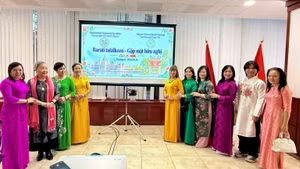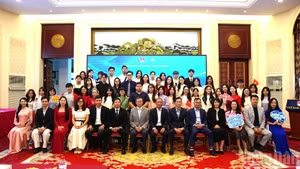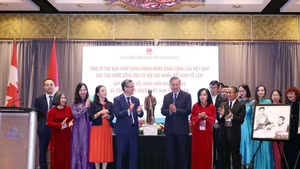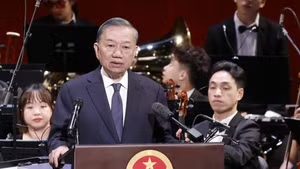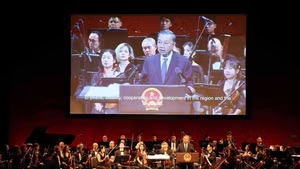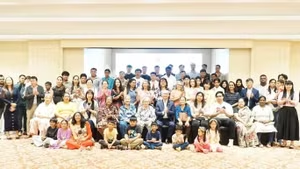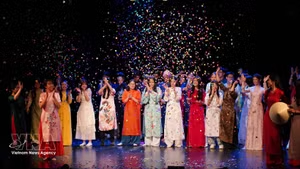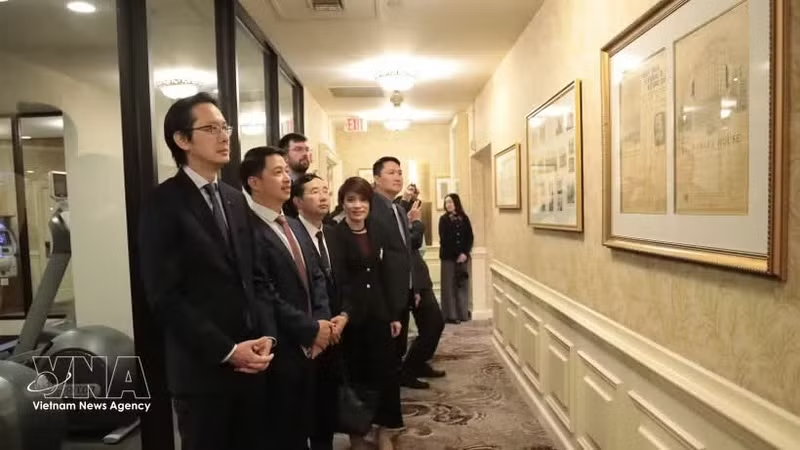
This activity and the incense offering in memory of President Ho Chi Minh also drew participation from members of the Vietnamese community, intellectuals and students in the northeast of the US.
They reflected on major milestones in the life and revolutionary career of the late President, particularly the period he spent in Boston and New York, where he closely observed the American political and social life and explored democratic ideals, anti-racial discrimination movements and progressive human values, gradually shaping his vision for Viet Nam’s struggle for national liberation.
During the delegation's visit on May 25, the leadership of the Omni Parker House introduced archival materials and artifacts associated with President Ho Chi Minh’s time in Boston, including the bakery area and a marble table linked to his work at the hotel more than a century ago.
In discussions with hotel representatives, Viet stressed that the Omni Parker House is not only a historic site connected to President Ho Chi Minh’s life, but also a vivid symbol of the depth of people-to-people exchanges and the unique historical bonds between Viet Nam and the US.
He noted that preserving and promoting stories about the late leader in the US plays an important role in helping international friends gain deeper insight into his journey in search of a path for national salvation, as well as Viet Nam’s history and aspirations for independence and peace.
The ambassador also thanked the Omni Parker House leadership for their longstanding efforts to preserve documents, artifacts and historical traces related to President Ho Chi Minh.
Established in 1855, the Omni Parker House is recognised as the longest continuously operating hotel in the US. It has hosted numerous prominent US figures, including former Presidents John F. Kennedy and Bill Clinton. President Ho Chi Minh is one of the hotel’s most notable former employees, alongside civil rights activist Malcolm X and chef Emeril Lagasse.