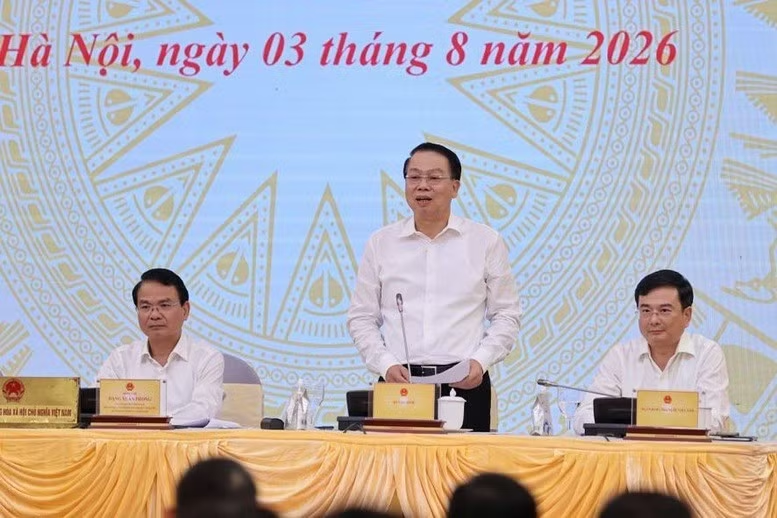
The official said the Ministry of Finance (MoF) is maintaining a 2-percentage-point reduction in value-added tax (VAT) for goods and services subject to the standard 10% VAT rate, lowering it to 8% through the end of 2026.
The Government has also extended the exemption of agricultural land use tax until December 31, 2030 while allowing businesses and individuals to defer payments of VAT, corporate income tax and personal income tax during 2026.
In addition, a policy reducing or exempting 46 categories of fees and charges, starting July 1 last year, will remain in force until the end of this year to ease financial burdens on enterprises and households.
Highlighting the significant impact of fuel prices on inflation and economic activity, Chi said the MoF has proposed a series of tax measures to stabilise the domestic fuel market. These include cutting the preferential import tariff on fuel products and fuel production materials to 0% from March 9 to September 30, 2026.
The Government also reduced environmental protection tax, VAT and excise tax on fuel products to 0% between March 27 and June 30.
In addition, it has extended the application of a zero environmental protection tax rate on fuel products and fuel production materials until September 30. During the same period, businesses are exempt from declaring and paying VAT on these products while remaining eligible to claim input VAT credits.
According to the deputy minister, during the Middle East conflict, the state budget advanced 8 trillion VND (over 304 million USD) to the fuel price stabilisation fund to help cushion domestic prices and maintain market stability.
The MoF is continuing to coordinate with the Ministry of Industry and Trade and other relevant agencies to develop contingency plans on pricing, taxes, fees and charges to respond to possible market disruptions. The measures are aimed at helping the Government maintain macroeconomic stability, keep inflation under control and ensure the achievement of the country's socio-economic development goals, Chi said.