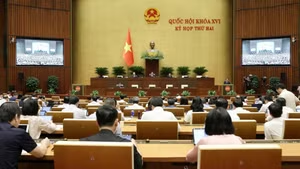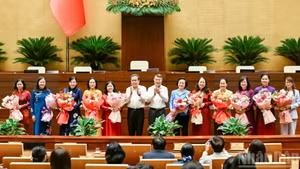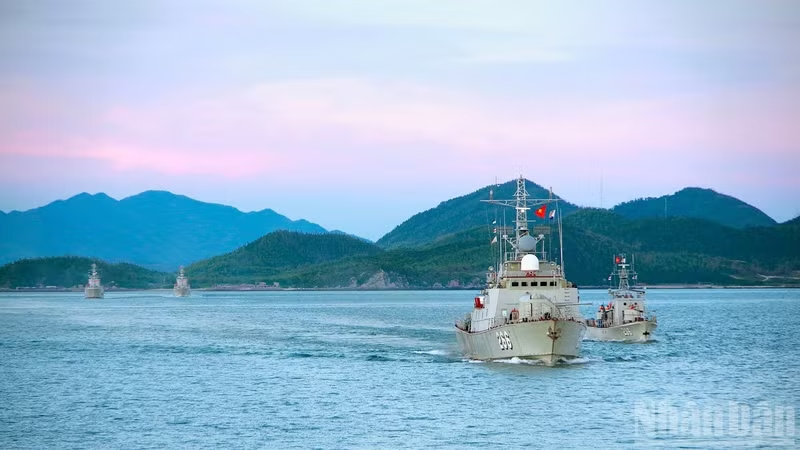
The Viet Nam Maritime Forum 2026 focused on discussions and recommendations concerning cooperation orientations and solutions for implementing Resolution No. 20-NQ/TW on building and developing Viet Nam into a strong maritime nation, transforming the country’s maritime potential into substantive and sustainable resources for development.
Attendees included Senior Lieutenant General Nguyen Doan Anh, member of the Party Central Committee (PCC) and Vice President of the National Assembly, along with leaders of the PCC’s Commission for Policy and Strategy, the Ministry of Foreign Affairs, the Ministry of Science and Technology, the Ministry of Culture, Sports, and Tourism, and the Naval Command.
The event also brought together representatives of central and local agencies, ministries, and sectors; ambassadors and heads of international organisations and development partners in Viet Nam; experts, research institutes, and universities; businesses; and domestic and international media.
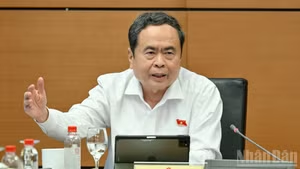
Delivering the opening remarks, Senior Lieutenant General Nguyen Doan Anh stressed that Resolution No. 20-NQ/TW marks a strategic shift in thinking about the sea, recognising it as a crucial pillar of national strength. Building Viet Nam into a strong maritime nation is a long-term development strategy closely intertwined with the country’s aspirations for advancement.
According to the NA Vice President, the forum takes place as Viet Nam begins implementing Resolution No. 20-NQ/TW, providing an opportunity to share development visions and draw on the experience, initiatives, and cooperation proposals of international partners.
He called on the forum to clarify the concrete contributions that international cooperation can make to the implementation of Resolution No. 20-NQ/TW, as well as Viet Nam’s role in shaping maritime space into one of peace, cooperation, connectivity, and sustainable development.
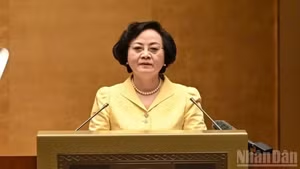
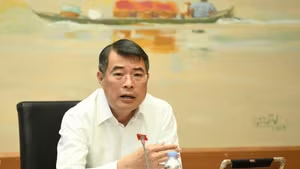
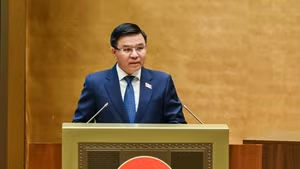
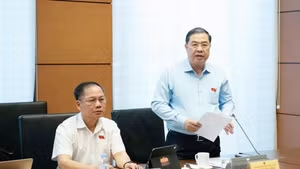
At the high-level orientation session themed “From Maritime Strategy to the 2026–2030 Action Programme,” leaders of central agencies, ministries, and sectors delivered important remarks and discussed priorities for implementing the Resolution, mobilising resources, and promoting international cooperation.
Speakers stressed that international cooperation should deliver tangible outcomes in terms of capital, technology, knowledge, human resources, infrastructure, governance, markets, and environmental protection, while strengthening Viet Nam’s capacity to participate in and contribute to mechanisms for maritime and ocean cooperation and governance.
They also highlighted science and technology, innovation, and digital transformation as key drivers for enabling Viet Nam to achieve breakthroughs in becoming a strong maritime nation, generating greater prosperity from the sea while pursuing sustainable development.
Participants also urged research into establishing of inter-provincial marine tourism clusters and developing multifunctional marine tourism centres as new growth poles. They stressed the importance of putting people at the centre of development, proactively promoting international cooperation and integration, and harmoniously combining marine economic development with the strengthening of national defence and security.
International participants spoke highly of Viet Nam’s contributions to global maritime and ocean governance. The United Nations Resident Coordinator in Viet Nam affirmed the UN’s commitment to accompanying Viet Nam in implementing its action programme, strengthening capacity for the implementation of UNCLOS (United Nations Convention on the Law of the Sea) and the BBNJ (Biodiversity Beyond National Jurisdiction), mobilising finance and technology, and ensuring that the benefits of development reach coastal communities, fishermen, women, and young people.