More discretion, clear limits on authority
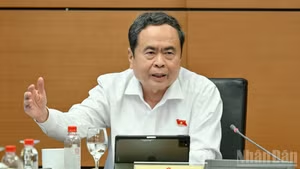
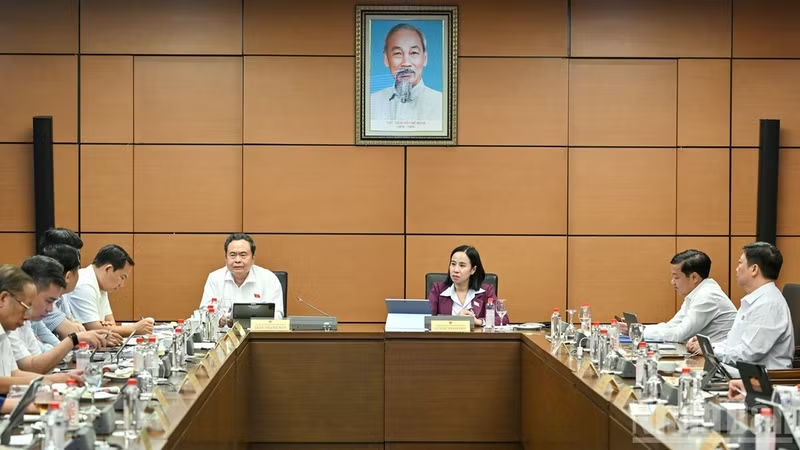
National Assembly President Tran Thanh Man, in group discussions, set out three principles of making it as easy as possible for lawful investors without loosening legal discipline, giving officials more room to act without blurring lines of authority, and expanding targeted incentives and support while keeping resources under control and results measurable.
He called for the law itself to spell out the basic principles and criteria for projects eligible for special incentives, particularly their spillover effects, role as growth drivers and contribution to economic competitiveness. He urged lawmakers to limit how much is left to sub-law documents. He also expected clear oversight, post-audit and clawback mechanisms tied to outcomes rather than upfront commitments alone, with specific output benchmarks such as local content ratios and core-technology transfer centres, so investors can see what incentives they earn in return.
On streamlining procedures and digitalisation, he asked for a thorough check of consistency with sector-specific legislation. He singled out the selection of investors for projects using sea areas, special procedures for strategic technologies such as semiconductors, artificial intelligence and data centres, and the role of the national one-stop investment portal.
The top legislator also asked the Government to make a more convincing case for some regulations, including extending project terms in eco-industrial parks to as long as 70 years and tightening links between FDI and the domestic economy, with priority for high-tech, high-added-value and eco-friendly projects. The revision must align with relevant laws, including the Land Law and the Law on Science and Technology.
Quality of linkages over headcount
Le Van The, a deputy from Ninh Binh province, said support for domestic firms entering supply chains should be measured by the quality of their linkages rather than headcount, and must stay within Viet Nam’s international treaty obligations.
The ultimate goal of the policy isn’t how many more Vietnamese companies end up on supplier lists, but how many genuinely upgrade their technological and production capacity and their position in the value chain, he said.
FDI seen as key to double-digit growth target
Minister of Finance Ngo Van Tuan, speaking in group discussions, said the amendments are meant to codify the Politburo’s Resolution 10-NQ/TW on developing the foreign-invested sector.
Viet Nam must step up investment attraction to reach double-digit growth amid rapid domestic and global shifts, Tuan said. Under the five-year financial plan, total social investment must reach 40% of GDP while the incremental capital-output ratio (ICOR) falls to 4.5-4.8 from 6.4, improving capital efficiency. Capital needs for 2026-2030 are projected to rise 2.67-fold from the previous period. For 2026, the target is at least 30 billion USD in disbursed FDI, compared with 21 billion USD in the first nine months.
According to him, FDI remains pivotal to growth. Trade turnover hit 930 billion USD in 2025, and the goal this year is 1.2 trillion USD, with the FDI sector contributing about 82%. But Viet Nam’s capacity to absorb and master technology remains limited, while competition for FDI is intensifying, particularly from India and Southeast Asian neighbours.
As of August, Viet Nam had 47,796 operating FDI projects with total registered capital of 561.6 billion USD. The revision should aim to raise FDI quality, focusing on helping firms integrate deeper into supply chains, develop high technology, boost scientific research and link with domestic training and research facilities, he added.