Recognising the campaign as an important political task of profound humanitarian significance, Dien Bien Province mobilised authorities, sectors, and localities at all levels, established specialised working groups and sample collection teams, and strengthened coordination among military forces, police, home affairs, and health agencies.
Working with urgency and a strong sense of responsibility, the participating forces completed the exhumation of all 4,607 graves across seven cemeteries, achieving 100% of the target. Of these, 4,343 biological samples meeting eligibility criteria were handed over to the Military Institute of Forensic Medicine for DNA analysis.
Alongside the collection of samples from fallen soldiers’ remains, efforts to review and gather information about their relatives were also vigorously pursued. Across the province, authorities reviewed information relating to 815 fallen soldiers, compiled records for 766 relatives, and collected 482 DNA samples from family members for comparison and identification.
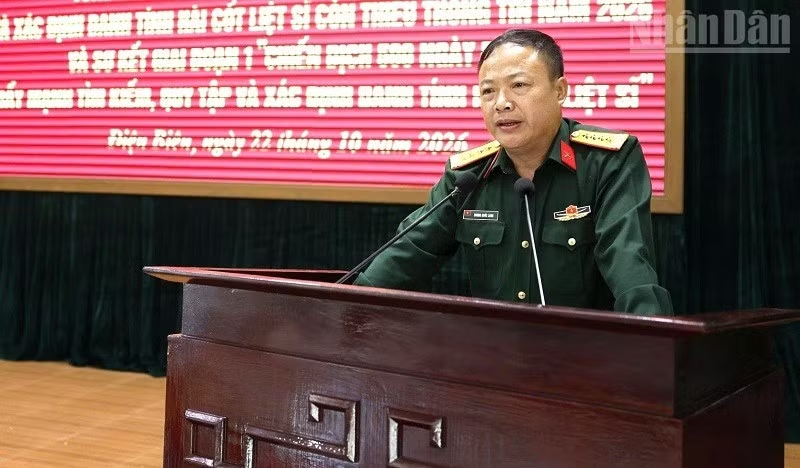
Regarding the search and recovery of fallen soldiers’ remains, the relevant forces conducted surveys and verification activities in five areas where information about burial sites was available. A total of 225 officers, soldiers and other personnel were mobilised, resulting in the recovery of the remains of 12 fallen soldiers.
Building on the results and experience gained during the first phase, the Provincial Steering Committee has identified the continued search, recovery and identification of fallen soldiers’ remains as a key priority for 2027.
Specifically, the province aims to complete the review of all local records and lists of fallen soldiers, search for and recover the remains of at least 20 fallen soldiers, and collect DNA samples from 100% of newly recovered remains whose identities have yet to be established.
At the same time, it will fulfil DNA sampling targets for graves containing partial identification information and complete the digitisation of all burial records, grave location maps and biological sample handover data to support DNA analysis.
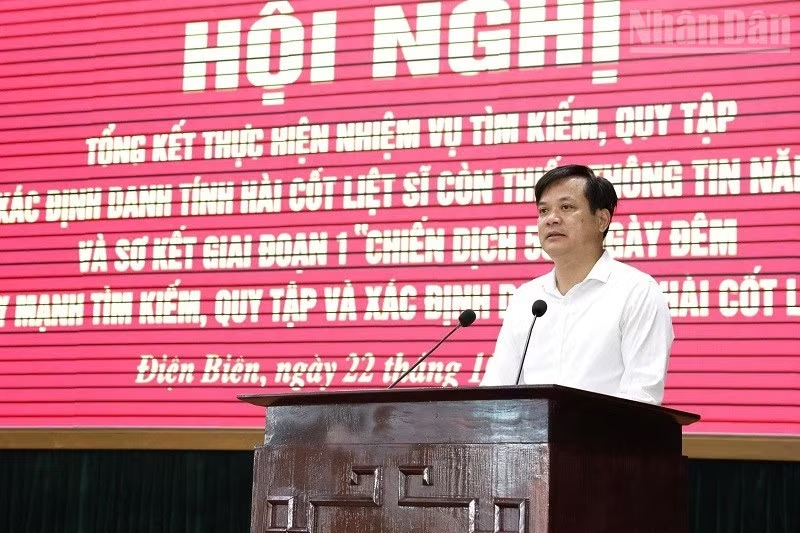
In his concluding remarks, Standing Vice Chairman of the Dien Bien Provincial People’s Committee Lo Van Cuong commended the achievements of the Steering Committee’s members during the first phase of the 500-Day Campaign.
He called on participating agencies and forces to mobilise all available resources, draw on experience gained during the first phase, and implement the second phase’s tasks in a coordinated and determined manner.
In particular, he stressed the need to complete sample collection from all graves containing partial information about fallen soldiers across the province, ensuring absolute accuracy and preventing errors.
Lo Van Cuong instructed the Provincial Military Command to take the lead in coordinating with relevant agencies, units, and localities to enhance the quality of field surveys, accelerate the decoding of military symbols, unit designations, and burial diagrams, and carry out searches, exhumations, recovery operations, and biological sample collection in strict accordance with technical procedures, ensuring scientific accuracy, solemnity, and safety.
The Provincial Police were tasked with coordinating with the Department of Home Affairs to leverage the National Population Database and expedite the verification and collection of reference DNA samples from relatives of fallen soldiers.
Particular attention must be paid to cases in which families no longer have direct relatives, ensuring that no eligible individuals are overlooked.
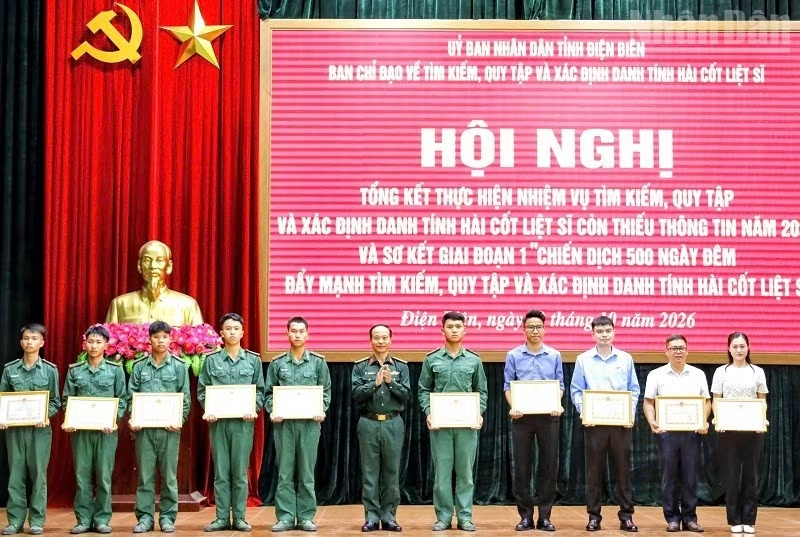
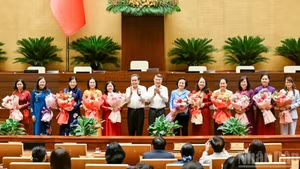
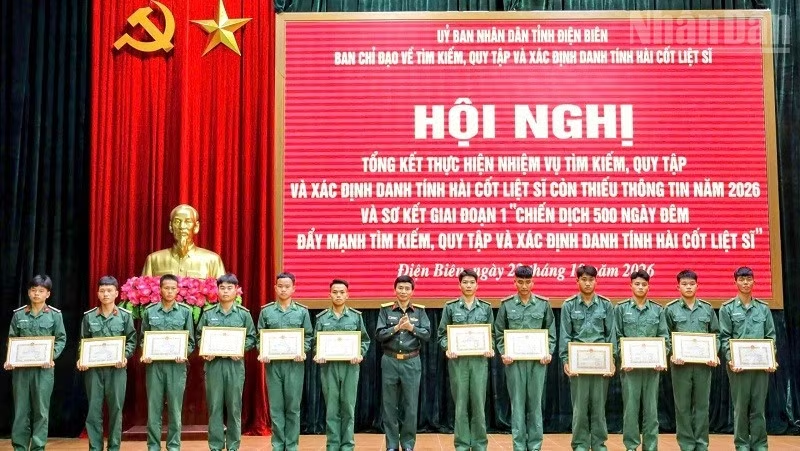
In recognition of their achievements and contributions to the campaign, the Dien Bien Provincial Military Command awarded certificates of merit to 70 individuals for outstanding performance.
Among the recipients was Le Thi Thuy Lan, Head of Nhan Dan Newspaper’s Representative Office in Dien Bien Province, who was honoured for her significant contributions to raising public awareness and disseminating information about the campaign locally.