At the same time, there is a pressing need to continue modernising leadership methods, elevate the effectiveness and efficiency of state management, accelerate decentralisation and delegation of authority, and enhance the quality of officials at all levels.
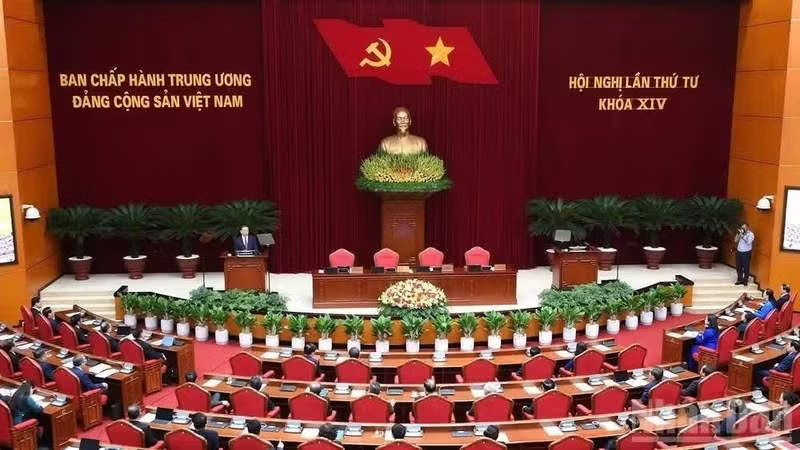
The fourth plenum of the 14th Party Central Committee considered and decided on a range of important issues, including strengthening Party building and rectification to develop a comprehensively clean and strong political system; renewing the Party’s leadership and governance methods; building a contingent of officials at all levels, particularly strategic-level and grassroots officials, and heads of agencies and organisations; attracting and harnessing talented individuals; and setting orientations for socio-economic development.
These issues are not isolated but closely interconnected, all serving the common objective of strengthening leadership and implementation capacity, mobilising resources, and laying the groundwork for rapid and sustainable national development.
In particular, renewing the Party’s leadership and governance methods must go hand in hand with enhancing the effectiveness and efficiency of the political system. Developing a capable contingent of officials must be accompanied by reforms in mechanisms for personnel evaluation, deployment, and the effective utilisation of their abilities.
Efforts to attract and harness talent must foster an environment in which capable individuals can genuinely contribute.
Socio-economic development orientations must be institutionalised through concrete mechanisms, policies, and practical solutions to unlock resources, promote innovation, and generate new development momentum. Major strategic directions have been established, key priorities identified, and the need for reform made increasingly clear. These provide an important foundation for authorities at all levels and across sectors to proactively discharge their duties.
However, a gap invariably exists between policy intentions and practical outcomes. Bridging that gap depends directly on implementation capacity, a sense of responsibility, and the determination to act demonstrated by Party committees, Party organisations, agencies, and units at every level, particularly their leaders.
In practice, some policies have been slow to be converted into concrete measures, while certain tasks have fallen behind schedule. Difficulties and obstacles have been identified but not definitively resolved. Some tasks have remained unfinished not because of a lack of legal grounds or solutions, but because of a tendency to wait for instructions, reluctance to confront difficult issues, fear of accountability, or inadequate coordination among relevant agencies.
Unless these shortcomings are addressed promptly, they will undermine the effectiveness of policy decisions and may even result in missed development opportunities. It is therefore essential not only to thoroughly grasp and implement resolutions, conclusions, and regulations, but also to channel policy directions into practical tasks with clearly assigned responsibilities, implementation schedules, and accountability.
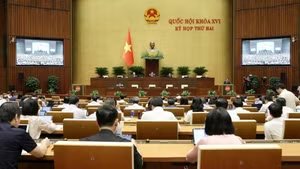
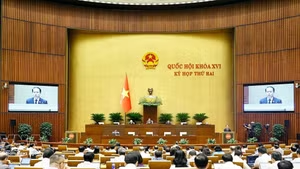
Addressing the national conference on studying, disseminating, and implementing the Resolution of the fourth plenum of the 14th Party Central Committee on the morning of October 16, Party General Secretary and State President To Lam emphasised that Party committees must urgently formulate concrete action programmes immediately after the conference.
Party committees, agencies, and units, from the central to grassroots levels, must proactively fulfil their responsibilities and resolve matters within their authority, while promptly reporting on and proposing solutions for issues beyond their jurisdiction. Heads of agencies and organisations must work collectively with their teams to identify changes that need to be implemented without delay.
Leaders must visit grassroots units, gain a thorough understanding of their work and implementation conditions, protect those who pursue innovation for the common good, and rectify the tendency to evade duty.
At the same time, central agencies must set an example in the quality of their policy advice, guidance, problem-solving, and coordination with local authorities to remove obstacles to execution. The guidance of the Party General Secretary and State President conveys a clear message: unity of understanding must be accompanied by unity of action. Studying and thoroughly grasping resolutions is meaningful only when it leads to genuine changes in thinking, working methods, leadership and management practices, and the quality of task implementation.
Accordingly, the Central Committee’s directions must be tranformed into practical actions, with responsibilities clearly defined for every level, sector, locality, agency, unit, official, and Party member. Every policy must be realised through specific tasks, every task must have an accountable person, and every outcome must be verified through tangible improvements in practice.
This requirement is becoming increasingly urgent as circumstances continue to evolve and new challenges constantly emerge, while resources, time, and development opportunities must all be used effectively. A sense of urgency and determination must therefore become a regular working principle throughout the political system. This is also the most effective way to ensure that the Central Committee’s policy decisions are swiftly realised as tangible results.