Voters nationwide have recognised the proactive and pioneering spirit of the country’s highest legislative body amid increasingly deep international integration. The continuous diplomatic activities undertaken by National Assembly leaders at global forums has not only affirmed Viet Nam’s standing, but also carried the voice of the people to agenda-setting tables of global significance.
A defining highlight of the term has been a turning point in parliamentary diplomacy. Moving beyond a supporting role, the 15th National Assembly has proactively shaped Viet Nam’s external engagement space, expanding relations with parliaments of other countries and international organisations.
A vivid example was the Francophone Parliamentary Forum on Sustainable Agriculture, Food Security, and Climate Change, hosted by the National Assembly of Viet Nam in Can Tho City — the “heart” of the Mekong Delta, the region most severely affected by climate change. By holding the event in the delta itself, the host country’s organisers skilfully elevated local realities to the international level while underscoring a commitment to concrete action.
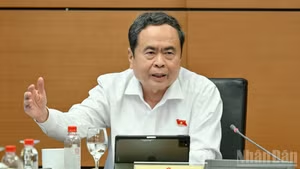
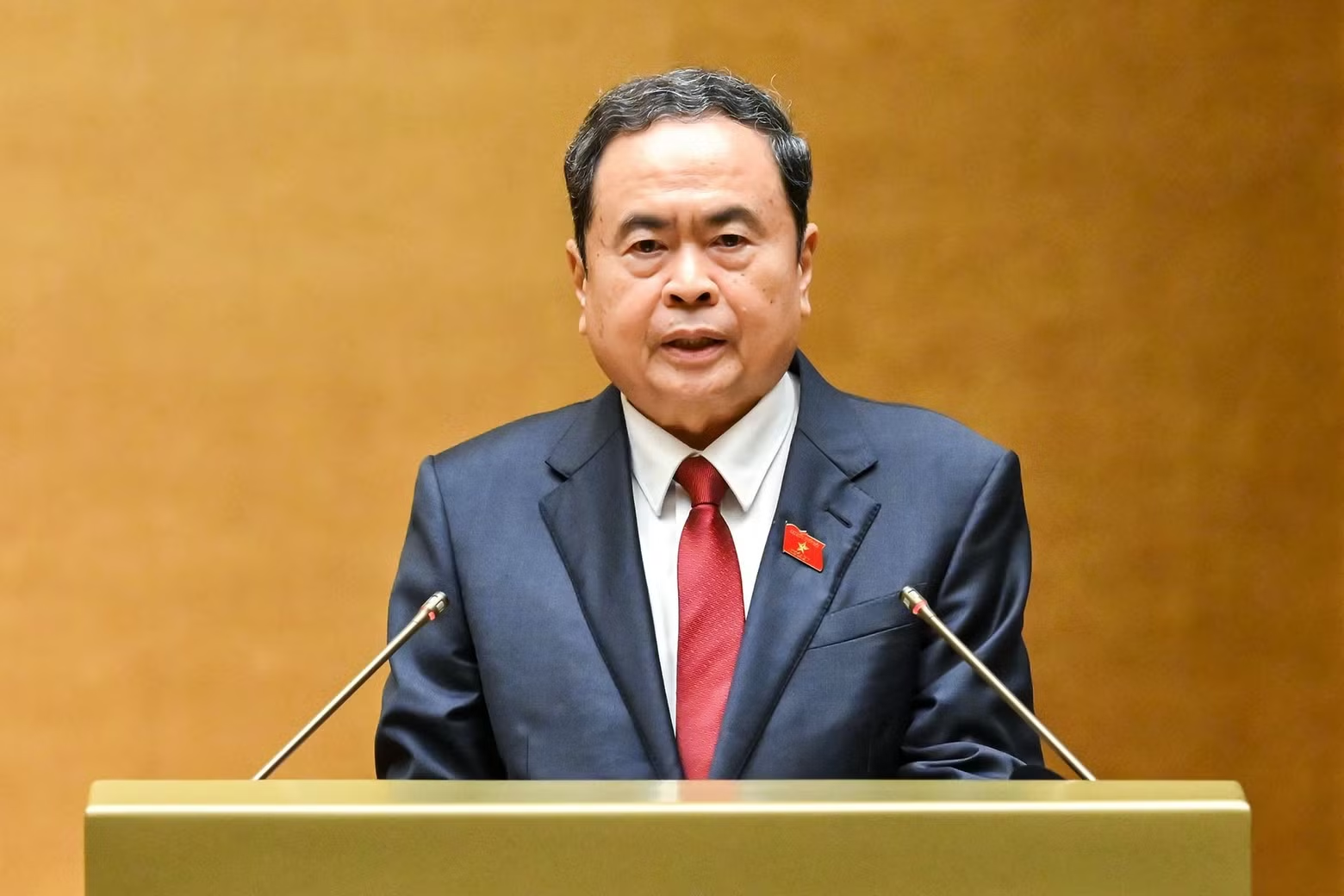
The message “Together, we can make a difference”, delivered by the National Assembly Chairman, became a human-centred declaration that resonated strongly and was highly praised by speakers and international parliamentary leaders.
The Can Tho Declaration, with ambitions to serve as a global reference point towards a model of sustainable cooperation, vividly underscored Viet Nam’s leadership role. Jacques Krabal, Secretary General of the Francophone Parliamentary Assembly (APF); Hilarion Etong, President of the APF; Caroline St-Hilaire, Secretary General of the International Organisation of La Francophonie, and many national leaders acknowledged that Viet Nam not only shared valuable experience as a country heavily affected by climate change, but also put forward practical initiatives on sustainable agricultural development linked to hunger eradication and poverty reduction. They also noted that the Vietnamese National Assembly and Government consistently pay attention to vulnerable groups affected by climate change during policy formulation.
Meanwhile, Speakers and Deputy Speakers of parliaments from member countries, in numerous bilateral meetings and multilateral forums, expressed strong interest in and appreciation of Viet Nam’s climate-smart, adaptive agricultural development model. Leaders regarded Viet Nam as an important partner in promoting South–South cooperation, particularly in ensuring regional and global food security, and highly valued lessons from Viet Nam’s transformation from a food-deficit country into a major agricultural exporter.
The impressions left by these “special voter engagements”, where Party and State leaders met overseas Vietnamese communities and diplomatic personnel, have been profound. Beyond the figures, declarations, and resolutions of major forums lie countless everyday stories rich in emotion.
During a visit to Switzerland, in the lakeside city of Vevey near Geneva, National Assembly Chairman Tran Thanh Man and his spouse visited the warm home of Jacques Savary, a bioengineer who has been connected with Viet Nam since 1995 through Viet Nam Medical Aids. The emotional reunion, marked by heartfelt embraces like those between family members, symbolised friendship beyond borders and demonstrated the power of sincere, heart-to-heart relationships.
The year 2025 witnessed a remarkable shift: Viet Nam not only participated but assumed a leading role at forums such as the IPU, APPF, and AIPA. Its initiatives on food security, water resources, and climate change response were incorporated into joint documents, reflecting pioneering thinking and a sense of global responsibility.
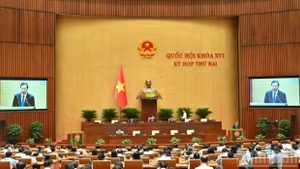
Throughout the past term, the National Assembly reaffirmed its pivotal role in the political system through its three core functions: legislation, supreme oversight, and decision-making on major national issues.
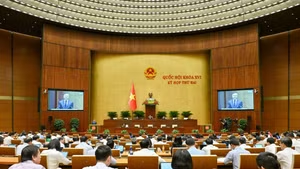
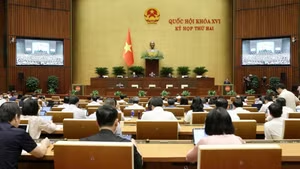
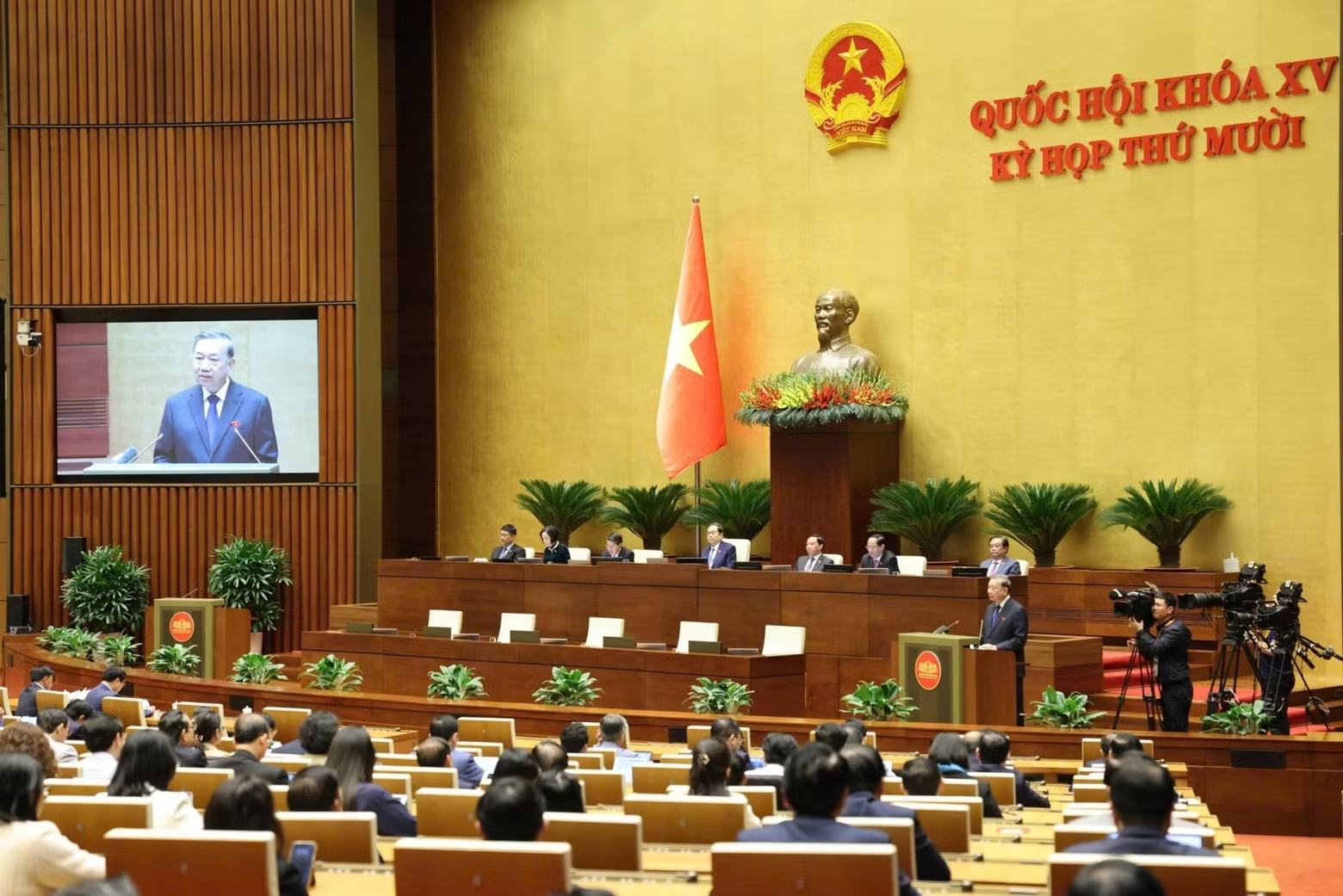
A particularly striking “hallmark” was the 10th session, the final sitting, which lasted 40 working days. During this session, the National Assembly reviewed and adopted 51 laws and 39 resolutions (including eight normative resolutions), accounting for nearly 30% of the total legislative output of the entire term. This was not merely a numerical record, but clear evidence of an action-oriented legislature delivering breakthrough decisions that genuinely reflected voters’ aspirations and met the country’s development needs in a new phase.
In July, in a warm and cordial atmosphere, representatives of the Vietnamese community in Switzerland expressed deep emotion at meeting the National Assembly Chairman and the Vietnamese high-level delegation. At the meeting, they described it as a bridge extending trust and affection from the homeland to overseas communities. They voiced confidence in the political system’s streamlining reform, stressing that many of the National Assembly’s decisions and the strong directives on “reorganising the national landscape” by General Secretary To Lam clearly demonstrated the resolve to bring governance closer to the people, using public and business satisfaction as the “yardstick” for service outcomes.
From anti-corruption legislation and administrative streamlining to policies on social welfare, healthcare, education, and digital transformation, laws and policies have been institutionalised in a timely and practical manner, with people placed at the centre. The National Assembly has “moved one step ahead” in translating Party guidelines into law, applying digital technologies and artificial intelligence, and successfully organising two inaugural forums on legislation and oversight. These carefully prepared events highlighted numerous initiatives and solutions aimed at enhancing the effectiveness of the country’s highest authority in the period ahead.
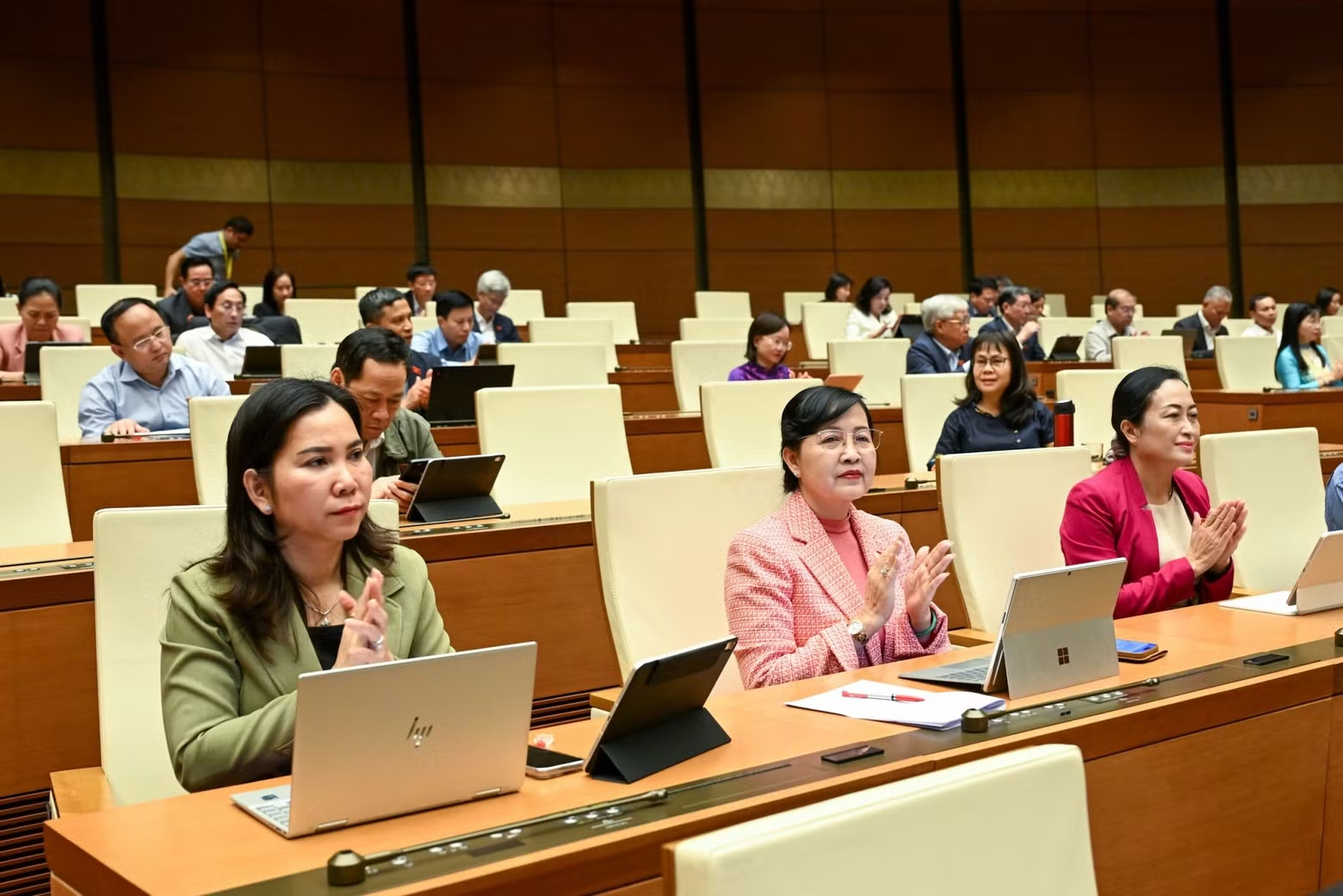
A key innovation of the 15th National Assembly has been its ability to stay close to reality, transforming local concerns into national policy decisions. Through voter meetings, National Assembly leaders have consistently engaged in open dialogue, listening with responsibility, humility, and receptiveness. In the Mekong Delta, local officials and residents spoke candidly about bread-and-butter issues: education, healthcare, housing, wage adjustments for younger generations, and delays in transport and irrigation projects. Voter Tran Thi Thuy (Vi Thanh Ward, Can Tho City) and others also highlighted the sophisticated proliferation of online scam advertising on platforms such as Zalo, Facebook, and YouTube, which remains insufficiently controlled.
These pressing real-life issues were swiftly conveyed to the National Assembly, the Government, and relevant agencies, prompting comprehensive solutions that put the people’s interests at the forefront. National Assembly deputies, with dedication and commitment, engaged in in-depth discussions and frank debates, reflecting deeply on voters’ concerns.
The 15th National Assembly has concluded its term, but the resonance of an innovative legislature continues to spread. Voters’ voices from everyday life are being brought ever more swiftly into the Dien Hong Hall and onto international forums. Clearly, the National Assembly’s people-centred reform mindset has been consistently and coherently demonstrated, grounded in the principle that all major decisions must stem from the legitimate needs, aspirations, and rights of the people. These major policy decisions have been, and will continue to be, shaping the legal framework for Viet Nam’s breakthrough development in the years ahead.