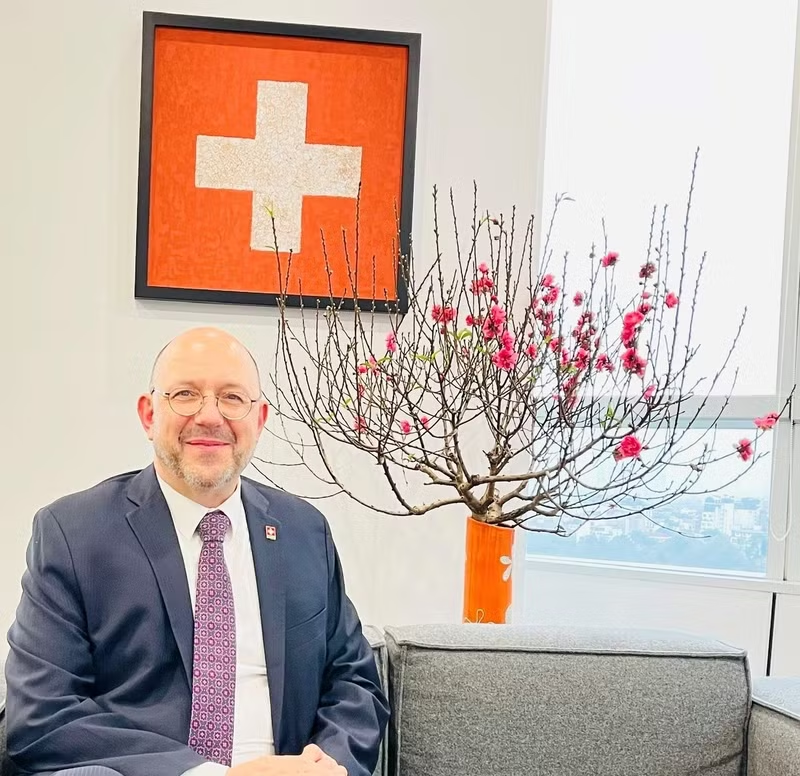
In separate interviews with Nhan Dan Newspaper ahead of Lunar New Year (Tet), Ambassadors of Switzerland to Viet Nam Thomas Gass and Ambassador of New Zealand to Viet Nam Caroline Beresford said bilateral ties are entering 2026 with renewed momentum after major upgrades in 2025. Both envoys stressed that the next phase should prioritise practical delivery — advancing trade and investment, scaling cooperation in innovation and sustainability, and strengthening coordination within a rules-based international framework.
Across innovation, green finance, education and trade facilitation — as well as legal dialogue, agri-tech, and renewable energy services — both ambassadors highlighted opportunities to translate political milestones into sustained on-the-ground outcomes, while also reflecting on Tet’s values and Viet Nam’s development trajectory.
2025: A defining year for upgraded ties
For Switzerland, 2025 stood out as the year the two countries decided to elevate their relationship to a comprehensive partnership, agreed during high-level talks between Prime Minister Pham Minh Chinh and Swiss President Karin Keller-Sutter. Ambassador of Switzerland to Viet Nam Thomas Gass said the move signalled a shared commitment to intensify cooperation in innovation, green finance, education, and trade, while strengthening collaboration within a rules-based international framework.
In the same year, at the launch of the Swiss–Viet Nam Cooperation Programme 2025–2028, the ambassador reaffirmed Switzerland’s long-term support for Viet Nam’s transition towards a resilient, sustainable, high-income economy, describing 2025 as a defining year that strengthened political trust and injected new momentum into a more strategic and future-oriented partnership.
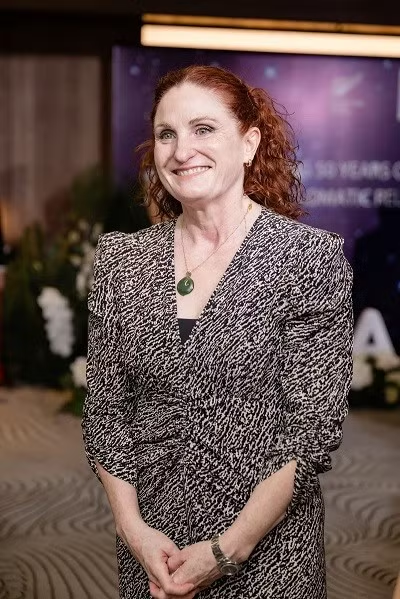
From New Zealand’s perspective, Ambassador of New Zealand to Viet Nam Caroline Beresford described 2025 as the most extraordinary year in bilateral relations, built on 50 years of steady work by predecessors and colleagues. She recalled that New Zealand proposed in 2024 upgrading the strategic relationship to a comprehensive strategic partnership, which Viet Nam accepted immediately — an outcome she said reflected the warm feelings and positive ties cultivated over the past 50 years.
She pointed to a year of intense engagement, including a prime ministerial visit, two trade delegations, a foreign ministerial visit, and a visit by the Speaker of the New Zealand Parliament, alongside wide-ranging cultural, educational, and diplomatic activities. “The momentum couldn’t be stronger in our bilateral relationship today,” she said.
Turning political upgrades into practical cooperation
Both ambassadors emphasised that upgraded frameworks should translate into concrete cooperation.
Ambassador Caroline Beresford said she had seen an immediate uptick in engagement after establishing the comprehensive strategic partnership — evidence, in her view, that it has real substance rather than being only a political announcement. As a tangible example, she highlighted the first-ever legal dialogue between legal officials of the two countries, which discussed multilateral cooperation, the law of the sea, and areas where Viet Nam and New Zealand see synergies in amplifying their voice through closer coordination.
Ambassador Thomas Gass, meanwhile, underlined an urgent priority to swiftly conclude negotiations on the Viet Nam–EFTA Free Trade Agreement.
Describing it as a win-win instrument, he said the agreement would further open the Vietnamese market to Swiss technologies, services, and expertise, while offering Vietnamese exporters better access to EFTA markets — with clear rules supporting competitiveness, compliance with sustainability requirements, and value creation on both sides.
Trade, regulatory hurdles, and new growth areas
On the business front, New Zealand Ambassador to Viet Nam Caroline Beresford said government agencies and businesses were stepping forward to follow through on the partnership’s promise. New Zealand firms, she noted, see Viet Nam as “an extremely lucrative, creative, and talented market,” with discerning consumers whose incomes and prosperity are growing alongside well-being. She said she receives constant inquiries from New Zealand businesses about how they can do more in Viet Nam — and expects similar momentum from Vietnamese businesses in the months ahead.
She stressed that New Zealand and Viet Nam have almost no tariffs between them under very high-quality trade agreements, making it easier to expand trade and economic ties. The key, she suggested, is enabling businesses to enter the market, understand it, and gain a foothold.
With Viet Nam and New Zealand setting a target of 3 billion USD in two-way trade in 2026, the ambassador said there is enormous potential for growth. While tariffs are small, she argued the real barriers are more about the regulatory systems of both countries. Her team is supporting efforts to improve regulatory processes so quicker decisions can be made on trading in new goods.
She pointed to New Zealand’s established trade in products such as dairy and horticulture, saying Vietnamese consumers can already find New Zealand fruits in supermarkets, including cherries during the Tet season. However, for the relationship to grow further, she said, it will require new products entering the market.
Shared outlooks on development, governance, and the international order
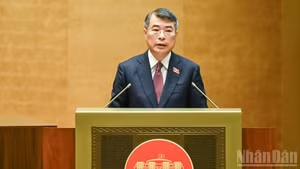
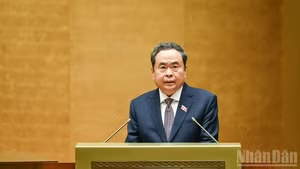
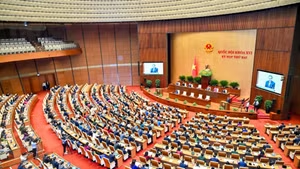
Asked about the significance of Viet Nam’s 14th National Party Congress, Swiss Ambassador to Viet Nam Thomas Gass described it as a pivotal strategic moment that will shape the country’s economic and social direction for the next decade while drawing lessons from 40 years of Doi moi (Renewal). He said the congress offers Viet Nam an opportunity to reaffirm its ambition to become a modern, resilient, innovative economy supported by social cohesion and political stability.
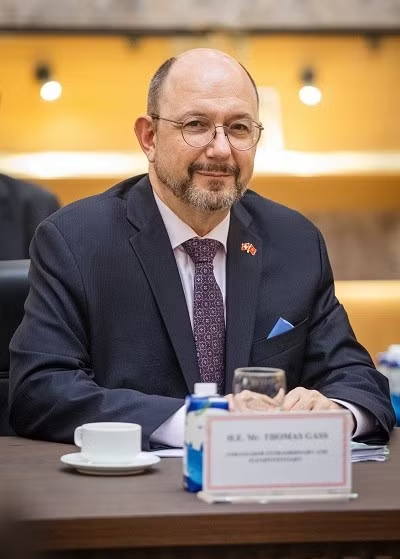
He also framed it as a key moment for Viet Nam to highlight the values guiding its engagement internationally, especially commitment to the international rule of law, respect for international obligations, and the peaceful settlement of disputes. In an uncertain geopolitical landscape, he argued, a clear stance in favour of multilateralism and constructive cooperation strengthens Viet Nam’s credibility as a responsible regional partner.
The congress, he added, also provides an opportunity to underscore the central role of sustainability, from energy transition and climate resilience to sustainable urban development and responsible value chains.
New Zealand Ambassador to Viet Nam Caroline Beresford, who attended the opening and closing ceremonies, said she was impressed by the discipline and coherence of the congress and by the communication with both the Vietnamese public and the international community. She described Viet Nam’s development story over recent decades as extraordinary, particularly the number of people who have been lifted out of poverty through strong leadership.
Looking ahead, she said she expects Viet Nam to reach the next level of its potential, noting that the congress set out clear goals reinforcing the socio-economic aim of becoming an upper-middle-income country in the coming decades. She said she has no doubt Viet Nam will achieve that goal, along with greater happiness and well-being for its people.
Asked what impressed her most in Viet Nam’s socio-economic development over the past year, she singled out the country’s GDP growth in 2025, calling it extraordinary at around eight percent while many other economies struggled to reach three or four percent amid turbulence in the international trading system. She added that New Zealand is studying Viet Nam’s progress closely.
Tet as a cultural bridge: Hope, renewal, and community
As Tet approaches, both ambassadors shared reflections on its values and cultural resonance.
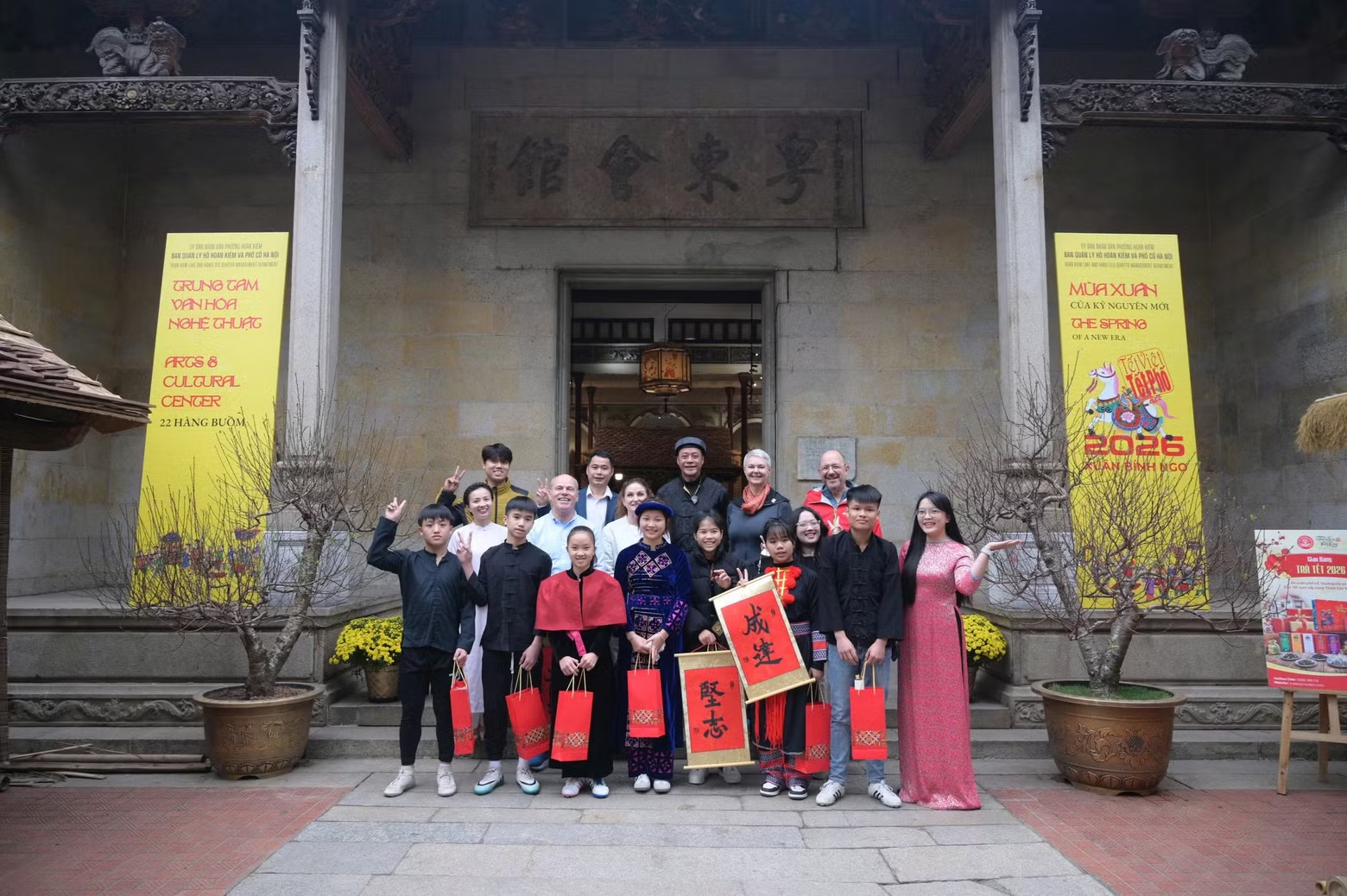
Swiss Ambassador to Viet Nam Thomas Gass said what leaves the deepest impression on him each spring is the Vietnamese people’s capacity to look forward and begin the new year with determination and hope. Among his memorable experiences, he recalled the sheer delight and privilege of celebrating, and singing, during Tet 2025 with the Green Wind Choir and the G4 ambassadors (Canada, New Zealand, Norway, and Switzerland) while preparing their annual celebratory video for the Vietnamese public.
Comparing cultural values, he described Tet as resembling a combination of Switzerland’s New Year and Easter. In Switzerland’s colder climate, he said, spring arrives later, while Easter in the Christian tradition celebrates resurrection, but the shared spirit is the same: putting the past behind and moving forward with hope and optimism.
In his New Year message, the Swiss ambassador extended heartfelt wishes to the Vietnamese people for a year filled with harmony, good health, and renewed hope. He said Tet is a reminder of the strength of Vietnamese traditions — respect for family, the importance of community, resilience, and generosity — and expressed hope that Viet Nam’s growth and transformation will continue to be guided by these enduring values. He ended with: “Chúc Mừng Năm Mới!”
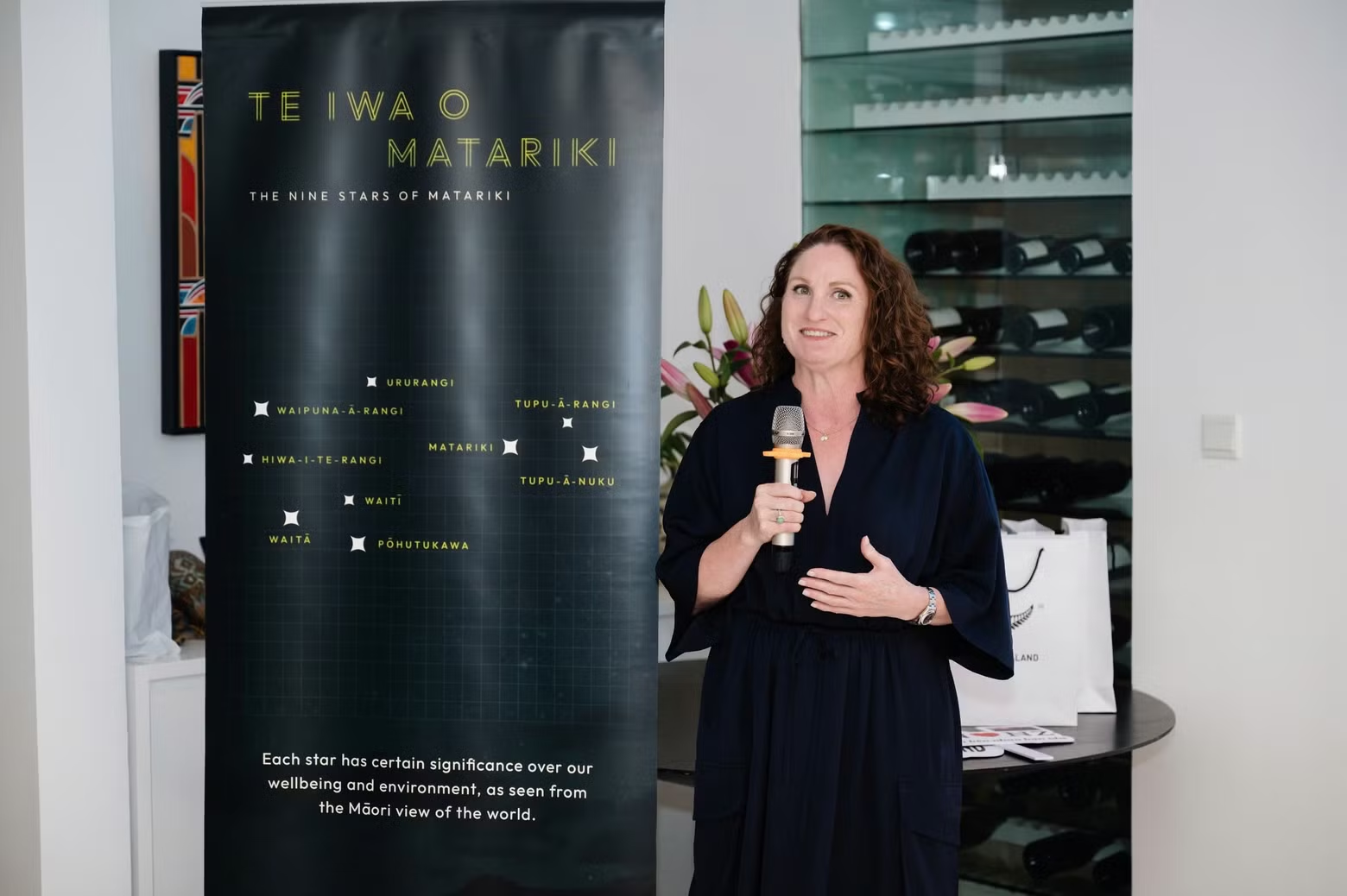
New Zealand Ambassador to Viet Nam Caroline Beresford, reflecting on her first Tet in Viet Nam, said it was a time of learning and discovery. She described Ha Noi during Tet as having a magical, misty feel, with cooler air, longer nights, and a sense of rejoicing as people come together. She enjoyed seeing kumquat trees appear on the streets and hearing from her staff about the time families spend together during the holiday period.
She also drew parallels with New Zealand’s own values at this time of year — making space for family, sharing good food and drink, and resting to refresh for the year ahead. New Zealand festival culture, she said, strongly emphasises food: families prepare their best dishes, cook for one another as a sign of connectedness, and relax together — something she sees as closely aligned with Vietnamese practice.
In her message to Vietnamese people, Ambassador Caroline Beresford offered congratulations on a successful 2025 and optimism for 2026. She also added a light-hearted appeal: during Tet, Vietnamese men should give their sisters, wives and mothers a break, and not let them do all the work. She extended Lunar New Year greetings to the Vietnamese people, saying in Vietnamese: “Chúc mừng năm mới.”
While the two interviews focus on different partnerships, they share a clear message: 2025 built momentum, and 2026 must deliver practical results. Both ambassadors expressed confidence that cooperation can deepen through steady progress in trade, regulatory coordination, sustainability, and rules-based engagement, supported by mutual respect and the people-to-people goodwill highlighted during Tet.