The date of April 30 is not only a landmark historical milestone but also a symbol of the Vietnamese nation’s will for independence, self-reliance, and aspiration for development.
From the perspective of the Vietnamese community in Germany, Pham Khanh Nam, Editor-in-Chief of Huong Viet Magazine, noted that the recent consolidation of key leadership positions within the Party and State continues to affirm strong political resolve in building a robust governance system, ensuring continuity, stability, and development. It also conveys a clear message of a Viet Nam that remains consistent in its policies, resilient amid global fluctuations, and ready to enter a new stage of development.
According to Pham Khanh Nam, political stability is a crucial foundation for strengthening the confidence of both the public and international partners, particularly at a time when the world is facing increasingly complex and unpredictable challenges.
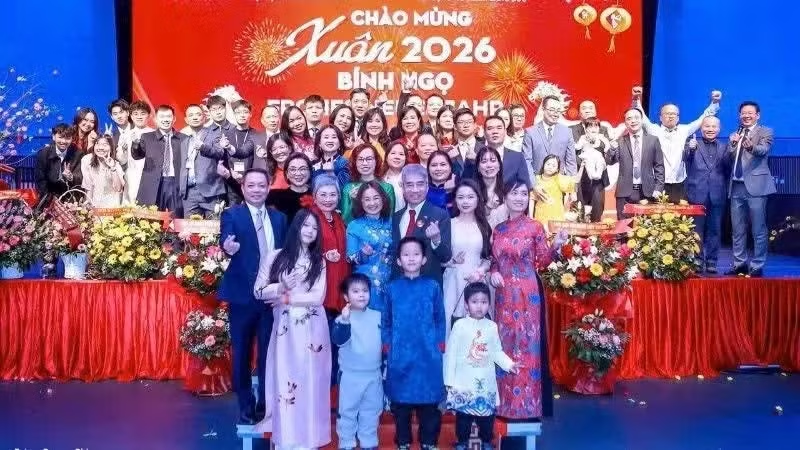
Vietnamese communities abroad, including hundreds of thousands of Vietnamese living in Germany and across Europe, are increasingly affirming their role as an inseparable part of the nation, as well as a vital resource for national development. With high levels of education, strong integration capabilities, and an increasingly prominent position in host societies, overseas Vietnamese contribute not only economically but also serve as a bridge for international cooperation.
Emphasising this role, Pham Khanh Nam suggested that mechanisms and policies should continue to be improved to facilitate greater participation by overseas Vietnamese in investment, business activities, technology transfer, and intellectual contributions to the homeland. At the same time, the connective role of Vietnamese communities in Europe should be further leveraged to promote relations between Viet Nam and its regional partners.
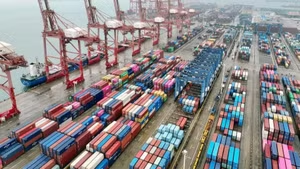
Viet Nam–European Union relations are entering a period of new opportunities, particularly as European countries accelerate the diversification of supply chains. Germany, as Europe’s largest economy, remains one of Viet Nam’s leading partners, with broad potential for cooperation in areas such as manufacturing, vocational training, renewable energy, and green transition.
However, the European market also imposes increasingly stringent standards, particularly in terms of environmental protection, labour, and governance. Viet Nam therefore needs to enhance its implementation capacity to better meet sustainable development requirements, while effectively leveraging free trade agreements, including the EU–Viet Nam Free Trade Agreement (EVFTA).
In addition, the early removal of barriers such as the “yellow card” warning on seafood and the acceleration of investment cooperation frameworks with the European Union will help strengthen market confidence and create new momentum for economic and trade cooperation between Viet Nam and Europe.