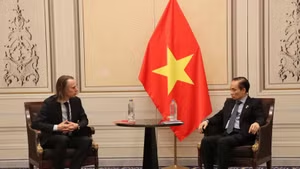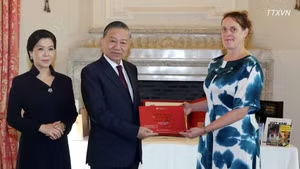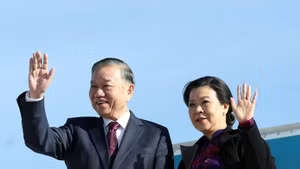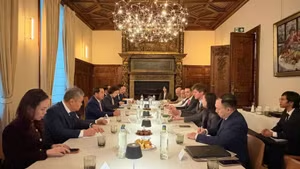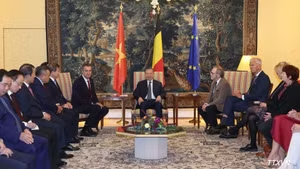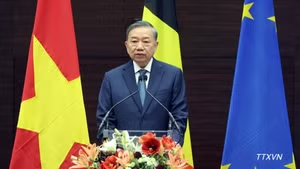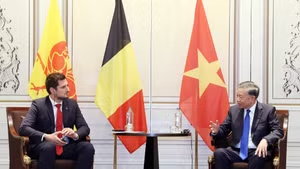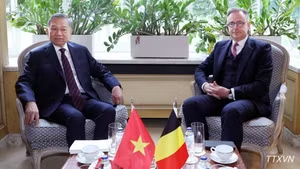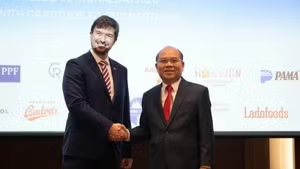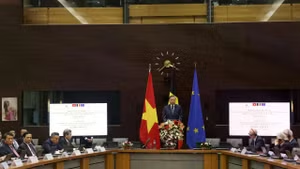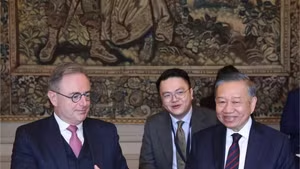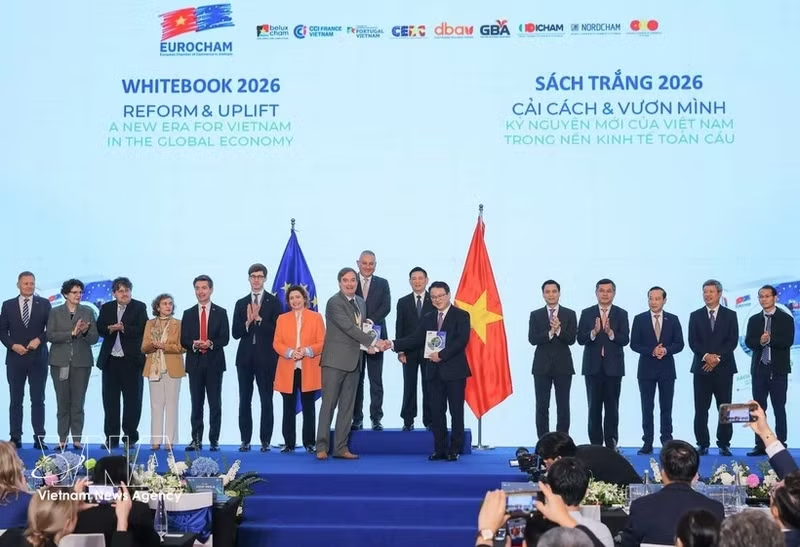
Welcoming the visit, Phoc spoke highly of the first EU–Viet Nam Global Gateway Business and Investment Forum (GGBIF) held in Viet Nam, describing it as a concrete step to implement the Comprehensive Strategic Partnership between Viet Nam and the European Union established in January.
Highlighting the EU’s role as the world’s third-largest economy and a pioneer in promoting sustainable development, green growth, the circular economy, digital transformation, just energy transition and free trade, the Deputy Prime Minister affirmed that Viet Nam always values and supports EU initiatives aligned with its development priorities, particularly the Global Gateway initiative.
He briefed his guest on the outcomes of the 14th National Congress of the Communist Party of Viet Nam, as well as the country’s socio-economic achievements and extensive international integration over nearly four decades of Doi Moi (renewal). He said Viet Nam is determined to realise its two centenary goals through specific orientations and measures, focusing on three strategic breakthroughs. These include improving institutions; developing modern, synchronous infrastructure, especially expressways, high-speed railways, seaports and airports; and enhancing high-quality human resources. At the same time, Viet Nam is promoting a growth model driven by science and technology, innovation, digital transformation, renewable energy, and the green and circular economy.
Regarding bilateral ties, Phoc noted that following the recent upgrade of relations, translating commitments into concrete programmes and projects, including the GGBIF, is crucial to creating new momentum for cooperation.
He called on the Commissioner to support the effective implementation of Global Gateway projects in Viet Nam, step up development cooperation, and encourage EU businesses to invest in major projects, including the newly established international financial centre in Ho Chi Minh City and Da Nang. Such efforts, he said, would help strengthen infrastructure connectivity, accelerate green and digital transitions, enhance capacity, and enable Vietnamese firms to engage more deeply in EU supply chains.
For his part, Commissioner Síkela expressed his pleasure at returning to Viet Nam and co-chairing the inaugural GGBIF, while praising the country’s socio-economic achievements in recent years.
He commended the progress in EU–Viet Nam relations, particularly the establishment of the Comprehensive Strategic Partnership, and noted that his delegation includes senior policymakers and leading EU enterprises, including the Vice President of the European Investment Bank.
An increasing number of major EU firms, he said, are keen to expand investment and business activities in Viet Nam, particularly in infrastructure, transport connectivity, energy transition, and the green, digital and circular economy.
Agreeing with the Deputy Prime Minister’s proposals, Síkela affirmed that the EU considers Viet Nam a key partner in the Association of Southeast Asian Nations (ASEAN). Amid global uncertainties and economic challenges, he described Viet Nam as a reliable partner, with both sides sharing common values on sustainable and human-centred development.
With 99% of tariffs already reduced to facilitate trade, he said the two sides should further enhance cooperation in investment, infrastructure connectivity, energy transition, and human resources development to support the green, digital and circular economy.