Boom in the digital market
According to figures from the Viet Nam E-commerce and Digital Economy Agency, e-commerce in Viet Nam has surpassed 30 billion USD in 2025, an increase of 25% from the previous year and accounting for two-thirds of the value of the digital economy.
This surge has been driven by widespread internet access, the proliferation of smartphones, and the development of online shopping platforms and social networks.
At the same time, consumers have been shifting their purchasing habits from in-store to online shopping thanks to convenience, competitive prices and a wider range of choices.
The boom has not only stimulated production and distribution but has also created jobs for hundreds of thousands of workers in the logistics and technology sectors.
However, e-commerce has also brought serious negative consequences, most notably the widespread presence of counterfeit and imitation goods and trade fraud.
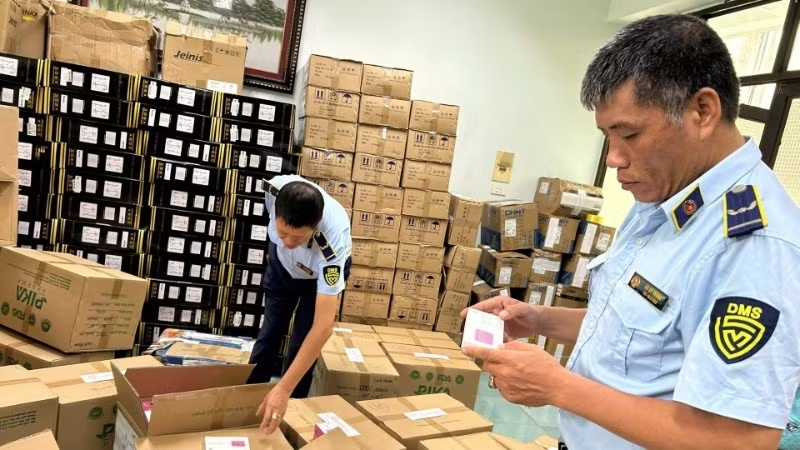
In 2025, market surveillance officials detected and handled more than 23,400 violations related to counterfeit goods nationwide, most of which occurred on e-commerce platforms and social media.
The infringing products ranged from cosmetics, clothing and footwear to electronic devices, and even health supplements and medicines.
In early November, Ha Noi’s market surveillance authorities discovered a warehouse in Phu Xuyen Commune containing 2,000 counterfeit handbags bearing the trademarks of several well-known and protected brands such as Hermes, Gucci and YSL.
According to the warehouse owner, the wholesale purchase price of each handbag was only between 50,000 and 60,000 VND (about 2 USD), whereas genuine products sell for tens to hundreds of millions of Vietnamese dong. The counterfeit items are offered for sale on the market via e-commerce platforms and social media through anonymous accounts at prices of several hundred thousand Vietnamese dong per item.
Creating a healthy and safe digital business environment
The biggest current challenge in preventing counterfeit goods in the e-commerce environment lies in the fact that legal regulations have not kept pace with market developments.
At present, on e-commerce platforms and social media, the identities of sellers and product quality control are difficult to verify, creating loopholes for counterfeit goods to enter the market.
This lack of transparency undermines consumer trust and causes economic losses estimated at trillions of Vietnamese dong each year.
In addition, existing penalties are not strong enough to act as a deterrent. Low fines compared with the enormous profits from producing counterfeit goods have led many offenders to repeat violations even after being penalised multiple times.
Tran Huu Linh, Director of the Agency for Domestic Market Surveillance and Development, said that it is necessary to renew approaches to managing the e-commerce market.
Accordingly, e-commerce platform operators must raise their awareness and sense of responsibility in preventing and removing infringing online shops.
Functional forces, including market surveillance units, need to enhance enforcement effectiveness and accountability in combating counterfeit goods in the digital environment; and step up the application of information technology and data analysis in monitoring and providing early warnings of market risks.
Automated monitoring systems using artificial intelligence to detect counterfeit products based on images, reviews and transaction data should be widely deployed.
In addition, continued training and capacity-building for enforcement personnel are required to meet the demands of a rapidly growing e-commerce sector and the increasing prevalence of cross-border transactions.
Renewing management methods and strengthening control of the digital space are seen as the key to enabling market surveillance forces to effectively protect consumers and create a safe and healthy digital business environment.