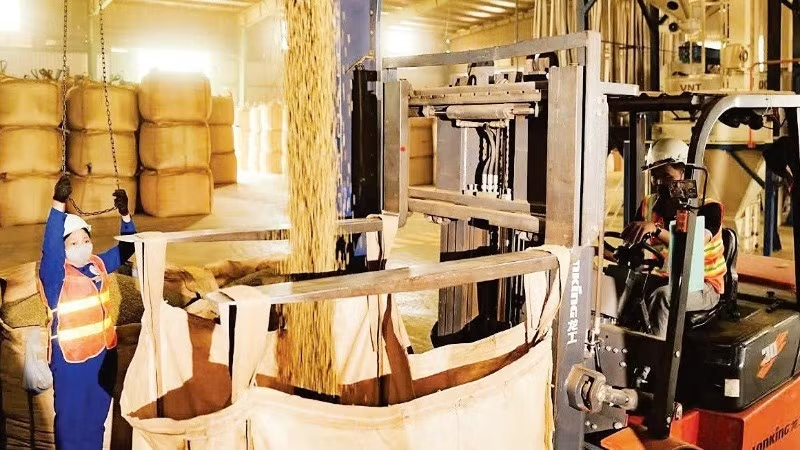
According to the General Statistics Office (Ministry of Finance), three groups surpassed the milestone of over 1 billion USD in turnover: wood and wooden products (1.6 billion USD), coffee (1.08 billion USD), and aquatic products (1.01 billion USD).
For 2026, the Ministry of Agriculture and Environment has set an export target of 74 billion USD and plans to expand into new potential markets.
Fruit, coffee and seafood exports show strong early-year signals
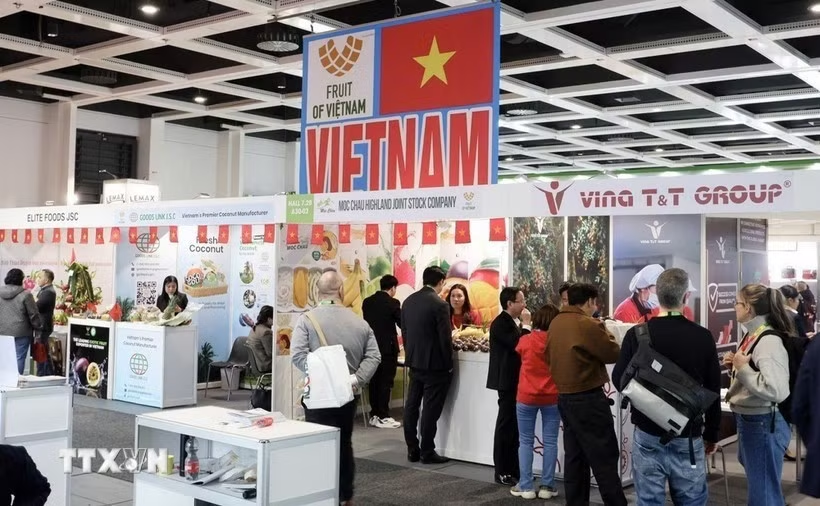
Nguyen Dinh Tung, General Director of Vina T&T Group, had just returned from Fruit Logistica 2026, the world’s leading trade fair for fruit, fresh produce, and the global supply chain, in Berlin, Germany.
Right on the first day of the fair, the Vina T&T Group booth became a hub for many partners and importers, promising valuable orders throughout the year. Each of the company’s fruit products is cultivated according to standard processes with a quality control and inspection system; end-to-end export-logistics capability ensures consistency in quality and standards across the supply chain.
According to the Viet Nam Fruit and Vegetable Association, the country’s fruit and vegetable export turnover in January 2026 reached about 750 million USD, nearly double that of the same period last year. The sector aims for the 10 billion USD export milestone in 2026, focusing on key markets such as China, the US, and the EU, while opening up new destinations.
Following the coffee sector’s growth momentum in 2025, Viet Nam’s coffee export turnover in January 2026 reached 1.08 billion USD, raising hopes for the year ahead. By the end of January, stable procurement demand for exports kept domestic coffee prices rising, fluctuating around 101,000 to 102,000 VND/kg.
Farmers such as Cao Thi Luu Bieu from Ea Kao Ward, Dak Lak Province said that high coffee prices have brought substantial income. Growers are now working more closely with processing enterprises to produce quality goods that meet export standards, ensuring stable output.
In line with that rhythm, the aquatic products sector also surpassed 1 billion USD in turnover in January 2026.
According to Le Hang, Deputy General Secretary of the Viet Nam Association of Seafood Exporters and Producers (VASEP), seafood enterprises have strived to maintain a good order pace at the start of the year despite global trade pressures from technical barriers and tariffs in some major markets.
Early-year growth has mainly come from markets such as China, Japan, and ASEAN, with product groups like pangasius, squid, and octopus. Many enterprises capitalised on heightened demand ahead of the Lunar New Year holiday, accelerating shipments to China. Lobster made a notable contribution to growth in this market, while premium shrimp saw strong consumption during the festivities.
Processing seen as the new growth engine
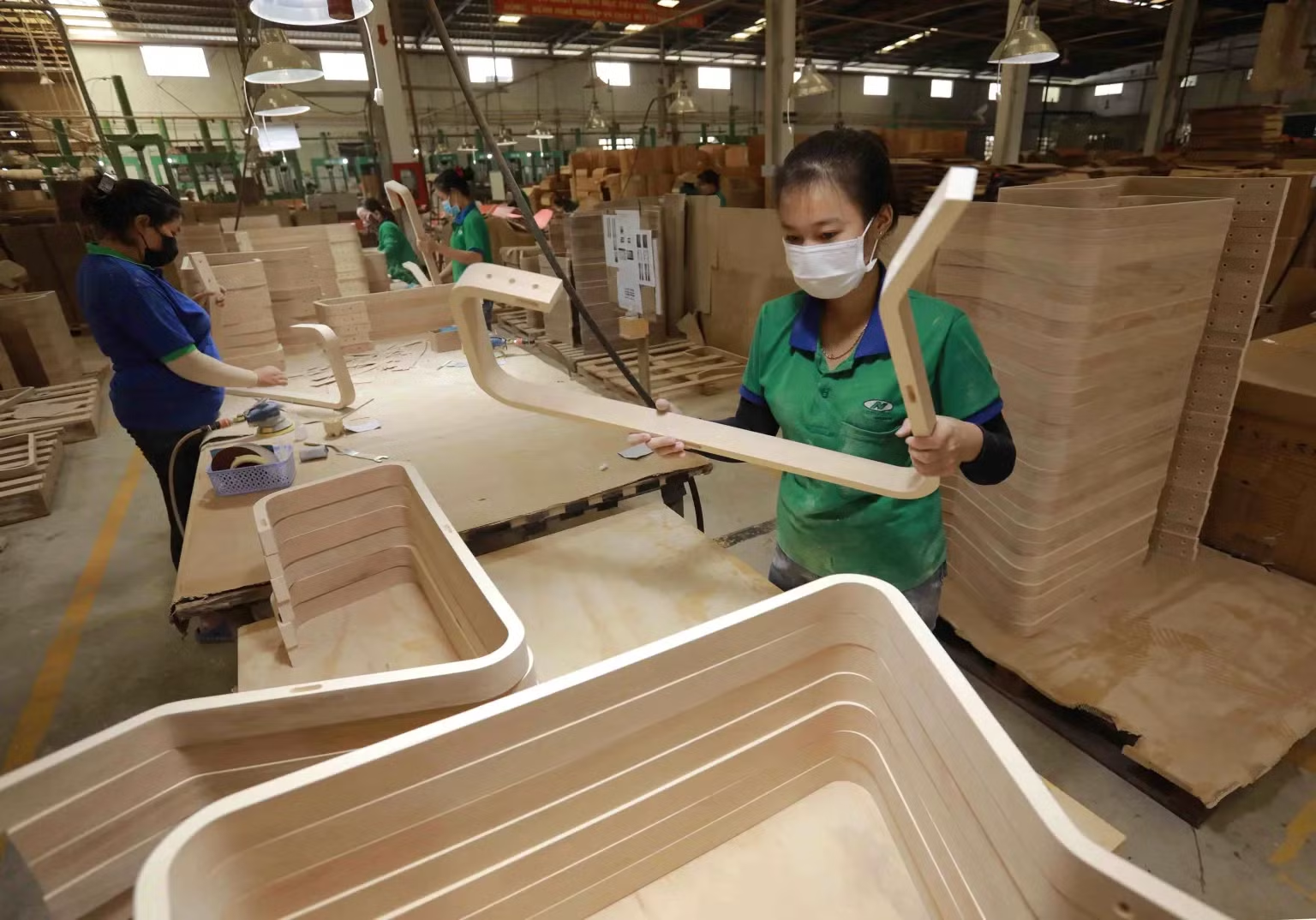
2025 marked the success of many agricultural sectors in shifting export structures towards diversifying product types and gradually reducing reliance on raw exports, while boosting deeply processed product exports. This is increasingly seen as the key driver of growth in 2026.
Specifically, in 2025, processed coffee exports reached 1.78 billion USD, up 50.4% from 2024. Nguyen Nam Hai, Chairman of the Viet Nam Coffee-Cocoa Association, attributed this to enterprises ramping up investment in deep processing technology, expanding production of instant coffee, roasted and ground coffee, and high value-added products.
This has enabled Vietnamese processed coffee to benefit from tariff preferences under free trade agreements, enhancing competitiveness in international markets. Currently, only about 10% of Viet Nam’s coffee export volume is deeply processed, so expanding this product line is crucial for sustainable turnover growth.
2025 marked the success of many agricultural sectors in shifting export structures towards diversifying product types and gradually reducing reliance on raw exports, while boosting deeply processed product exports.
Beyond coffee, wood and wooden products, aquatic products, and fruit and vegetables have also seen high global demand for processed goods. In 2025, processed fruit and vegetables hit a record turnover of about 2 billion USD.
Many exporters are now striving to build high value-added agricultural ecosystems. For example, Vina T&T Group, after more than a decade exporting fresh fruit to world markets, officially launched its TiTi Food processed fruit line at the end of December 2025, featuring mango, pineapple, custard apple, and durian. Using advanced drying technology to preserve natural flavour and nutritional value, the line caters to trends in convenient, healthy, and safe consumption.
In the wood sector, a notable highlight has been the shift from raw materials to deeply processed products. In 2025, wood pellet exports grew strongly, reaching 1.17 billion USD, up 47.5% from 2024. The success of wood pellets is a typical lesson in circular economy, encouraging enterprises to invest in technology to maximise wood by-products into renewable energy product lines.
Additionally, wood handicrafts reached 65 million USD, up 44.9%, showing the appeal of deeply processed products with artisanal and cultural value to global high-end customer segments.
In the first month of 2026, agricultural, forestry, and aquatic exports have not only shown bright spots in individual sectors but also upward momentum across the board. With orders and markets expanding, export growth is forecast to maintain a strong pace in the months ahead.