This demonstrates that the city authorities are resolutely implementing the goal of achieving net-zero emissions in the transport sector, with a clear roadmap and prioritised allocation of resources.
Rapid expansion of electric buses
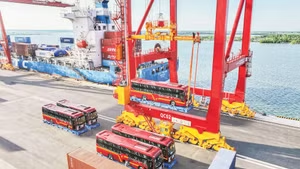
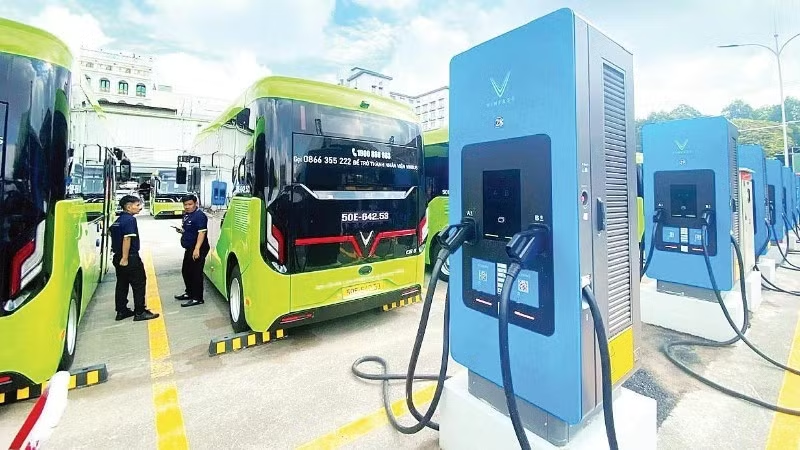
The Public Transport Management Centre has recently announced the conversion of all 169 buses operating on nine routes to electric vehicles, raising the total number of routes using clean energy to 66. With 1,082 electric and CNG-powered buses, vehicles using clean energy now account for nearly 48.4% of the city’s total bus fleet.
According to Pham Ngoc Dung, Director of the Centre, this large-scale conversion to electric buses provides residents with additional options for safe, convenient, and environmentally friendly travel. The move forms part of the roadmap to green the public transport system, with the goal that by 2030, 100% of buses operating in the city will run on electricity or other forms of green energy.
At the end of 2025, the city launched an electric bus route in the Con Dao special administrative zone, contributing to the development of a zero-emission transport model. Based on this model, the city plans to expand “green” public transport to Can Gio and other areas.
Alongside the transition of vehicles, the city is also accelerating the development of energy infrastructure. The Department of Construction has proposed selecting 19 bus depots and parking areas with favourable locations to install charging stations, thereby maximising the use of public assets while meeting the rapidly growing demand for electric vehicles.
For two-wheeled vehicles, the city has announced 102 locations for battery-swapping cabinets on pavements and in public spaces. It is forecast that by 2030 the city will have around 1.2 million electric motorbikes in circulation, creating demand for more than 25,000 public charging stations and battery-swapping cabinets.
Proactive control of emissions
According to Bui Hoa An, Deputy Director of the Department of Construction, for the transition to electric vehicles to succeed, the city needs sufficiently strong policies to attract investors to develop charging infrastructure, alongside mechanisms such as interest rate support and appropriate tax and fee incentives.
The city is currently studying and refining financial support policies, including subsidies, credit incentives, and risk-sharing mechanisms for green transport investment projects. Along with the electric bus system, the operation of Metro Line 1 connecting Ben Thanh and Suoi Tien will help increase the share of public transport, reduce pressure from private vehicles, and create a foundation for sustainable emission reductions.
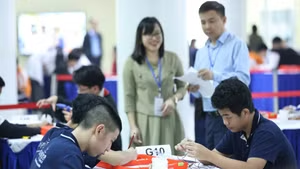
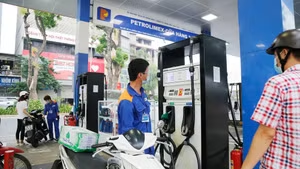
Regarding emission control, the Department of Construction has urged associations, manufacturers, importers, and maintenance service systems to proactively review and upgrade their facilities in preparation for participating in emissions testing for motorcycles and motorbikes under the new National Technical Regulation, which will take effect on June 30, 2026.
Following administrative mergers, Ho Chi Minh City now has more than 11 million motorcycles and motorbikes subject to emissions inspection. According to professional assessments, if emissions control is implemented rigorously, the city could reduce more than 56,000 tonnes of carbon gases and nearly 5,000 tonnes of hydrocarbons each year — figures that would make a significant contribution to improving air quality.
Ho Chi Minh City is facing an important opportunity to affirm its pioneering role in green transformation. The simultaneous deployment of clean-energy transport is not only an environmental solution but also a test of the city’s governance capacity, its ability to mobilise resources, and its long-term development vision — where economic growth is closely linked with environmental responsibility and the quality of life of its people.