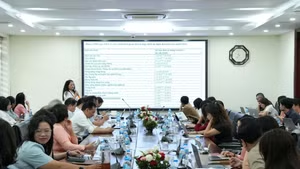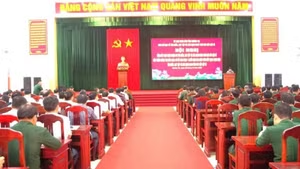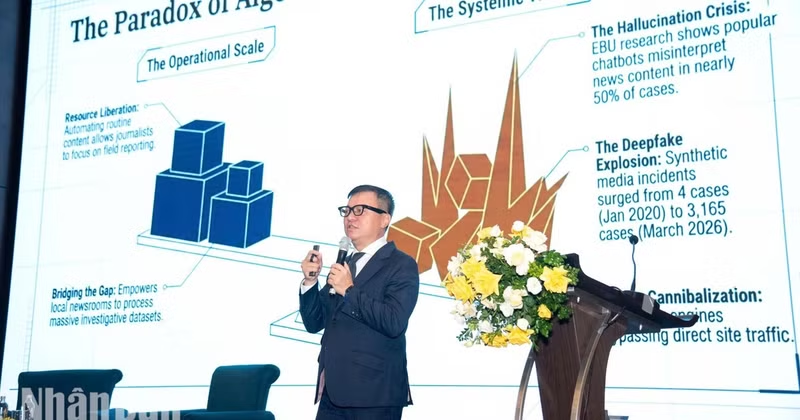
The forum was organised in Ha Noi by the Viet Nam Journalists Association in collaboration with the World Association of News Publishers (WAN-IFRA), bringing together more than 200 delegates, including leaders of regulatory agencies and news organisations, experts, researchers, and international AI speakers from the Americas, Europe, ASEAN, and Viet Nam.
In his opening remarks, Le Quoc Minh, Member of the Party Central Committee (PCC), Editor-in-Chief of Nhan Dan Newspaper, Deputy Head of the PCC’s Commission for Communication and Education, and Chairman of the Viet Nam Journalists Association, said AI was fundamentally changing the way people worked, studied, and accessed information, with journalism among the sectors being affected most rapidly.
“Journalism is not simply about technology, productivity, or the speed at which information is produced. Journalism is about truth, responsibility, and, above all, trust,” Le Quoc Minh stressed.
The Reuters Institute for the Study of Journalism’s report on AI and the future of news found that only 12% of surveyed members of the public felt comfortable with news generated entirely by AI, compared with 62% for news produced entirely by humans.
AI is opening new possibilities for journalism, ranging from analysing large volumes of documents, searching for data, and producing multi-platform content to supporting tasks such as transcription, proofreading, translation, and subtitle generation. However, AI cannot replace journalists when it comes to engaging with people, understanding their stories, verifying information, and taking responsibility before the public.
“Technology can generate content, but it cannot replace journalists’ professional ethics, political integrity, social responsibility, and humanity,” Le Quoc Minh said.
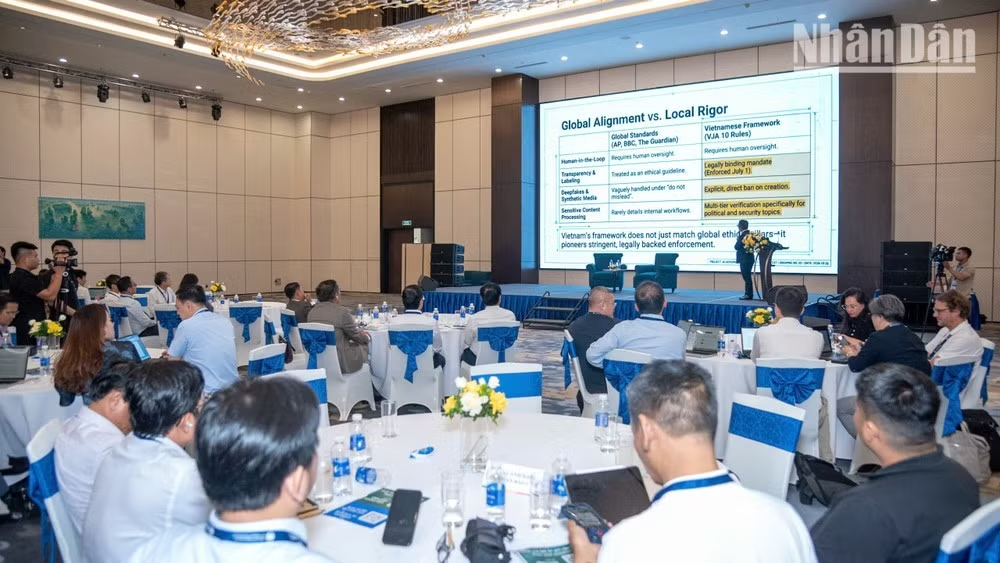
Discussions at the forum focused on how artificial intelligence is evolving from an individual support tool into an increasingly important component of news organisations’ operational systems.
From AI adoption strategies and the redesign of journalistic workflows to content production, distribution, and audience engagement, international speakers shared a range of practical models demonstrating how AI is profoundly changing the way newsrooms organise their work and serve the public.
One emerging trend receiving particular attention is agentic AI, which can perform sequences of tasks rather than simply provide answers to individual requests. AI agents can be used to automatically detect and flag news, monitor events, support information gathering, and carry out multiple stages of the journalism production process.
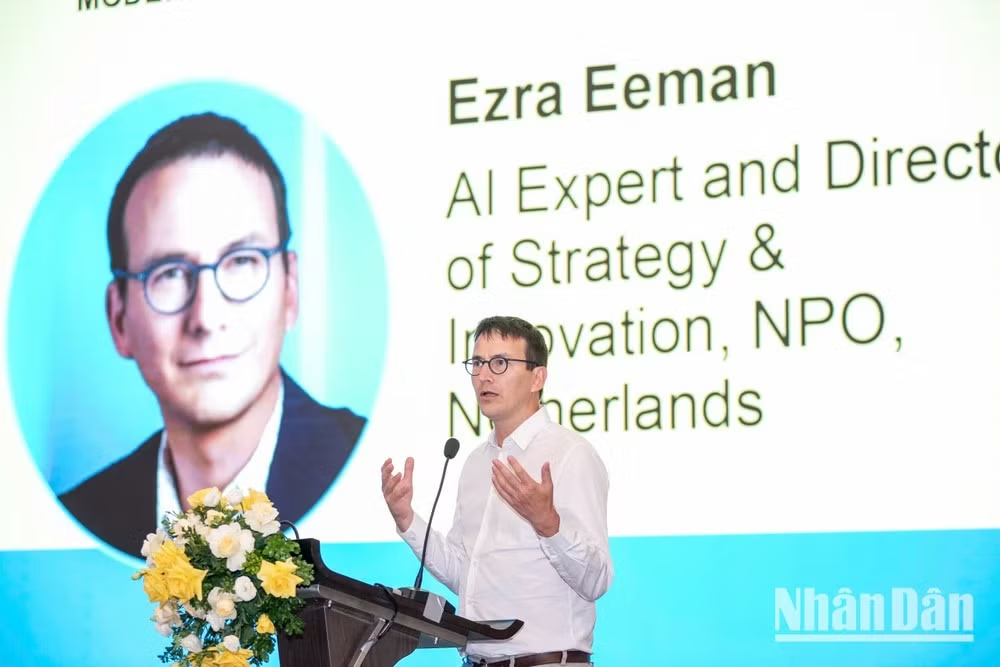
The 2026 WAN-IFRA Viet Nam Forum took place as Viet Nam steps up implementation of Resolution No. 57-NQ/TW on breakthrough development in science and technology, innovation, and national digital transformation.
Through international models and experience, together with domestic practices, the forum aims to help news organisations strengthen their capacity to apply AI while establishing a human-centred approach in which truth and trust remain the foundations of the transformation.