Not only have they enriched the craft through innovation and creativity, applying science and technology to develop imported flower varieties and propelling the traditional craft village forward, but local flower growers have also worked diligently to keep the flame alive by modernising tourism models to showcase family traditions, the craft village, and their ancestors’ production practices.
Last year, the Sa Dec ornamental flower-growing craft in Dong Thap Province was included in the national list of intangible cultural heritage. Its distinctive “soilless” cultivation method, together with the creativity of local people, has forged a unique character, helping to build Sa Dec ornamental flowers into a distinctive brand.
Developing hand in hand with tourism
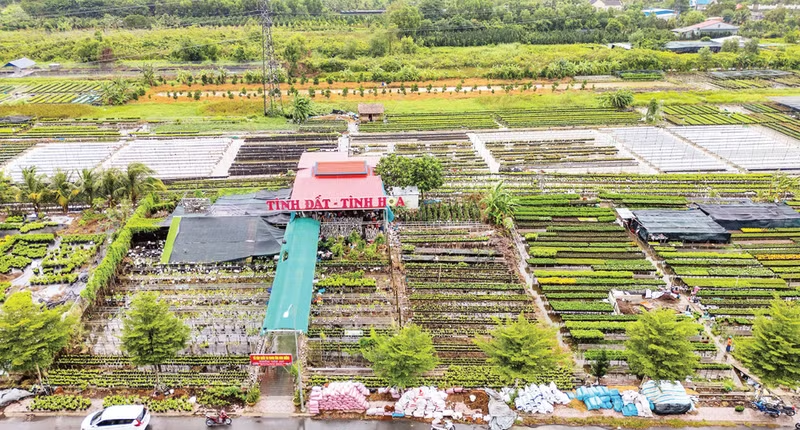
The Tan An Ornamental Flower Production and Supply Cooperative Group run by Dang Van Giau on Pham Huu Lau Street, Sa Dec Ward, has become an attractive photo destination that draws many visitors, particularly young people in Dong Thap.
This is the third year that Giau has transformed his model from purely ornamental flower production into a combination of production and ticketed visitor services, with the aim of increasing profits and promoting Sa Dec’s ornamental flowers to a wider audience.
The flower garden covers 3 hectares, including a 2-hectare area for sightseeing and flower appreciation, with both on-land and water-based check-in areas.
At the second Sa Dec Flower and Ornamental Plant Festival, Giau and members of the cooperative group prepared 200,000 flower pots for display at the festival, an increase of 70,000 pots from the previous event.
“Before the opening ceremony, I had finished displaying the picture made of flowers and leaves and the heart-shaped flag. The next day, many people came to take photos, and in the days that followed, visitors kept pouring in,” Giau said.
For visitors from afar, perhaps the most impressive sight in Sa Dec is the rows of flower beds standing in perfect alignment, 0.5 to more than 1 metre high, stretching endlessly across the water.
This is a traditional cultivation technique adapted to natural conditions. It helps reduce production costs and has been passed down through generations, contributing to the distinctive character of Sa Dec flower village.
The sight of farmers rowing boats between the flower beds to tend and water the plants has become a poetic feature of the landscape, serving both as a solution for adapting to nature and as a distinctive tourism attraction.
The flower beds embody not only cultivation techniques but also the life philosophy of the people in the Mekong Delta: relying on nature to survive and thrive. Growing flowers and ornamental plants on raised beds creates an airy environment, limits pests and diseases, and keeps the plants free from weeds.
“In the past, we made the frames from bamboo, which was not very durable and had to be replaced after about a year. Now we use metal, such as aluminium and steel, or plastic pipes. These structures can last for more than 10 years and are quick to install, but the investment cost is four to five times higher than for bamboo frames,” Giau said.
For many years, people in Sa Dec flower village have actively applied advances in science and technology to production.
Giau’s cooperative group is among the pioneers in using new tissue-cultured flower varieties, which offer outstanding advantages such as large-scale propagation, disease-free plants, uniform quality, good adaptability to weather conditions, high yields, lower costs, and greater economic efficiency.
“We are currently preparing 30,000 pots of tissue-cultured flowers. The plants are growing well and are ready to be supplied to the market for the upcoming Tet holiday,” Giau said.
Keeping the heritage alive
Identifying tourism as a key economic sector, Sa Dec Ward has focused on developing transport infrastructure for tourism and leveraging its distinctive cultural resources to promote tourism. In the past, farmers simply tended their flower pots and waited for traders to arrive. Today, the dual-purpose model of combining production with tourism has become the prevailing trend. Each garden becomes a stopping point, and each local resident a true tourism ambassador.
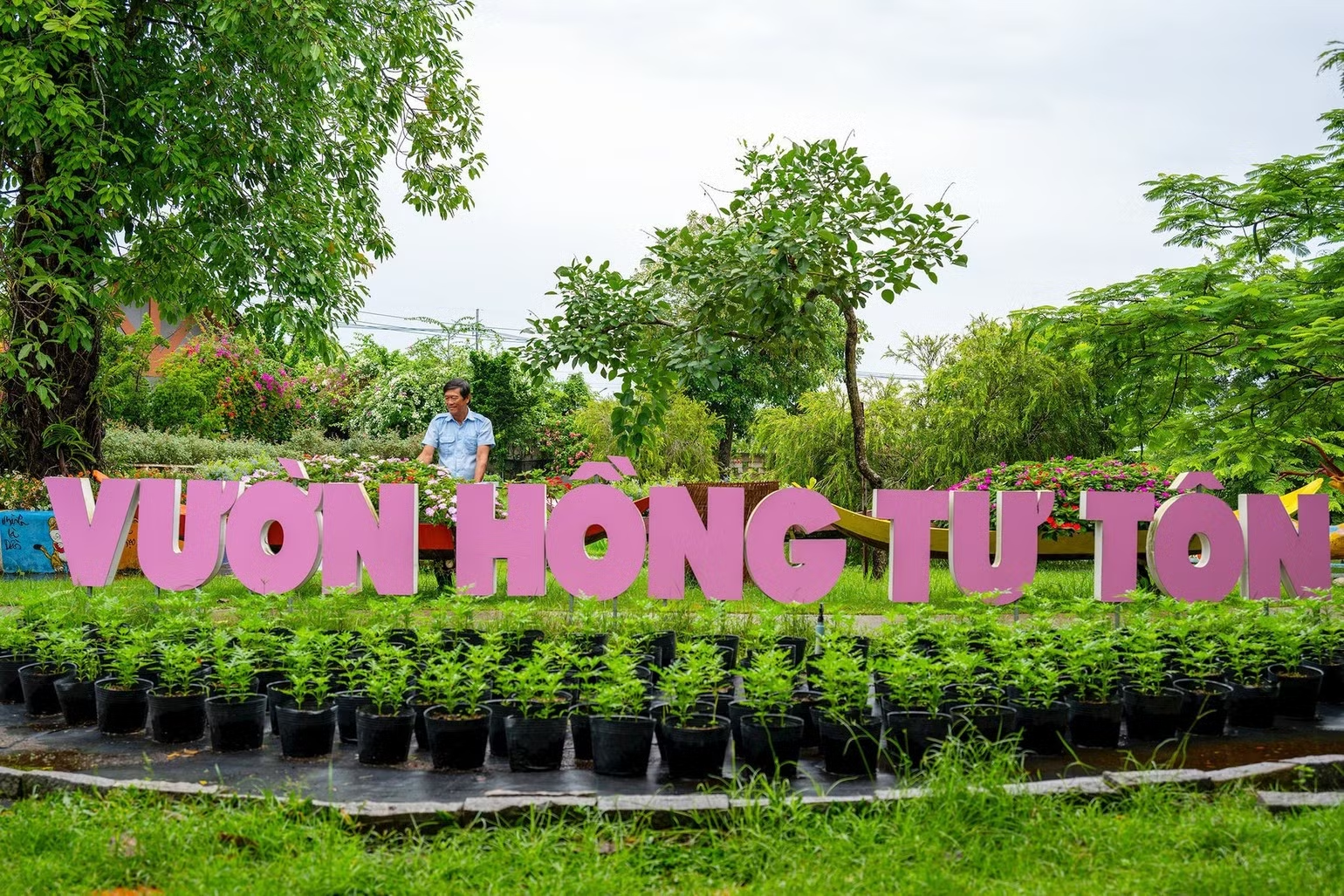
Located along Provincial Road 848, Tu Ton Rose Garden Tourist Area is truly a must-visit destination for those travelling to Sa Dec flower village. The tourist site is distinctive not only for its modern beauty but also for the unique cultural and spiritual values deeply rooted in the area.
In early 2020, Duong Van Que, the seventh son of Tu Ton, invested in recreating his father’s once-famous rose garden. The new Tu Ton Rose Garden is larger, but with the aim of faithfully and vividly recreating his father’s former garden, Que devoted considerable effort to conceptualising and redesigning the new garden in the style and spirit of the old one.
Covering nearly 4 hectares, Tu Ton Rose Garden features a range of new facilities and distinctive check-in spots. Alongside modern landscaping, visitors are also drawn to the rose garden, which features a wide variety of roses, from traditional Sa Dec varieties to old-fashioned and imported roses.
For Que, the development of the rose garden today is not primarily about commercial objectives but focuses first and foremost on preservation.
He has concentrated on recreating a miniature old-style home, with a cosy stilt house for receiving guests surrounded by colourful flower beds on raised frames.
“I recreated this heritage site primarily to tell the story of my family tradition, the craft village, and the production practices of our ancestors,” he said.
Although tourism is part of the business model, it is simply a way for Que to introduce the area’s traditional culture to visitors. His greatest goal remains preserving the legacy of his talented father and affirming the reputation of the Tu Ton Rose Garden brand.
Duong Van Que shared: “Since I switched to tourism, whenever I welcome people who used to be my father’s customers and hear them recount their memories and praise my father, I feel deeply touched. Through my father’s life, I have also come to understand that nothing matters more to successful tourism than affection and the genuine sincerity of the host towards guests. When people leave after many years and still come back, that is when you can truly say that you have succeeded in tourism.”
More than simply a flower grower, Duong Van Que is diligently keeping the flame alive for the heritage, ensuring that visitors to the garden see not only flowers but also experience the depth of its cultural heritage and his unwavering love for his family’s traditions.