In implementing Resolution No. 06-NQ/TW and adhering to the directive of the General Secretary and President — that “implementing the resolution is not the task of foreign affairs agencies alone, but of all Party committees, agencies, organisations, and localities” — many creative approaches have emerged in practice.
Spreading the image and values of Viet Nam
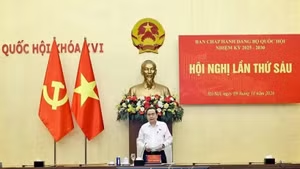
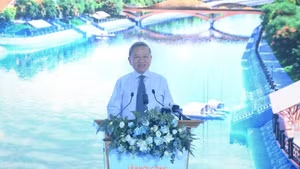
At the national conference dedicated to studying, grasping, and implementing Resolution No. 06-NQ/TW, General Secretary and President To Lam highlighted five key points, affirming that for the first time, foreign affairs have been defined as a “crucial and regular” task, alongside national defence and security. This marks a significant evolution in the Party’s leadership thinking.
According to the General Secretary and President, if the foreign policy of the 14th National Party Congress represents the crystallisation of the Party’s vision and political will, then the contents of Resolution No. 06-NQ/TW serve as a necessary and vital concretisation to realise that vision and will.
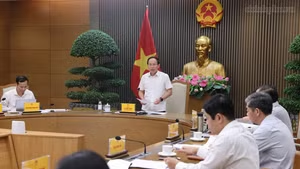
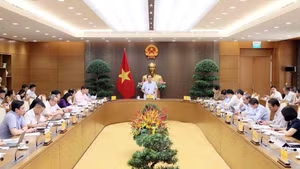
Implementing the resolution is a responsibility shared by all Party committees, agencies, organisations, and localities, not just foreign affairs bodies. During the recent 33rd Diplomatic Conference, numerous successful experiences and innovative practices highlighted the active contributions of localities in this field.
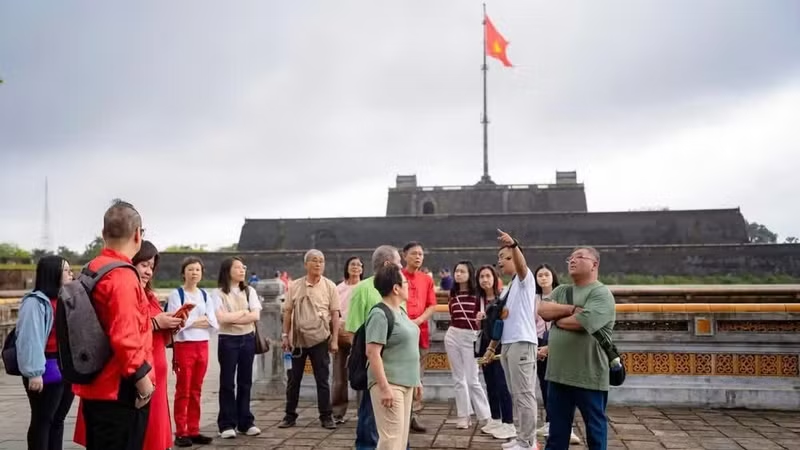
According to Le Tri Thanh, Deputy Secretary of the City Party Committee and Chairman of the Hue City People’s Committee, in an era where nations are increasingly linked to “soft power”, people-to-people diplomacy must go beyond serving as a bridge of friendship; it must become a key method for expanding cooperation and mobilising resources to drive development. Leveraging its unique strengths, the city of Hue views culture as a form of soft power, and heritage as a vital resource and a distinctive competitive advantage.
Capitalising on its status as a land that embodies the quintessential values of Vietnamese culture — boasting numerous sites recognised by UNESCO — Hue has actively expanded its ties with international organisations, sister localities, and heritage cities worldwide through cultural and heritage diplomacy.
In doing so, the city has acquired knowledge, management expertise, conservation technologies, and sustainable development models to advance its heritage urban development, implementing a policy shift in people-to-people diplomacy from mere “friendly exchanges” to “value-creating cooperation”, Hue has maintained and expanded partnerships across sectors such as heritage conservation, education, healthcare, environmental protection, green transition, science and technology, and sustainable urban development.
Through people-to-people diplomacy, the city has progressively connected with international organisations, non-governmental organisations, the overseas Vietnamese community, research institutes, universities, and development partners. The people of Hue — characterised by their friendliness, civility, and hospitality — serve as cultural ambassadors, helping to share the image of Hue and Viet Nam with the world and demonstrating that the power of people-to-people diplomacy originates within the community itself.
Furthermore, digital transformation has opened new horizons through heritage digitisation, multilingual media products, and online promotional platforms, bringing Hue’s cultural values closer to the international community. Drawing on Hue’s practical experience, the Chairman of the City People’s Committee emphasised that the effectiveness of people-to-people diplomacy in the new era is not measured merely by the number of exchange activities or signed cooperation agreements.
More importantly, it is gauged by tangible results, the efficacy of implemented programmes and projects, mobilised resources, shared knowledge, and the practical benefits delivered to the public. This approach has served as a consistent guiding principle in the effort to transform Hue into a distinctive heritage city of Viet Nam and a major regional hub for culture and tourism.
Solidifying the “security-development belt”
Lang Son Province’s Party committees and authorities have effectively balanced the relationship between cooperation and the protection of national interests; between opening for exchange and maintaining security and order; and between developing border trade and exercising strict border management.
General Secretary and President To Lam has outlined five major orientations for implementing the foreign policy of the Party’s 14th National Congress. One key direction is leveraging the pioneering role of external relations to prevent crisis risks early, from afar, and at their source, while shaping an international environment favourable to the country. A primary task in this regard is firmly consolidating a “security-development belt”.
Lang Son Province shares a border of nearly 232 km and serves as a vital gateway for trade between Viet Nam, China, and ASEAN nations. While this position offers significant development opportunities, it also necessitates a harmonious balance between cooperation and national interest protection, between openness and security maintenance, and between border trade development and strict border management.
Deputy Secretary of the Provincial Party Committee Vu Hoang Anh stated that the province regards external relations as a task involving the entire political system. Within this framework, Party diplomacy provides direction and establishes a foundation of political trust; state diplomacy translates policies and agreements into concrete cooperation programmes; and people-to-people diplomacy fosters friendship, understanding, and consensus among the populations on both sides of the border.
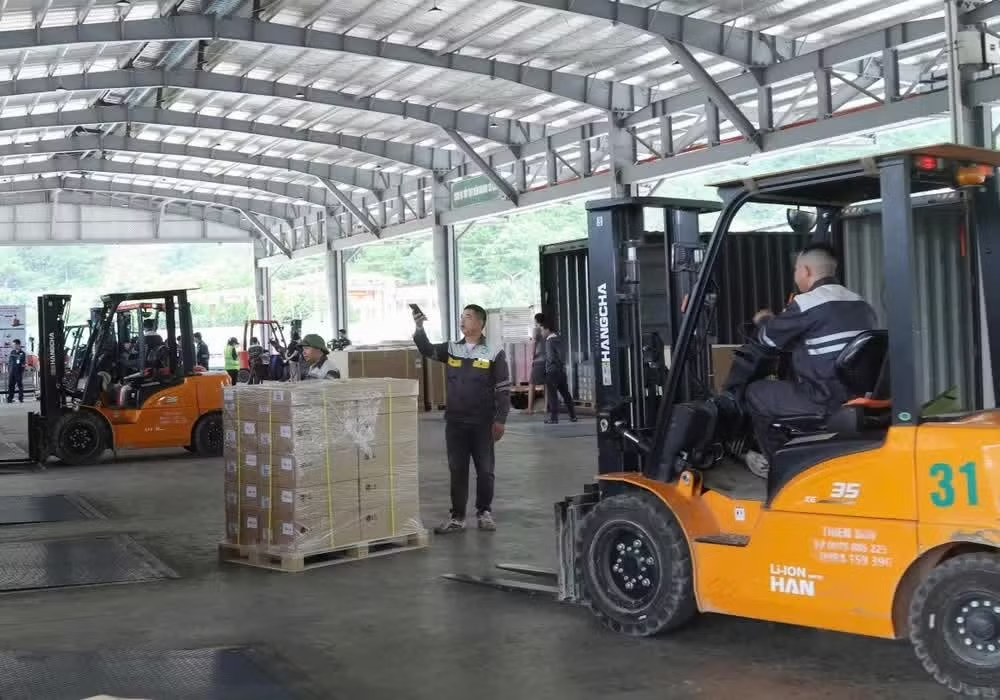
According to Vu Hoang Anh, the unified leadership of the Party committee ensures that the province’s external activities align with established orientations and safeguard national interests. Cooperation programmes are evaluated comprehensively, taking political, economic, defence, security, and external relations aspects into account.
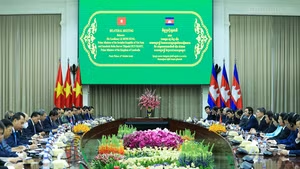
A notable highlight is the maintenance of the early-spring meeting programme involving the Party Secretaries of Lang Son, Quang Ninh, Cao Bang, Tuyen Quang, and Hai Phong and the Party Secretary of the Guangxi Zhuang Autonomous Region (China), alongside the Joint Working Committee meeting mechanism.
These local-level cooperation mechanisms play a significant role in the overall Viet Nam-China relationship, enabling direct dialogue between Party leaders, strengthening political trust, aligning cooperation directions, and facilitating the timely resolution of emerging issues.
Lang Son has maintained exchange and “sisterhood” models connecting localities, units, and residential clusters on both sides of the border. These initiatives help residents better understand each other's guidelines, policies, cultural traditions, and ways of life; they strengthen neighbourly bonds, raise awareness regarding compliance with border management agreements and regulations, and foster cooperation in protecting the border line and markers while maintaining security and order in residential areas.
Effective results have been achieved by closely integrating Party and people-to-people diplomacy with state and economic diplomacy — prioritising development and placing citizens and businesses at the centre. Efforts have focused on promoting the locality’s potential, advantages, and investment environment, thereby playing a key role in connecting partners and expanding markets, as well as coordinating to resolve obstacles in import-export activities and the cross-border flow of goods.
Lang Son’s experience demonstrates that for border areas, alongside administrative management mechanisms and the operations of competent authorities, ensuring long-term stability requires the consensus, trust, and voluntary participation of the people as a foundational element.
Residents who benefit from the outcomes of international cooperation become more active in protecting the border, maintaining friendly relations, and participating in grassroots-level external affairs activities. This makes a practical contribution to building a border region characterised by peace, friendship, stability, cooperation, and development, thereby firmly consolidating the nation's “security-development belt”.