The Decree came into effect on July 1, 2026 and garnered widespread attention from the artistic community. The move is seen as a necessary adjustment that will help alleviate the ongoing hardships faced by artists.
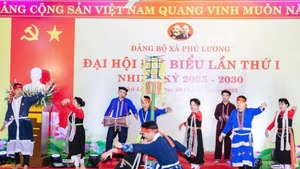
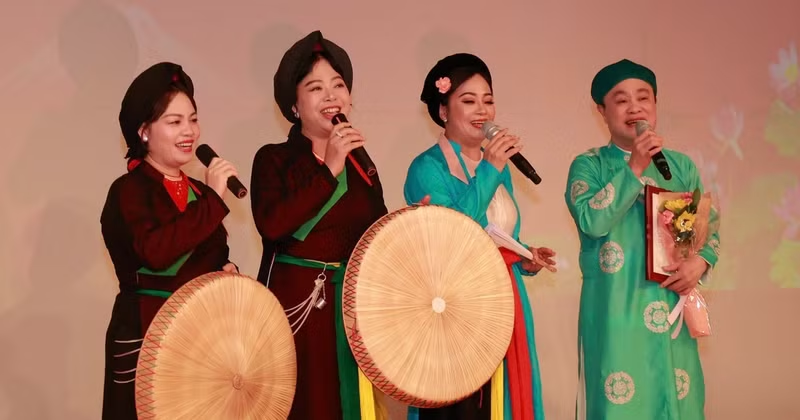
For many years, performing artists, particularly those working in traditional forms, have faced dual pressures: preserving their craft and maintaining professional standards while coping with limited incomes. Behind the stage lights are gruelling rehearsals, occupational injuries, and long performance tours away from home, presenting hardships that often go unseen.
Decree No. 261 concretises the view that culture is an intrinsic driver and that artists should be supported, nurtured and equipped with the conditions to contribute their talents. Beyond salaries, the policy also reflects a profound recognition of the unique nature of artistic labour.
Notably, the new policy has broad coverage. It applies not only to public servants and contractual employees at public performing arts institutions, but also to performing arts personnel serving in the People's Public Security Force and the People's Army. This inclusive approach reflects the realities of stage production. Producing a play or a programme depends not only on the performers on stage, but also on the many behind-the-scenes professionals, from sound and lighting technicians to costume, props, and stage crew.
With regard to occupational preferential allowances, Decree No. 261 introduces a two-phase roadmap. From July 1, 2026 to June 30, 2027, allowances will be applied for each group, ranging from 20–50%. From July 1, 2027 until the new salary regime comes into effect, the allowance rates will increase, with the highest reaching 60%.
The stratification acknowledges the varying demands of different art forms, with higher rates reserved for roles requiring advanced skills, greater physical intensity, higher occupational risks, or those requiring additional support to ensure the preservation of traditional art forms in a competitive environment.
The Decree also allocates occupational allowances for holders of the titles People's Artist and Meritorious Artist, with further increases from July 2027. Meanwhile, artists working in border, island, mountainous, and other disadvantaged areas will also receive additional support. This reflects the policy's human-centred approach, recognising long-standing contributions while extending solidarity with those working far from major centres, where opportunities for performance and access to culture remain limited. In addition to regular allowances, the Decree introduces training and performance allowances linked directly to the intensity of artistic work.
The most immediate impact of Decree No. 261 is the improvement of both regular income and earnings linked to professional activities. However, the more significance is to reflect a shift in management thinking, recognising the performing arts as a specialised profession that requires a remuneration system capable of attracting and retaining highly skilled talent.
For public arts institutions, the Decree provides an important basis for stemming the brain drain, particularly at a time when the private sector and the entertainment industry offer increasingly attractive career opportunities.
However, the policy will realise its full potential only if it is implemented transparently, reaches the intended beneficiaries, is promptly delivered, and linked with a healthy creative environment.
Financial support should go hand in hand with commissioning mechanisms, investment in new performances, expanded performance opportunities, the training of the next generation of artists, and audience development. When artists are given the opportunity to create, performances are able to thrive, and theatres have the resources to operate effectively, the new policy will serve as a catalyst for broader development.