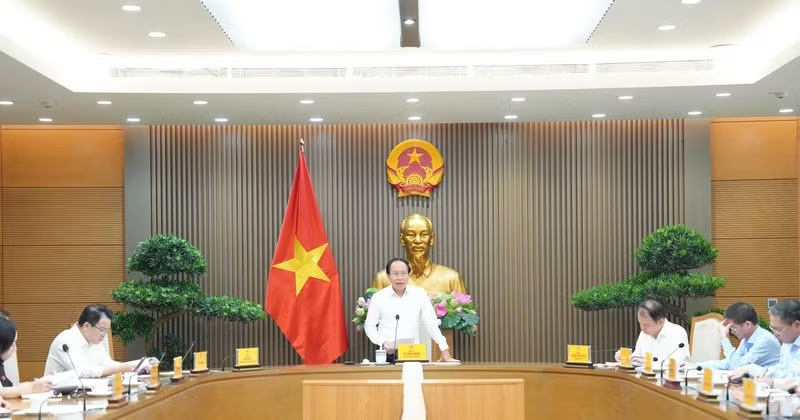
The Ministry of Justice said the review provides an important basis for identifying and addressing bottlenecks in the legal system, contributing to institutional reforms and meeting development requirements in the new period.
Basically, ministries, agencies and localities have identified the scope of documents subject to the comprehensive review and initially pinpointed regulations that remain problematic, inadequate, contradictory or overlapping. Reports and appendices have largely been prepared in line with Guidance No. 06/HD-BCD issued by the Steering Committee for the Comprehensive Review of the Legal Document System on April 22.
Of the more than 43,000 documents reviewed, nearly 13,000 have been preliminarily identified for further study and possible amendment, supplementation, replacement or annulment.
The ministry noted that the initial results provide an overview of the existing legal system and serve as a basis for agencies to further scrutinise the findings and propose specific solutions for each document.
However, shortcomings remain. Some ministries, sectors and localities have yet to clearly identify specific provisions requiring action, provide sufficient legal and practical grounds, or clarify links between the reviewed documents and related regulations. In some cases, the criteria, grounds and roadmap for review have also not been consistent with guidance.
The Ministry of Justice is drafting a Government report on the implementation of the comprehensive review for submission to the National Assembly Standing Committee.
It has recommended that the Government and Prime Minister continue to direct ministries, agencies and localities to ensure the quality and progress of the review, with heads of agencies and local administrations taking responsibility for the results.
The ministry stressed that the review must identify and resolve legal bottlenecks in each sector and locality, helping unlock resources and build a comprehensive, consistent legal framework conducive to national development.