Greater responsibility for declared data
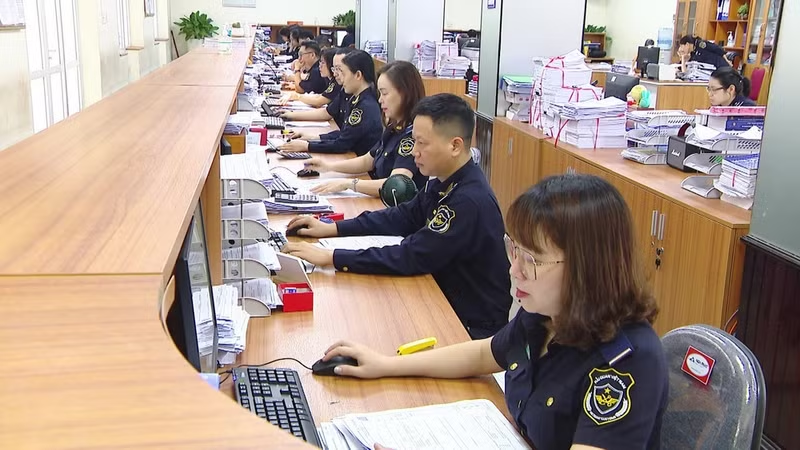
Centralised customs clearance is not simply a matter of transferring documents from multiple locations to a single processing point. The model involves the digitalisation of documents, the exchange of information through the system, and changes in the way customs authorities and businesses coordinate with each other.
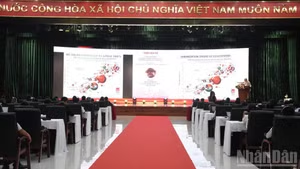
At a recent seminar entitled “Centralised customs clearance – A driver of digital transformation in the customs sector”, organised by VOV, Dao Duy Tam, Head of the Customs Management Supervision Division under the Customs Department, said the model aims to raise businesses’ awareness of voluntary compliance with the law.
Under the model, businesses make their own declarations and assume responsibility for the information declared and documents submitted to customs authorities in digital form. This is an important requirement as the receipt and processing of dossiers and the exchange of information are carried out through information technology systems.
The digitalisation of documents helps businesses reduce the time needed to prepare customs declaration dossiers. However, for dossiers to be processed smoothly, the declared information must be accurate and consistent with the documents included in the customs dossier.
According to Dao Duy Tam, the application of technologies such as artificial intelligence and big data aims to ensure consistency between declared information and information contained in supporting documents, improve accuracy and reduce errors during the declaration process.
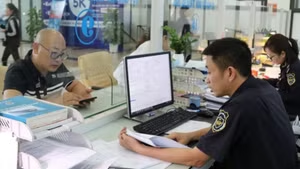
Data exchange between customs authorities and businesses is carried out through the system. Within the customs authority, coordination and information exchange between the customs clearance team, border-gate customs offices and professional divisions are also basically conducted through information technology systems.
Dao Duy Tam stressed that businesses must make their own declarations and assume responsibility for the information declared and documents submitted to customs authorities in digital form, while ensuring consistency between the declared information and the documents included in the customs dossier.
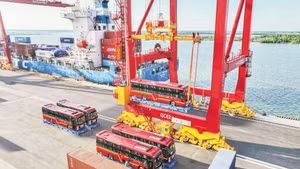
Pham Thi Thuy, representing VinFast Manufacturing and Trading JSC, which regularly handles large volumes of imports and exports, said that the combination of digitalised documents and centralised processing had helped accelerate the circulation of electronic dossiers. Shipments with complete and accurate documentation are processed more quickly.
The establishment of a single processing point also helps ensure a more consistent, professional and convenient customs clearance process for shipments. Businesses no longer have to spend significant time dealing with different agencies and departments when addressing issues and exchanging information.
According to the company representative, stability, transparency and processing speed are key concerns. When declaration processing times are shortened, businesses can reduce warehousing and storage costs, optimise delivery schedules and take a more proactive approach to production planning.
Shifting to centralised processing on a digital data platform also helps reduce direct interactions and minimise problems that may arise, thereby contributing to greater transparency in the procedural process.
Coordinated preparation of technology and human resources
Alongside data standardisation, businesses need to prepare the necessary conditions to connect and exchange information with customs authorities.
Dao Duy Tam said that when new procedural models are introduced, businesses’ methods and procedures will change. As customs authorities’ information technology systems are gradually being upgraded, businesses must also prepare their infrastructure, technical systems and technology to meet requirements for data connectivity and exchange.
In addition to technical infrastructure, businesses need to provide training and improve the professional and technical expertise of staff handling customs procedures. Businesses should coordinate with customs authorities through training programmes and briefings on regulations and policies to gain a better understanding of the objectives behind policy development as well as operational procedures.
A thorough understanding of policies and procedures helps businesses minimise difficulties during implementation. At the same time, businesses should provide input during the drafting of legal documents to gain a clearer understanding of policy objectives and operational procedures, thereby reducing difficulties in implementation.
Business participation has also been a focus of the Customs Sub-Department of Region III since preparations for the pilot phase. According to Truong Binh An, Deputy Director of the Customs Sub-Department of Region III, since November 2025, the unit has organised conferences to disseminate regulations, provide legal guidance and conduct business surveys.
Feedback and recommendations from businesses have been collected to develop plans and refine implementation procedures. Before the model officially began operations, the unit continued to provide information on its organisational structure and implementation methods, helping secure consensus and participation from the business community.
According to Truong Binh An, interaction and communication among businesses, customs officials and customs authorities are among the factors contributing to the success of the model, promoting and facilitating trade.
In the coming period, the customs sector will gradually expand the digitalisation of documents to other localities. The Customs Department also plans to work with ministries and sectors to have licences, licensing information and specialised inspection results submitted through the National Single Window, enabling the system to receive and process them and reducing the need for businesses to submit paper documents.
This process will continue to require businesses to standardise information, prepare connectivity infrastructure, improve staff expertise and take greater responsibility for declared data when carrying out procedures under the centralised customs clearance model.