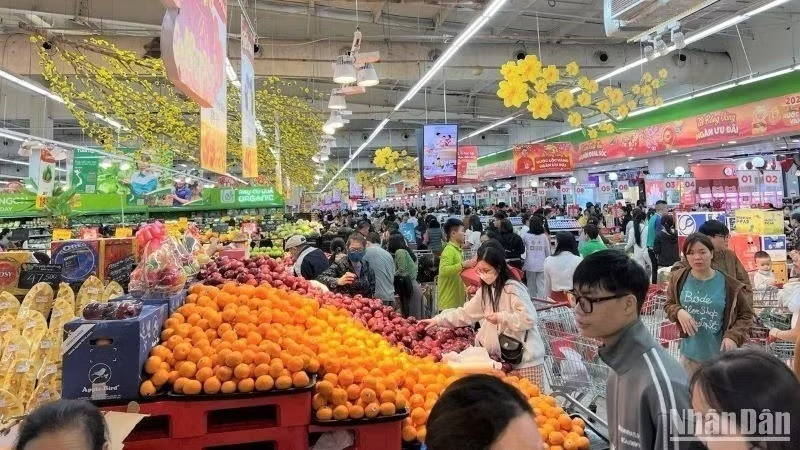
This marks the highest growth rate recorded over the past five years, reflecting a rapid recovery in purchasing power and growing consumer confidence in the domestic market, as well as support for domestically produced goods under the “Vietnamese people prioritise using Vietnamese goods” campaign.
Notably, nationwide, Viet Nam has expanded, upgraded and modernised its distribution infrastructure, with around 1,300 supermarkets and 280 shopping centres currently in operation. At the same time, e-commerce platforms and social media commerce have grown strongly, with transaction value reaching 32 billion USD, accounting for about 12% of total market revenue.
These factors have helped enhance the shopping experience for consumers, gradually becoming a key driver enabling the domestic trade and retail sector to make breakthroughs and improve its competitiveness against foreign retailers. They have also strengthened the resilience of the domestic retail market against global fluctuations, reflecting the vitality of an economy transitioning from traditional to modern models, while facilitating supply chain organisation, regional linkages and product consumption connectivity.
However, there remain shortcomings that prevent Viet Nam’s retail market from achieving truly sustainable development. Chief among these is the uneven development of distribution networks.
In rural areas, lower incomes mean consumption still relies largely on traditional channels such as small local markets, where service quality and customer experience remain limited. Logistics infrastructure and electronic payment systems are still incomplete and inefficient; administrative procedures remain cumbersome; rental costs are high; and human resources are weak.
Although the competitiveness of domestic retail enterprises has improved, it still lags behind that of foreign-invested companies in terms of scale, financial capacity, adoption of modern technologies, and corporate governance. Unfair competition, the widespread presence of counterfeit and substandard goods, a lack of market transparency, and ineffective consumer protection also constitute major barriers, leaving the domestic market vulnerable.
To address these constraints, state management agencies need to swiftly simplify and reform administrative procedures to reduce business costs; continue investing in logistics, transport, and electronic payment infrastructure, particularly in remote and disadvantaged areas; and strengthen market supervision to combat counterfeit goods and protect consumers.
For retail enterprises, greater encouragement is needed to adopt hybrid online–offline business models, expand into under-served areas, improve service quality, and invest in workforce training.
Logistics companies, meanwhile, should step up investment in digitalisation, optimise transport routes, develop regional cold storage facilities, and strengthen links with distribution centres to cut costs and enhance efficiency in supporting retail activities, in line with retail market development strategies.
These efforts will contribute to building a sustainable and transparent domestic trade market that better meets consumer demand and enhances the resilience of the internal market amid global uncertainties.