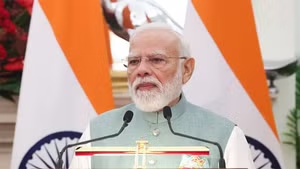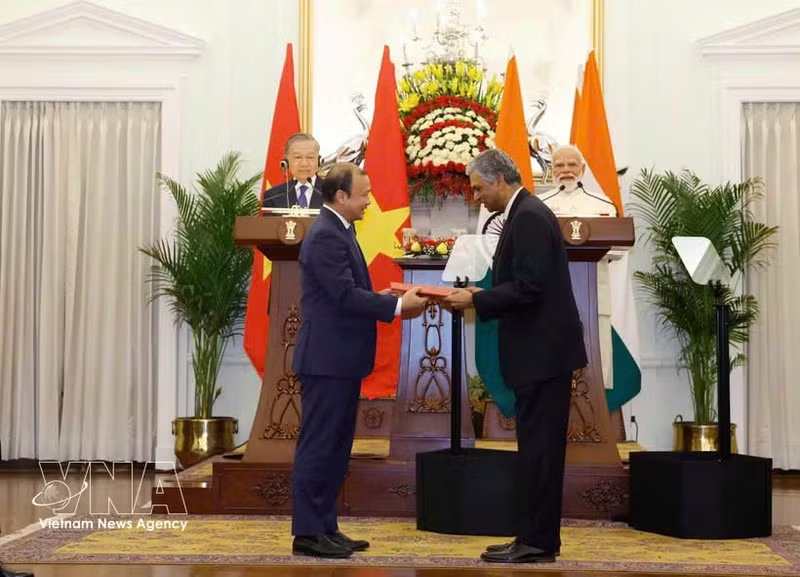
In an interview with Viet Nam News Agency correspondents in New Delhi, Pradhan noted that the elevation of bilateral ties to an Enhanced Comprehensive Strategic Partnership reflects the increasingly deep convergence of geopolitical, economic, maritime and civilisational interests between the two countries.
The former security adviser said the visit carried strategic significance in four key aspects.
First, the visit institutionalised a higher level of cooperation, upgrading bilateral ties from sector-based cooperation to a more comprehensive and sustainable strategic alignment.
Second, bilateral cooperation has expanded significantly beyond the traditional defence pillar into emerging areas such as AI, fintech, digital payments, pharmaceuticals, semiconductors, rare earths and cultural preservation.
Third, the visit demonstrated the strong convergence between the two countries on maritime issues and the Indo-Pacific vision. Viet Nam’s participation in the Indo-Pacific Oceans Initiative (IPOI) was seen as an important step, reflecting a shared commitment to peace, freedom of navigation, resilient supply chains and a regional order based on international law.
Fourth, the two sides reaffirmed their determination to deepen economic cooperation, with the goal of raising bilateral trade to 25 billion USD by 2030, expanding market access for agricultural products and strengthening investment, production and logistics linkages.
According to Pradhan, General Secretary and President Lam’s engagements with the business community in Mumbai showed that Viet Nam places great importance on the private sector and seeks to boost cooperation in future strategic sectors such as AI, clean energy, logistics, data centres and research and development.
According to the former official, the most important factor in translating the commitments made during the visit into reality is the establishment of effective implementation mechanisms with clear roadmaps and high-level monitoring arrangements. Both sides also need to promote direct air connectivity between major economic centres, strengthen supply chain linkages, encourage private sector investment and improve the business environment.
He also suggested that the two countries should further enhance cooperation in regional and global forums such as Association of Southeast Asian Nations, the United Nations and Indo-Pacific frameworks, while promoting people-to-people exchanges, tourism, education and spiritual tourism routes to build a sustainable social foundation for bilateral relations.
Pradhan stressed that the true success of the visit would be measured by the ability to turn agreements and memoranda of understanding into concrete projects in the areas of defence, trade, technology and connectivity. If implemented effectively, Viet Nam-India relations could become one of the most important bilateral relationships in Asia.