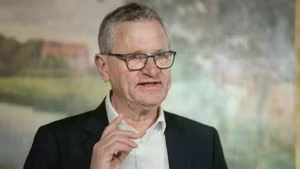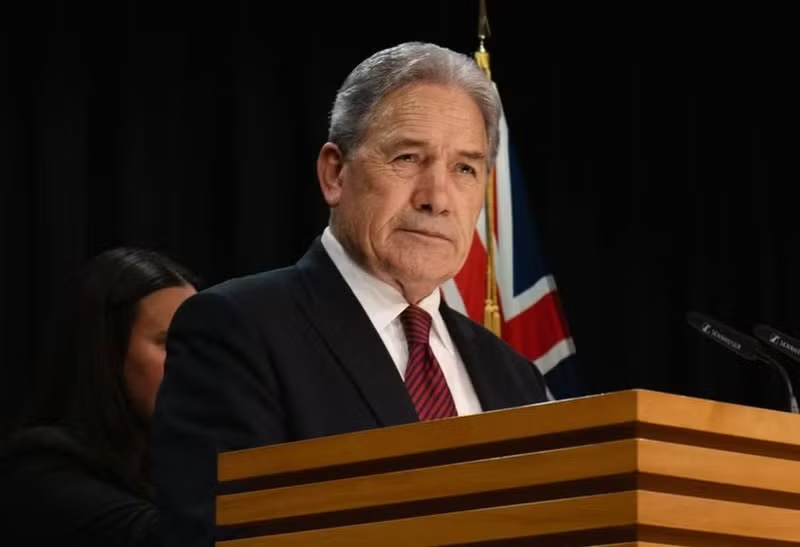
On the occasion of the state visits to Australia and New Zealand from August 9-14 by General Secretary of the Communist Party of Viet Nam Central Committee and State President To Lam, New Zealand Minister of Foreign Affairs Winston Peters spoke with a Viet Nam News Agency (VNA) correspondent in Oceania, sharing insights on significant development steps in bilateral relations and expectations for the visit.
The following is the full text of the interview.
Reporter: Party General Secretary and State President To Lam’s State visit to New Zealand comes amid significant changes in the Indo-Pacific region and the wider world. How do you expect the visit to strengthen bilateral relations, particularly in areas where the two countries have complementary strengths?
Minister of Foreign Affairs Winston Peters: This is a significant visit – the first State visit to New Zealand by a President of Viet Nam since 2007. It comes at an important point in a relationship built over more than 50 years through trade, education, development cooperation, security ties and links between our people.
In 2025, New Zealand and Viet Nam elevated our relationship to a Comprehensive Strategic Partnership. The next task is straightforward: make sure the words are followed by action.
Our strengths are complementary. Viet Nam brings scale, rapid growth, a major manufacturing base and increasing regional influence. New Zealand brings expertise in agriculture, education, health, science and technology. Together, those strengths create opportunities for businesses, institutions and people in both countries.
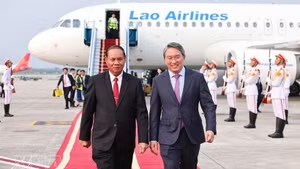
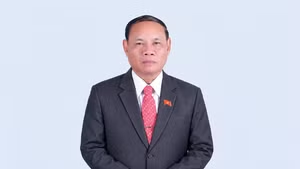
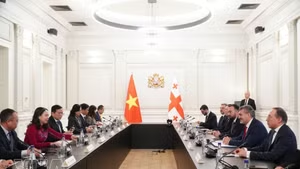
Party General Secretary and State President Lam’s visit reflects that focus. It includes leaders’ talks, business engagement and events highlighting our education and cultural ties, and will advance cooperation in trade and investment, technology, agriculture, defence and security.
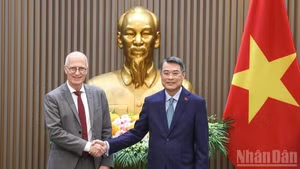
At Foreign Ministers’ level, we look forward to meeting Le Hoai Trung again. We met in Viet Nam in November 2025, and we are pleased to return the warm welcome we received there. Our discussions will cover the bilateral relationship, the Indo-Pacific, and wider international issues.
In a less certain world, the relationship between New Zealand and Viet Nam matters. We share an interest in regional stability, open markets, international law and a rules-based system. This visit will keep the relationship relevant, forward-looking and focused on results.
Reporter:What strategic areas of cooperation should Viet Nam and New Zealand prioritise to ensure that the Comprehensive Strategic Partnership delivers tangible benefits for both nations’ people while contributing positively to regional and international cooperation?
Minister of Foreign Affairs Winston Peters: Our priorities are clear. Trade and economic integration must remain at the heart of the Comprehensive Strategic Partnership. Two-way trade has risen 72% in five years to 3.41 billion NZD. We can build on that progress by improving market access, reducing non-tariff barriers and making greater use of the CPTPP, RCEP and AANZFTA.
Education has long been a foundation of the relationship and a bridge between our people. It has created generations of friends, families and colleagues. The 56% increase in New Zealand government scholarships for Vietnamese students, covering study from secondary to postgraduate level, reflects our commitment to Viet Nam’s development.
The Education Forum during the visit will bring institutions from both countries together and showcase New Zealand as an innovative, high-quality education partner.
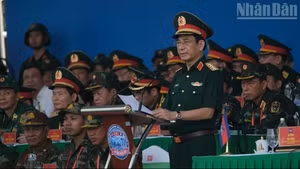
Our defence and security cooperation is also growing. We can work more closely on peacekeeping, maritime domain awareness, demining, transnational crime, and women, peace and security.
Climate-resilient agriculture is another area where New Zealand can contribute practical expertise. New Zealand-backed work in the Mekong Delta has helped lift farmer profits and cut rice emissions by 50%. Further cooperation can support Viet Nam’s low-emissions rice ambitions and help farmers adapt to a changing climate.
We should also develop opportunities in agricultural, health and education technology, artificial intelligence and the digital economy. These areas will increasingly shape our prosperity and resilience.
Reporter:New Zealand has long attached importance to ASEAN and the Indo-Pacific region. How do you assess Viet Nam’s role in New Zealand’s regional engagement and what opportunities are there for the two countries to strengthen coordination in addressing shared regional and global challenges?
Minister of Foreign Affairs Winston Peters: Viet Nam is an important regional partner for New Zealand. As ASEAN Country Coordinator for New Zealand, it has been a strong supporter of our relationship with ASEAN and it backed the establishment of the ASEAN-New Zealand Comprehensive Strategic Partnership in 2025. That matters because New Zealand has been an ASEAN partner for more than 50 years, so that puts us in sound standing for the next 50 years.
ASEAN helps keep the region stable and gives countries a forum to deal with real problems. Viet Nam plays an important role in keeping New Zealand’s engagement responsive to ASEAN’s priorities, including the ASEAN Community Vision 2045 and sustainable development in the Mekong sub-region.
There is considerable scope for New Zealand and Viet Nam to do more together – on maritime security, transnational organised crime, cyber threats, artificial intelligence and digital technologies, disaster resilience and climate-smart agriculture.
We also share an interest in open markets, international law, and a region where small and medium-sized countries have the same right as large countries to have the rules respected.
The Indo-Pacific is becoming more contested and less predictable. That is all the more reason for countries like New Zealand and Viet Nam to work together, speak plainly, respect the rules, and focus on practical cooperation that strengthens our security and prosperity.
Reporter: Thank you very much for your interview!