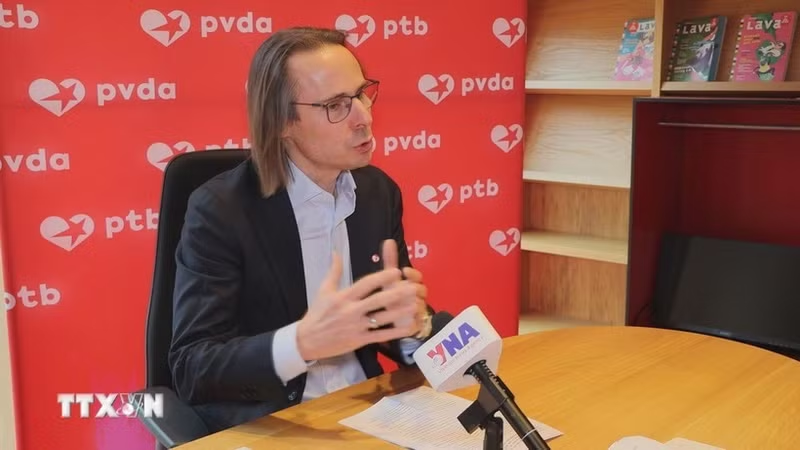
In an interview with Viet Nam News Agency correspondents in Brussels, Pestieau praised Viet Nam for successfully balancing economic growth with human development, poverty reduction, the preservation of strategic autonomy, and proactive, in-depth integration into global value chains. He said these achievements are reflected in the country’s strong growth indicators and the sharp decline in poverty rates in recent years, yet Viet Nam’s development model and poverty reduction experience remain insufficiently recognised internationally.
Recalling his Viet Nam visit in 2002, the Belgian party official said he was impressed by the strong sense of collectivism, the spirit of service to the people and the nation, and the readiness to make sacrifices among Vietnamese cadres. These values, he said, continue to inspire progressive forces around the world.
He stressed that the Communist Party of Viet Nam (CPV) has repeatedly affirmed its values, identity and leadership capacity throughout history, particularly through its leadership during the struggle against US imperialism in the 1960s and 1970s. That struggle, he said, was not only a war of national liberation for Viet Nam but also a powerful symbol for national liberation movements worldwide.
According to Pestieau, the Vietnamese people’s struggle under the CPV’s leadership received broad international support, especially from progressive youth movements at the time. Viet Nam’s victory demonstrated that a small nation, with a clear-sighted path and strong national unity, could defeat a major military and economic power, he noted.
Commenting on the significance of the 14th National Congress of the CPV, Pestieau said the most notable aspect was its ambitious development vision. The orientations focus on promoting economic growth alongside human resource development, fostering innovation, proactively responding to climate change, and pursuing an active foreign policy aimed at preventing conflict and building international relations based on mutual respect and shared development. These directions, he said, reflect the Party’s long-term and comprehensive vision for leading Viet Nam into a new era of sustainable and responsible development.
Regarding relations between the CPV and the PTB, Pestieau noted that from the PTB’s early days, Viet Nam’s victory in national liberation and President Ho Chi Minh's thought served as a major source of inspiration for young students who founded PTB. Viet Nam’s victory, he said, remains a lasting source of spiritual strength for those striving for a fairer world.
Looking ahead, he assessed prospects for ties between the two parties as positive, citing their shared commitment to serving the people, strengthening international solidarity, promoting socio-economic progress, protecting the environment, and safeguarding peace.
Amid increasingly complex regional and global developments, Pestieau underscored the importance of strengthening links among political parties and progressive forces to uphold peace, stability and international cooperation, based on respect for the UN Charter, international law, and national sovereignty and territorial integrity.