According to the Viet Nam Domestic Market Report 2025 released by the Agency for Domestic Market Surveillance and Development under the Ministry of Industry and Trade, these results clearly reflect the recovery of domestic consumption and growing consumer confidence.
Matthew Powell, Director of Savills Ha Noi, noted that the core drivers of this growth stem from structural factors, particularly demographics and rising household incomes. As Viet Nam moves closer to the upper-middle-income threshold, consumers are spending more on retail, education, dining, and lifestyle services. This is creating a sustainable source of demand for the market, not only in the short term but also over the medium and long term.
He added that the current period marks a very vibrant cycle for Viet Nam’s retail market. Expansion demand is coming from a wide range of brands, including both international and domestic names. The market is also becoming more sophisticated, with the parallel development of e-commerce, traditional retail, shopping centres, and home delivery models.
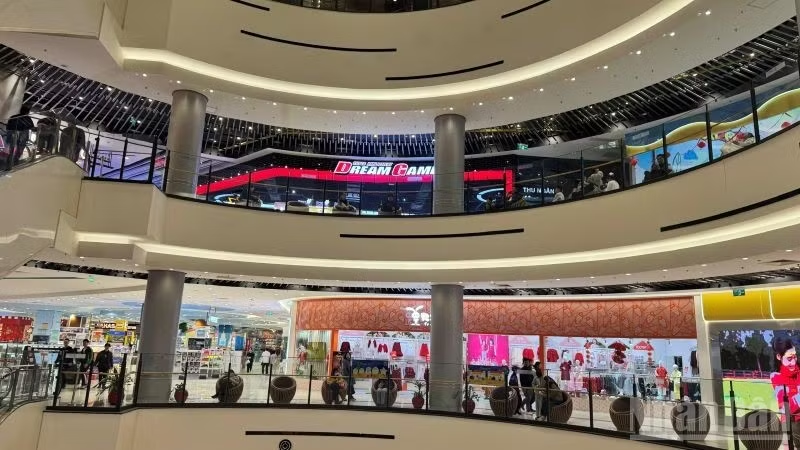
In addition, urbanisation and changes in consumer behaviour are playing an important role. Retail is increasingly moving beyond its traditional function as a place to shop, evolving into a space for experiences, social interaction, and everyday activities. This trend is particularly evident among younger consumers, including Gen Z and Millennials, who currently account for around 60–70% of customers at urban shopping centres. As a result, shopping malls, retail streets, and mixed-use developments are benefiting significantly, especially where retail is integrated with dining, entertainment, and community activities.
Technology and digital platforms continue to be key supporting factors. E-commerce is expanding rapidly thanks to high smartphone and internet penetration, improving accessibility and convenience for shoppers. However, online channels are seen as complementary rather than a complete replacement for physical retail. Many brands are adopting omnichannel retail models, leveraging digital platforms to enhance efficiency and strengthen connections with their traditional store networks.
Finally, a positive macroeconomic environment continues to reinforce growth momentum. Strong FDI inflows, improvements in the legal framework, and a favourable business environment are contributing to job creation, higher incomes, and stronger consumer confidence, all of which are fundamental drivers of the retail market.
In the period ahead, retail growth in Viet Nam is expected to remain stable, supported by long-term drivers rather than short-term factors. The market is gradually shifting towards higher-quality retail models that prioritise experience and satisfy the increasingly sophisticated demands of urban consumers.