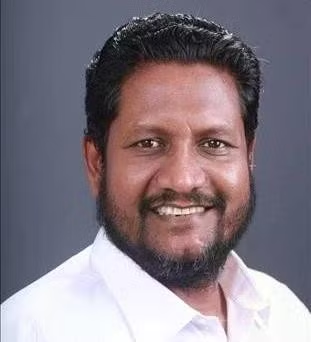
Talking with Viet Nam News Agency correspondents in New Delhi, Devarajan said Viet Nam’s decision to place people at the centre of development, link economic growth with social progress, and harness advanced technologies in the national interest reflects a “mature and confident approach,” helping the country avoid the traps of financial and technological dependence that plague many developing economies.
According to him, reform is no longer a policy of the past but has evolved under the CPV leadership into a comprehensive, dynamic, and adaptive process of renewal, in which technological self-reliance, productivity gains, and digital transformation are laying groundwork for a modern, self-reliant, and inclusive economy.
Devarajan also praised the 14th Party Congress for placing environmental protection on an equal footing with socio-economic development. Amid rapid industrialisation and urbanisation, he warned that growth without ecological safeguards would inflict long-term damage on both people and nature.
Viet Nam is not pursuing a development model at the expense of coming generations, he said, adding that this ecological awareness is essential to achieve goals through 2030 and its vision to 2045.
He further noted that more emphasis on foreign affairs and global integration reflects Viet Nam’s growing global stature. A proactive, independent, and balanced foreign policy, he said, would allow Viet Nam to expand its development space, access global resources, technology and knowledge, while firmly safeguarding national interests.
The Indian scholar also highlighted the Congress’s reaffirmation of culture and people as the core drivers of development, describing them as critical sources of soft power, social unity, and national identity. Ongoing cultural exchanges and people-to-people diplomacy, he added, would sustain Viet Nam’s positive international image and reinforce international solidarity.
A key point stressed by the scholar was the elevation of Doi Moi (renewal) policy into a theoretical framework with lasting ideological significance. He described this as clear proof of the CPV’s capacity for self-renewal, self-criticism, and the creative application of Marxism–Leninism under new conditions.
In his view, the CPV’s proactive updating of its thinking, embrace of modern technologies, and adoption of new governance approaches within a socialist framework would enhance the realism and vitality of Viet Nam’s development path. He voiced confidence that the goals outlined in the draft documents of the 14th Congress are “both realistic and achievable” as they build on the Doi Moi successes while accurately reflecting current challenges at home and abroad.
About key priorities for the next five years, Devarajan called for building a clean, transparent, and accountable system of governance, with anti-corruption efforts serving as a cornerstone to maintain public trust and ensure social justice.
He urged Viet Nam to narrow social and regional disparities through inclusive growth that converts economic gains into concrete social benefits, alongside expanded healthcare access, better nutrition, and reinforced social safety nets, especially in rural and vulnerable communities.
Another priority should be given to improving the quality of officials and civil servants through training, technological adoption, and public service ethics, he said. Finally, he placed special emphasis on engaging the youth in innovation, creativity, and national construction, asserting that genuine youth involvement would maintain long-term development momentum and strengthen democratic practices within the socialist framework.
Devarajan expressed optimism that CPV leadership will steer the Congress's orientations and priorities toward sustainable development, greater social equity, and elevated international standing, while continuing to serve as an inspiration for progressive movements in developing nations worldwide.
![[In Pictures] General Secretary and President To Lam and his spouse visit and present books to Royal Library of Belgium](https://en-cdn.nhandan.vn/images/3NY4Z6Du1Md1PrS_s0ZZOrwc5xDfq4rRua69depr-TBkwatGjBcD9lagzrI2BmGDo4nKYA9qjKDjuB3-yYloL_1KbNBr00klMZQFyHQxQ6Jq6GzFfAiY0m5agKw6jNtArN4QnVntX8RQeUmD7pdCq7nwvn3e235v3kufpokBN_s/1-tong-bi-thu-chu-tich-nuoc-va-phu-nhan-tham-tang-sach-cho-thu-vien-hoang-gia-bi.jpg.avif)