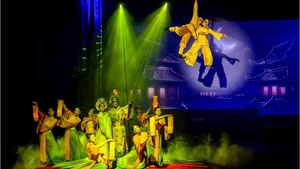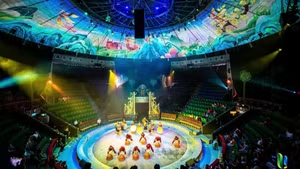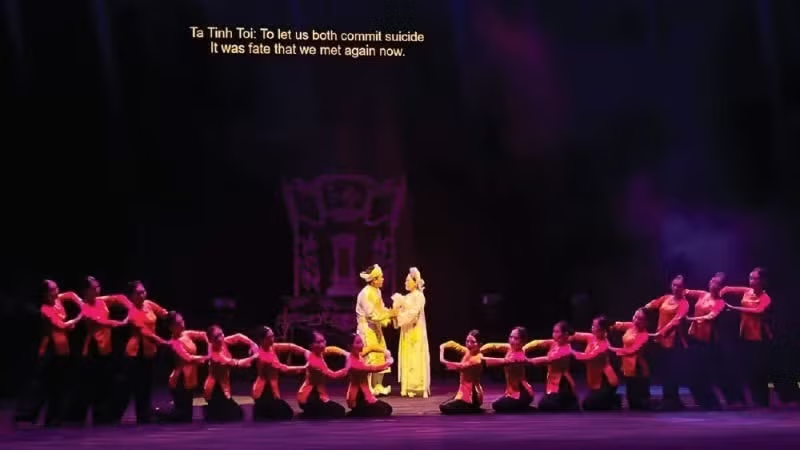
Many theatres continue to operate according to familiar practices: staging and performing productions in runs, then putting them into storage once their performance schedules end. Links between theatre and tourism, education, communications, technology and other creative industries remain fragmented, making it difficult to extend the life cycle of productions, broaden their audiences and build sustainable value chains.
Recent developments in Ha Noi and Ho Chi Minh City point to a broader approach. Ha Noi is focusing on developing the market for cultural products, expanding spaces for performing arts and bringing heritage values into contemporary life. Ho Chi Minh City has identified performing arts as one of eight cultural industries prioritised for development by 2030, alongside cinema, fine arts, photography, exhibitions, advertising, cultural tourism and fashion.
This shows that, alongside investment in individual productions, it is necessary to build a comprehensive theatre ecosystem. Productions should remain at the centre, but be connected with production, distribution, promotion, education, tourism, technology and copyright exploitation, enabling artistic value to be translated into social and economic value.
To achieve this, theatre needs to broaden the range of professionals involved in the creation and exploitation of productions. In addition to directors, actors, writers, designers and musicians, there should be producers, communications specialists, brand managers, copyright lawyers and market development experts. Involving these professionals from the outset will help each project clearly identify its target audience, performance venues, distribution methods and potential for development after its premiere. Theatre spaces should also be viewed more flexibly.
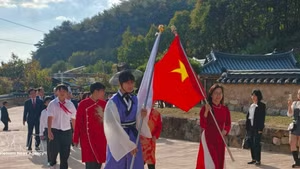
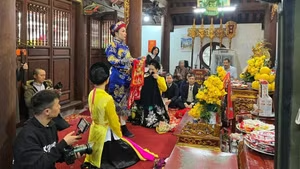
Beyond theatres, productions can reach heritage sites, museums, pedestrian streets, schools, industrial parks, tourist destinations and digital platforms. This would expand the market and help theatre regain the close connection with community life that it once enjoyed. In this process, technology should become a tool for creativity, management and distribution, rather than being used solely for promotion.
Data can help theatres identify audience demand, habits and spending capacity, while online ticketing systems can make access easier. Digital archives can support the preservation, introduction and exploitation of productions. Alongside technology, copyright and related rights must be established from the earliest stages of a project. This is not only essential to protecting creative work, but also provides a foundation for theatre companies to engage more deeply in the cultural industry market.
Audiences are another crucial link that requires greater attention. Taking school students to theatres, organising exchanges and backstage experiences, or developing versions tailored to different age groups can both contribute to arts education and cultivate future generations of theatre-goers.
Businesses and the tourism sector should be involved from the product development stage, jointly researching audience demand and ways to organise and exploit productions, rather than appearing only as sponsors.
In addition to creating a favourable framework for public-private partnerships, transparent socialisation of resources and commissioning artistic works based on clear criteria, the State should continue to address obstacles related to taxation, venues, performance facilities and the use of public assets.
Support should focus on unlocking creative potential, developing markets and encouraging efficient operating models, rather than maintaining subsidy-based mechanisms or fostering dependence and reliance on State support.
With comprehensive engagement from all stakeholders, theatre can both help preserve traditional artistic values and serve as a bridge between spiritual and economic value, national identity and the competitiveness of Viet Nam's cultural industries, meeting the development requirements of the new era.