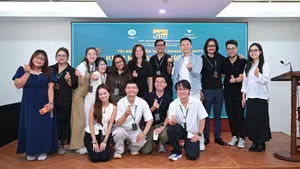
In mid-May, CNA Creative Arts was launched in Ha Noi, envisaged as a pioneering unit aiming to develop the musical theatre and dance sectors in a comprehensive way. Alongside providing training in vocal performance, acting and dance to nurture musical-theatre talent, CNA Creative Arts also organises discussions, artist exchanges and programmes that bring musical theatre into schools, among other activities.
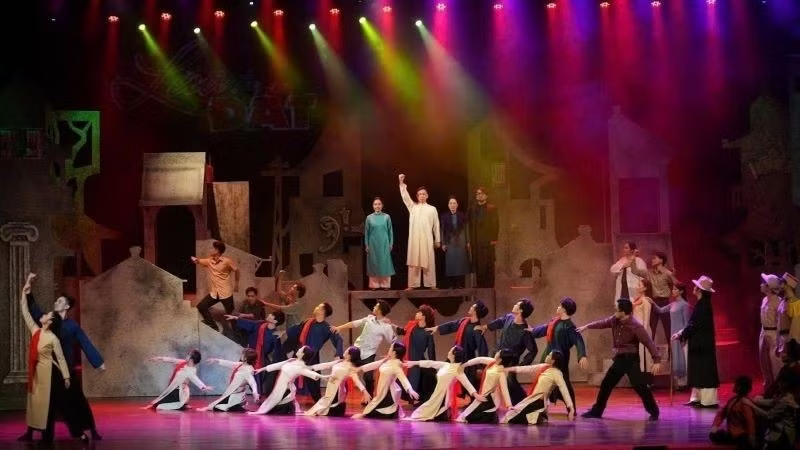
Over the past decade or so, Vietnamese musical theatre has seen a number of new productions, such as Tien Nga (Fairy), De Men Phieu Luu Ky (Diary of a Cricket), Tam Cam, Thuy Tinh – Dua Con Thu 101 (Thuy Tinh – The 101st Child), Nguoi Cam Lai (The Driver), Lua Tu Dat (Fire from Earth), and Giac Mo Chi Pheo (Chi Pheo’s Dream).
Several of these works have left a deep impression and won significant art prizes. Giac Mo Chi Pheo secured an Excellence Award at the National Music and Dance Festival 2024 and triumphed in the Essence of Stage category at the Tinh Hoa Viet (Vietnamese Essence) 2025 Awards. Meanwhile, Lua Tu Dat was honoured with the 2025 Bui Xuan Phai – For Love of Ha Noi Award.
Although the number of productions has increased, the number of genuine success stories remains limited; regular performance venues for musicals are still scarce; and the market for musical theatre has yet to take clear shape.
Yet the recent progress of Vietnamese musical theatre has largely been driven by individual efforts rather than forming a strong current. Although the number of productions has increased, the number of genuine success stories remains limited; regular performance venues for musicals are still scarce; and the market for musical theatre has yet to take clear shape.
Meritorious Artist Cao Ngoc Anh, founder of CNA Creative Arts, said Viet Nam has the advantage of drawing on the achievements already accumulated by countries that have gone before. However, what should be learned is the production process, training methods and professional management, while the “soul” must still be Vietnamese culture.
According to her, one of the biggest gaps in Vietnamese musical theatre today is training and human-resource development. Viet Nam does not yet have a standard curriculum for musical-theatre training.
Not only are performers who can master singing, acting and dance skills in short supply, but Vietnamese musical theatre also lacks playwrights and directors.
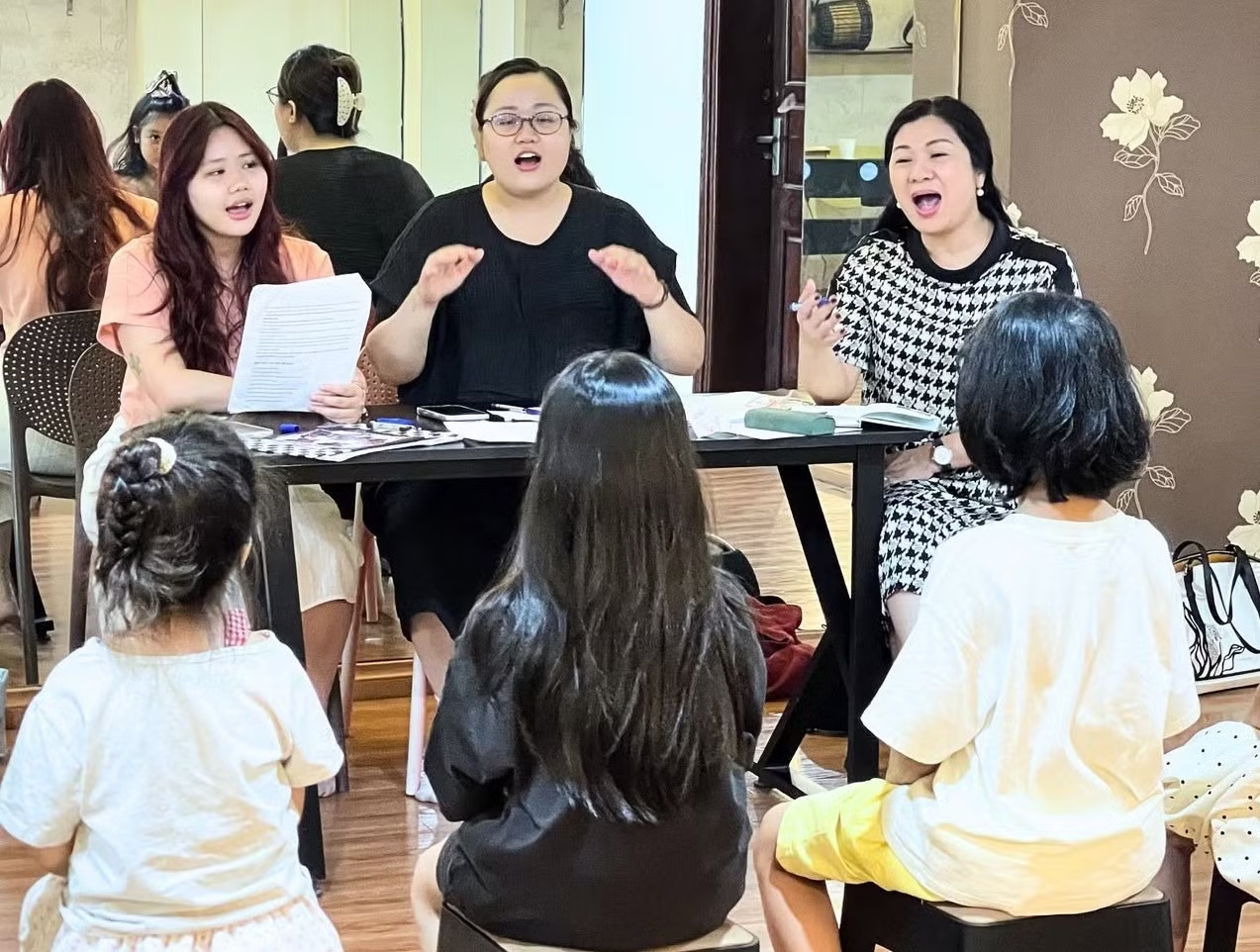
In many productions, Ngoc Anh and her colleagues still have to adapt stage scripts into musical scripts themselves, while also working with composers to build a suitable musical structure.
There is also the challenge of the market, as most Vietnamese audiences still do not fully understand or have the habit of enjoying musicals.
In this context, the issuance of Resolution No. 80-NQ/TW on the development of Vietnamese culture, with its orientation towards developing the cultural industries, mobilising social resources and encouraging innovation, gave her added motivation to establish CNA Creative Arts, as an effort to help fill the missing links in Viet Nam’s musical-theatre ecosystem.
Serving as both general director and musical director of Giac Mo Chi Pheo, composer Duong Cam said that for a successful “made in Viet Nam” musical, the key is to know how to retell Vietnamese cultural material in a contemporary language.
The next “key” is for music to become the language of the musical itself. To attract large numbers of young audiences, the melodies need to be appealing, easy to listen to, easy to sing along to and suitable for sharing on social media, while still preserving Vietnamese identity.
For a successful “made in Viet Nam” musical, the key is to know how to retell Vietnamese cultural material in a contemporary language.The next “key” is for music to become the language of the musical itself.
Composer Duong Cam
In addition, the stage and production techniques must meet international standards; performers must be able to sing and act, rather than simply be singers providing musical illustration.
According to composer Duong Cam, for Vietnamese musical theatre to develop sustainably, a synchronised set of solutions is needed, including building a well-structured musical-theatre training programme, strengthening international cooperation in training, creating mechanisms for commissioning and long-term funding of high-quality works, encouraging businesses to invest in culture through tax incentives, and developing a system of dedicated performance venues.
The State and cultural funds could also establish programmes to encourage the adaptation of Vietnamese literary works into musicals, both to preserve heritage and to create productions with a distinct identity.