The city currently has 25 museums, including 14 public museums — nine under the Ho Chi Minh City Department of Culture and Sports and five administered by central government ministries and agencies — as well as 11 privately operated museums.
Integrating technology into museum exhibitions
In recent years, many museums have proactively transformed the way they present Viet Nam's cultural and historical heritage, creating richer, more engaging, and more emotionally resonant experiences for visitors.
The Southern Women's Museum is among the pioneers in applying digital technology to museum exhibitions. Nguyen Quoc Chinh, Deputy Director of the Southern Women's Museum, said that in October 2020 the museum officially opened a modern technology-enabled exhibition gallery. Its exhibition system was designed with scalability in mind, allowing additional artefacts to be incorporated into 3D presentations as resources become available. This demonstrates the museum's adaptability and determination to modernise its exhibitions while providing visitors with a richer, multi-sensory experience.
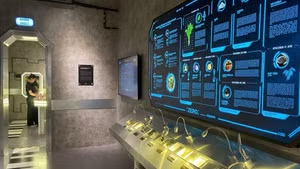
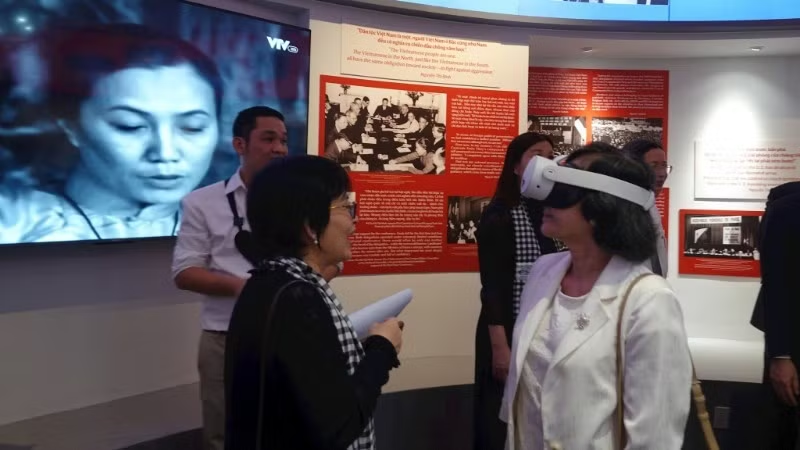
Meanwhile, the War Remnants Museum is one of Viet Nam's most visited museums, attracting large numbers of visitors throughout the year, the majority of whom are international tourists. Guided by its mission to preserve historical memory and promote peace, the museum has increasingly embraced technology to enhance its exhibitions. It has introduced virtual reality and immersive simulations to recreate historical settings, including a reconstructed prison inside a shipping container using sound and lighting effects to provide visitors with a powerful and distinctive experience.
The Ho Chi Minh City Museum of Fine Arts is also experimenting with the digitalisation of national treasures, using virtual reality (VR) technology and artificial intelligence (AI)-powered animation. These innovations are expected to bring the nation's treasured artworks closer to the public while attracting more visitors through contemporary and engaging storytelling.
According to Nguyen Minh Nhut, Deputy Director of the Ho Chi Minh City Department of Culture and Sports, the city's museums have diversified and modernised both their content and methods of operation by displaying more original artefacts and applying scientific and technological solutions to make exhibitions more informative and appealing, thereby attracting a broader audience.
Museums have also introduced new ways of engaging the public by designing dedicated educational programmes for school pupils and university students, while implementing cultural heritage education initiatives in schools, museums, and heritage sites through innovative approaches. These efforts have made a significant contribution to meeting the cultural needs of both domestic and international visitors.
Public outreach and the promotion of cultural heritage have likewise evolved. Museums are now actively showcasing their collections across a wide range of social media platforms. Many have also developed 3D virtual tours, enabling audiences to explore exhibition spaces remotely and broadening access to cultural heritage, especially for younger audiences and overseas visitors.
To date, the city's museums have digitised 249,319 artefacts and image records in two-dimensional formats — including photographs, archival materials and documentation — and created three-dimensional digital records for 2,176 artefacts and historical objects.
In addition, museums have gradually expanded the digitalisation of the various categories of cultural heritage under their care, including artefacts, antiquities, relics, and specialised collections. To date, the city's museums have digitised 249,319 artefacts and image records in two-dimensional formats — including photographs, archival materials, and documentation — and created three-dimensional digital records for 2,176 artefacts and historical objects.
Bringing the arts into museums
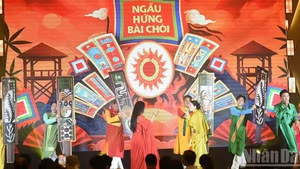
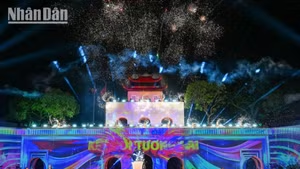
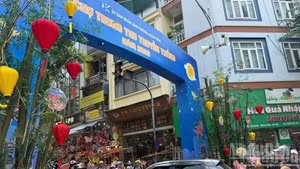
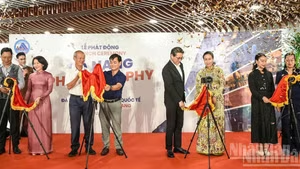
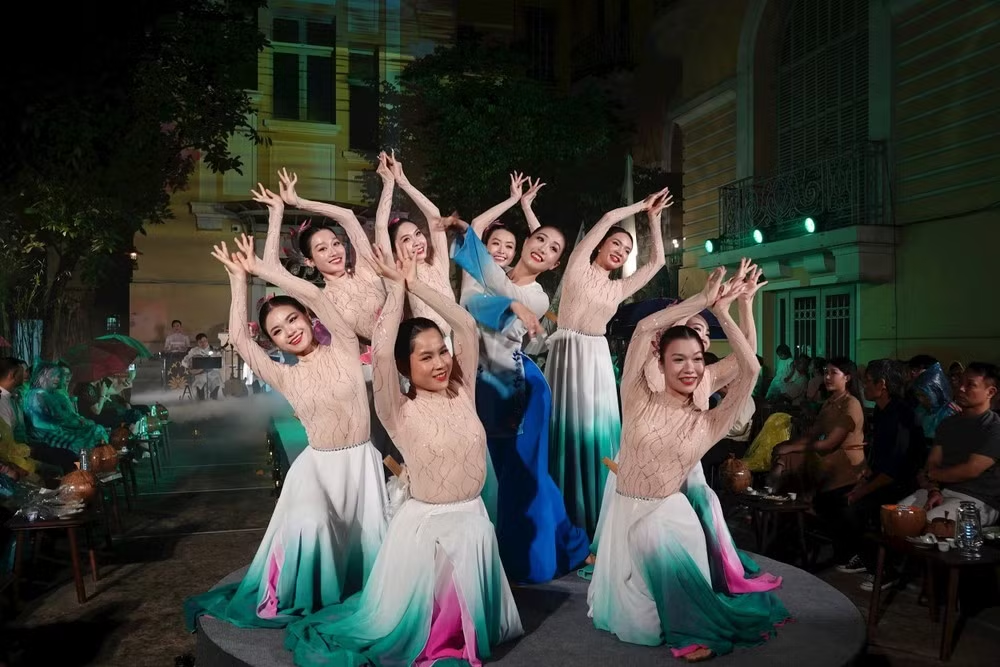
Alongside digital transformation, many museums have actively collaborated with organisations and individuals to stage distinctive cultural and artistic events that have injected new vitality into museum spaces. A number of major city festivals — including the Ao Dai Festival, Tourism Festival, River Festival, and Viet Nam–Japan Festival — have incorporated museum venues into their programmes. This has not only enriched the festivals themselves but also helped introduce museums to a wider audience of domestic and international visitors.
As part of these festivals, some museums have become venues for showcasing traditional Vietnamese cuisine to international guests, while others have served as ideal settings for presenting the beauty of Viet Nam's traditional costumes to both local audiences and overseas visitors.
Drawing on years of international cooperation, the Ao Dai Museum has evolved into a unique cultural meeting place where stories of Viet Nam's heritage are shared through sincerity, a deep appreciation for the ao dai, and a spirit of openness towards friends from around the world. The museum regularly hosts exhibitions, performances, educational activities, and artistic exchanges to attract visitors. Through each cultural event, it has become a modest yet enduring bridge that brings people together, narrows cultural distances, and fosters greater mutual understanding.
Huynh Ngoc Van,
Director of the Ao Dai Museum
According to Huynh Ngoc Van, Director of the Ao Dai Museum, the institution's international partnerships have helped establish it as a distinctive cultural destination where Vietnamese heritage is celebrated through authentic storytelling, the elegance of the ao dai, and meaningful cultural exchange. The museum regularly organises exhibitions, performances, educational programmes, and artistic exchanges that continue to draw increasing numbers of visitors.
A representative of the Ho Chi Minh City Department of Tourism said that with more than four million museum visits annually, the city's museum network is steadily reinforcing its role as one of the most valuable resources for the development of cultural tourism. Museums are not only places where cultural heritage is preserved, safeguarded, and promoted, but they also provide the foundation for developing distinctive tourism products that enrich visitors' experiences.
A representative of the Ho Chi Minh City Department of Tourism said that with more than four million museum visits annually, the city's museum network is steadily reinforcing its role as one of the most valuable resources for the development of cultural tourism. Museums are not only places where cultural heritage is preserved, safeguarded, and promoted, but they also provide the foundation for developing distinctive tourism products that enrich visitors' experiences.
By breathing new life into museums through artistic programmes that celebrate Viet Nam's rich cultural identity, these institutions have revitalised their activities while also contributing to the growth of the city's night-time economy through the promotion of its unique cultural heritage.