Speaking at the opening ceremony, Nasly Isabel Bernal Prado, Ambassador of Chile to Viet Nam, said that through Chilean Film Week, the embassy hoped to give Vietnamese audiences a deeper insight into Chile, including its territory, memory, cultural expressions, tensions, emotions, and the way the country views the world. She added that the embassy wanted to present a diverse, humane, and modern Chile.
Chilean Film Week 2026 in Ha Noi features three films, to be screened on September 10, 24, and 29, offering different perspectives on Chilean life and culture. The films range from works by filmmaker Diego Soto to the famous biographical film “Violeta Went to Heaven,” directed by renowned Chilean filmmaker Andres Wood.
The films explore passion, crises, everyday life, and the complex relationship between reality and artistic creation. Through the directors’ discerning eyes, audiences will travel through Chile’s diverse landscapes and communities, from urban settings to coastal towns and rural areas bearing the rich imprint of the country’s history and culture.
Ambassador Nasly Isabel Bernal Prado highlighted Violeta Parra, one of the most important figures in Chilean culture. As a singer, musician, folklorist, and visual artist, Violeta Parra collected, preserved, and transformed folk, rural, and local traditions, representing a highly creative, free, and deeply critical female voice.
She expressed her belief that Violeta Parra’s image could resonate strongly with Vietnamese audiences, as both Chile and Viet Nam value memory, traditions, folk music, and the ability to preserve national identities even during difficult periods in history.
She added that the film painted an authentic portrait of Violeta Parra, covering her experiences, love, sorrows, and, above all, her extraordinary artistic legacy.
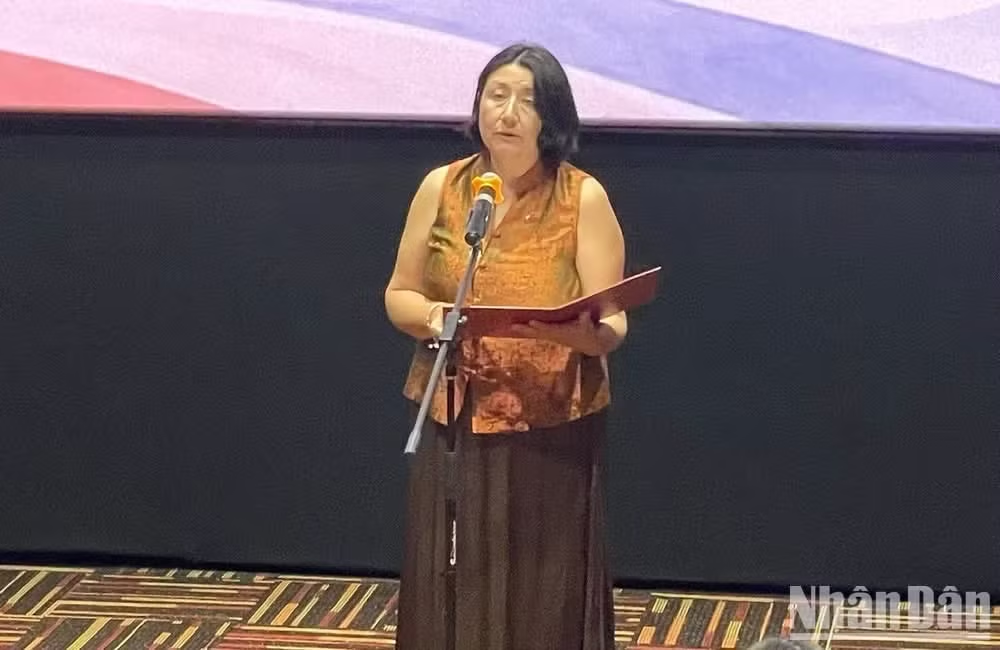
Chilean Ambassador to Viet Nam Nasly Isabel Bernal Prado. (Photo: KHAC KIEN)
Through Chilean Film Week, audiences will find in Chilean cinema not only stories about Chile, but also shared emotions and questions across cultures: memory, identity, family, territory, artistic creation, and human dignity.
Cinema allows audiences to approach different cultures through stories, emotions, and human experiences, thereby opening a door to a country’s history, identity, and imagination, even when viewers do not yet have a deep understanding of that country.
Films become a bridge connecting viewers with personal stories that often address broader social issues. They can also provide a first encounter with another country, from which curiosity, dialogue, and new forms of connection may emerge, including learning a foreign language, exploring literature, travelling, studying, conducting research, or imagining future projects together.