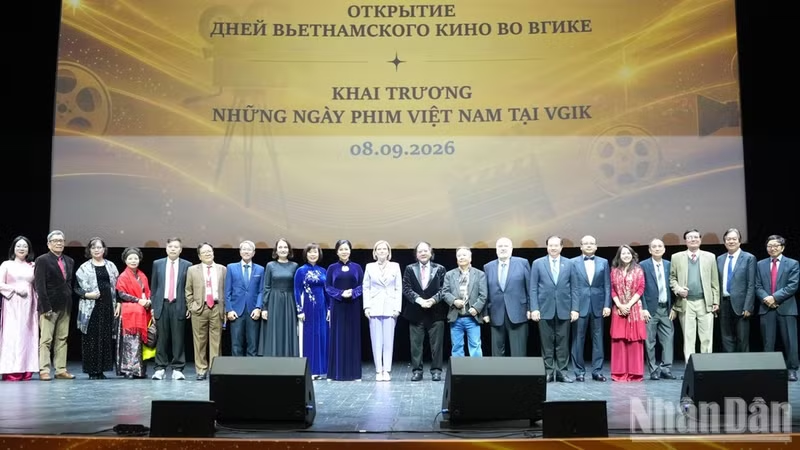
The event was held as part of the state visit to the Russian Federation by To Lam, General Secretary of the Communist Party of Viet Nam (CPV) Central Committee and State President, his spouse Ngo Phuong Ly, and a high-ranking Vietnamese delegation. First Lady Ngo Phuong Ly was the guest of honour at the opening ceremony.
Speaking at the event, Ta Quang Dong, Deputy Minister of Culture, Sports and Tourism, expressed his honour at attending the programme. According to the Deputy Minister, VGIK holds special significance for many Vietnamese people.
Seventy years ago, generations of Vietnamese artists and filmmakers travelled to the Soviet Union to study and conduct research. The knowledge, experience, and affection that generations of Vietnamese students gained there have become an important part of the development of Vietnamese cinema.
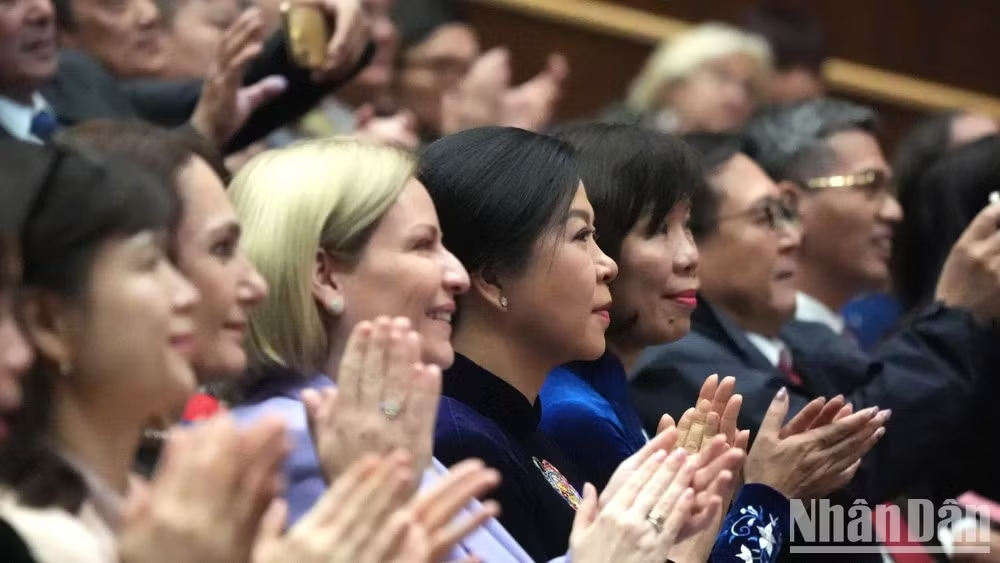
According to the deputy minister, through Viet Nam Film Week at VGIK, Viet Nam wishes to introduce VGIK students and Russian audiences to diverse aspects of the country, its people, and everyday life in Viet Nam, while sharing the humanistic values that Vietnamese cinema has always pursued. The films featured are works by Vietnamese filmmakers who were trained at VGIK.
Deputy Minister Ta Quang Dong also said that the screenings provide an opportunity to look back at the positive milestones in Viet Nam-Russia cinematographic cooperation, while expressing his belief that current generations of VGIK students will continue to write new chapters in the cinema and cultural relations between the two countries. From today’s encounters, more ideas, projects, and collaborative works will emerge, enabling cinema to become an increasingly strong bridge connecting the younger generations of Viet Nam and Russia.
VGIK Rector Vladimir Malyshev stressed that cooperation between the Russian and Vietnamese Ministries of Culture in the fields of art and culture is being actively promoted, with an important foundation being the bonds and mutual understanding between the peoples of the two countries. According to him, when both sides share the desire for the well-being of each other’s countries, cultural cooperation is pursued with sincerity and from the heart.
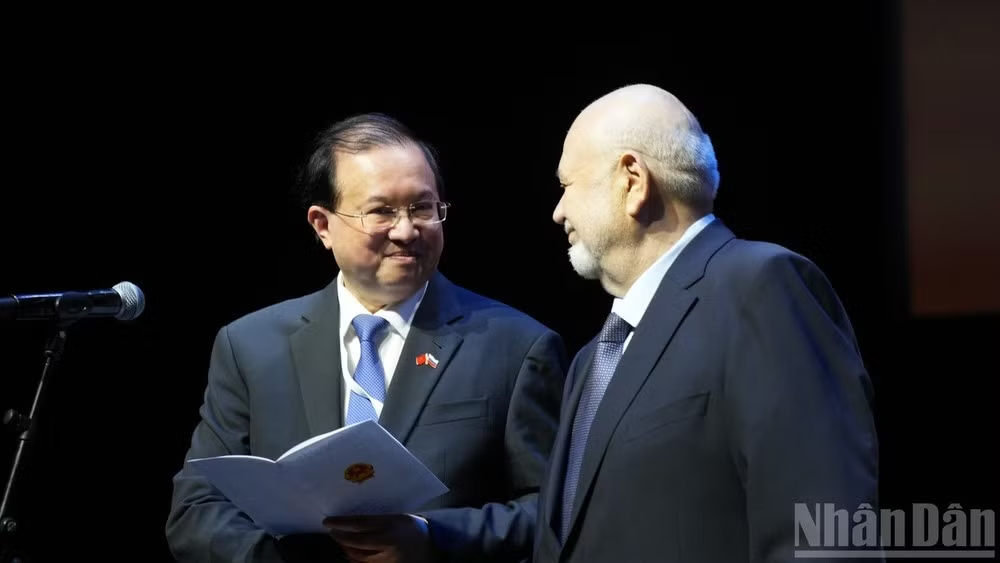
The VGIK rector said that since the mid-20th century, around 140 Vietnamese students from different generations have studied and trained at VGIK. The two most recent Vietnamese students began studying at the university in 2019, demonstrating that the link between the two countries in cinema and human-resource training has been maintained for around 70 years.
Vladimir Malyshev described General Secretary and President To Lam’s visit to VGIK earlier the same day as a particularly significant event, demonstrating respect for the university, its traditions, and the values it has cultivated. He said this also placed a responsibility on the university to continue preserving and promoting its good traditions.
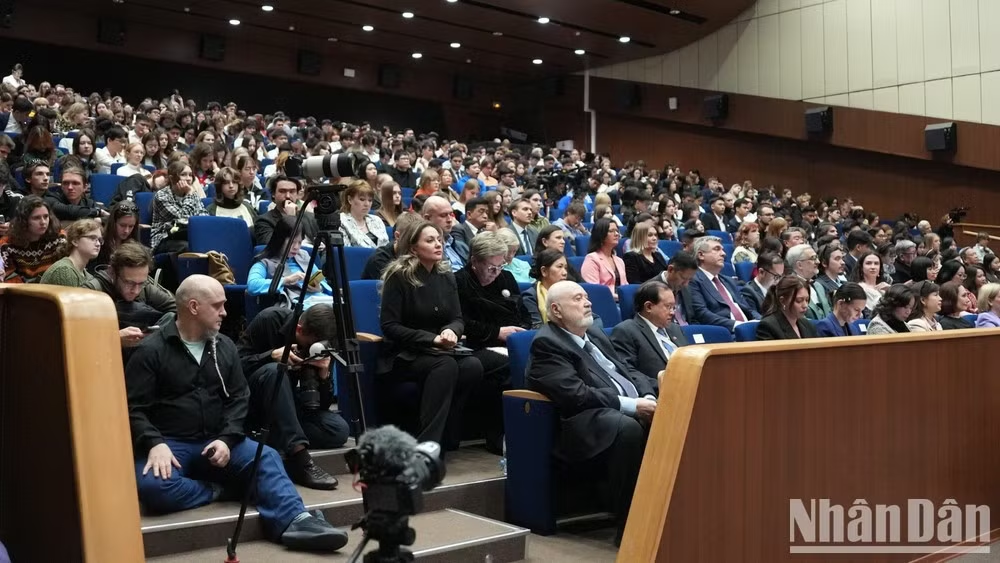
The VGIK rector expressed his hope that new generations of Vietnamese students would continue to study at the university, thereby helping maintain friendship and cooperation between the generations. VGIK also plans to send lecturers and students to Viet Nam to participate in cultural activities and organise thematic classes, concerts, and exchange programmes, thereby strengthening connections between students of the two countries.
Associate Professor Do Lenh Hung Tu, PhD, President of the Viet Nam Cinematography Association, who studied at VGIK from 1979 to 1985 and led a delegation of VGIK alumni on a visit to the university, emotionally recalled that the first Vietnamese students were selected and sent to the Soviet Union more than 70 years ago, where they were admitted to the All-Union State Institute of Cinematography, now VGIK.
Across successive generations, hundreds of Vietnamese students have graduated in various disciplines. After returning home, many of them contributed to the development of revolutionary Vietnamese cinema.
Do Lenh Hung Tu expressed his belief and hope that many more young Vietnamese students would follow in their predecessors’ footsteps and study at VGIK, acquire more new knowledge and skills, and contribute to strengthening the precious traditional ties of solidarity, friendship, and cooperation between Viet Nam and the Russian Federation.
On the occasion, the Russian-Vietnamese Tradition and Friendship Fund for Promoting Cooperation presented awards to outstanding students to mark the 70th anniversary of the first Vietnamese fine arts student cohort travelling to the Soviet Union to study.
Do Xuan Hoang, Chairman of the Association of Vietnamese Organisations in the Russian Federation and Chairman of the Tradition and Friendship Fund, stressed that amid international integration and cultural diversity, extensive Viet Nam-Russia cultural exchanges enable young people in both countries to, on the one hand, access the rich artistic values of humanity and, on the other, introduce their own national identities to international friends. Young people from the two countries are themselves close and effective cultural ambassadors.
According to Do Xuan Hoang, culture and the arts are the glue that sustainably binds friendship between peoples. Cultural diplomacy is a vibrant and far-reaching component of people-to-people diplomacy. The Vietnamese community in Russia is proud to contribute to this process, helping promote the image of Viet Nam and its people, culture, and arts to international friends.
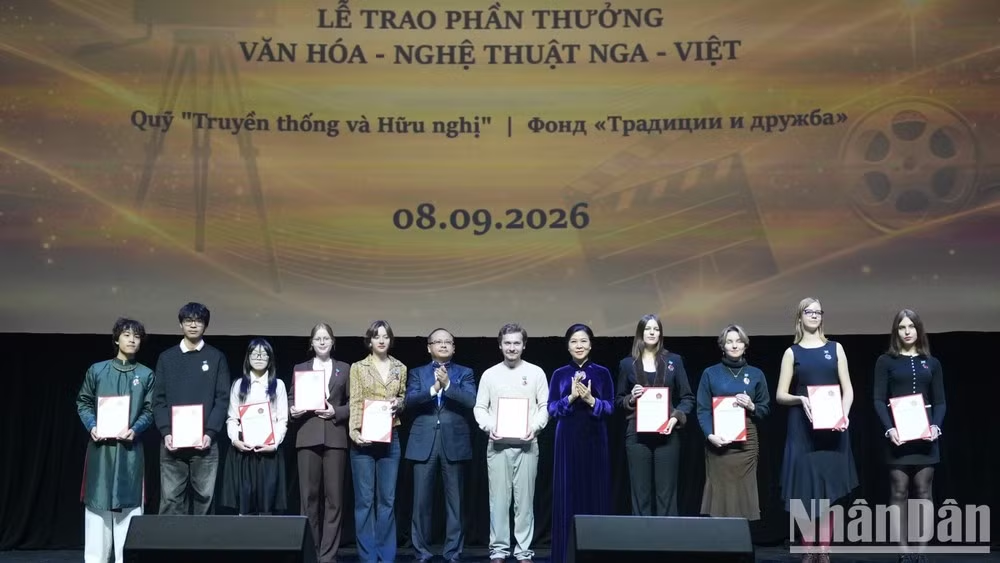
Through honouring outstanding students, the Vietnamese community in Russia wishes not only to recognise their achievements but also to place its trust in the younger generation, encouraging them to nurture aspirations to contribute to society and become strong links between the peoples of Viet Nam and Russia.
Naumova Ksenia, a VGIK student, said that although she had never been to Viet Nam, she has learned about the country and its people through books, newspapers, and films. According to Ksenia, Viet Nam has a distinctive and highly appealing culture, and she is therefore very keen to learn more about the country.
Ksenia said she was very pleased that Viet Nam Film Week was being held at VGIK itself, giving the university’s students an opportunity to directly enjoy Vietnamese cinematic works.
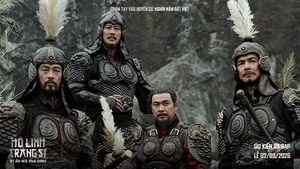
During Viet Nam Film Week, VGIK is presenting audiences with a selection of films, including The Scent of Burning Grass, The Story of Saint Giong, Kitten, The Story of the Shoes, Bicycle, The Talking Starling, and Deadly Coordinates. The films introduced during this week not only offer audiences artistic experiences but also spark interest, affection, and a desire to discover Viet Nam.