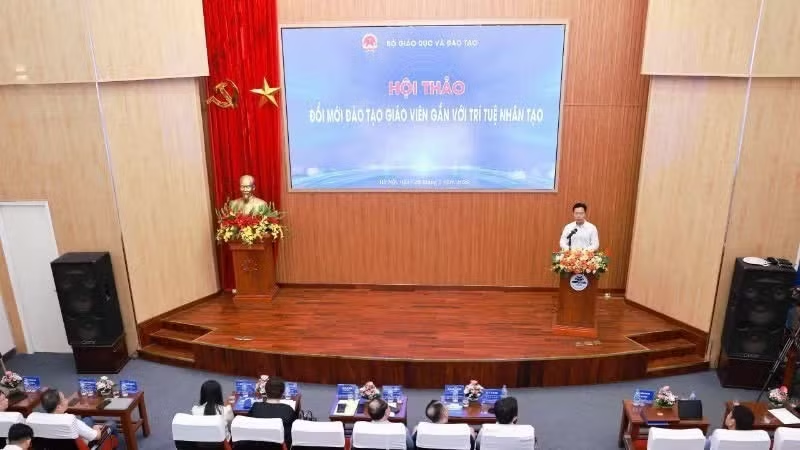
On July 28, at Ha Noi National University of Education, the Ministry of Education and Training organised the seminar on innovating teacher training integrated with AI. The event aimed to discuss and gather input on directions for reforming teacher training amidst the profound impact of AI—particularly generative AI—on teaching and educational activities.
In his opening remarks, Deputy Minister of Education and Training Le Quan stated that this was not merely an academic seminar but a forum for dialogue and consultation, enabling the Ministry and teacher training institutions to implement coordinated activities moving forward.
According to the Deputy Minister, implementation requires a robust policy framework and the selection of key tasks, guided by the motto of “rapid development and progress, yet sustainable”.
The Deputy Minister emphasised that AI is driving rapid changes, necessitating new mindsets and approaches in education. While student enrolment in STEM fields is showing positive shifts, teacher training institutions—along with many other sectors—must proactively transform to meet development requirements.
The Deputy Minister highlighted several major strategic directions, the first being the restructuring of training curricula toward “AI+” and “Aix” models. This involves integrating AI into learning outcomes and embedding it systematically throughout the entire curriculum, rather than treating AI merely as a standalone subject.
Alongside this, there is a need to innovate pedagogical methods—shifting from traditional teaching to integrated, interdisciplinary approaches—and to leverage AI tools to assist in lesson design, organise learning activities, and enhance learners' self-study capabilities.
The Deputy Minister also emphasised the need to boost research and establish centres of excellence for AI in education, ensuring that research is closely linked to practical implementation within schools to create scalable solutions.
The seminar focused on three key areas: international experiences and strategies for building AI competencies among educators; the innovation of teacher training curricula and professional development in the AI era; and the refinement of policies and implementation roadmaps for the future.