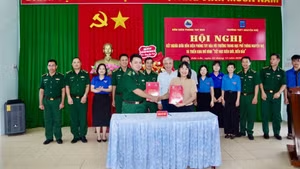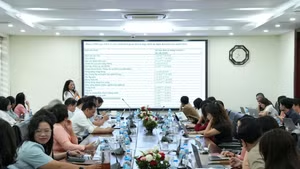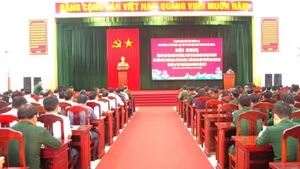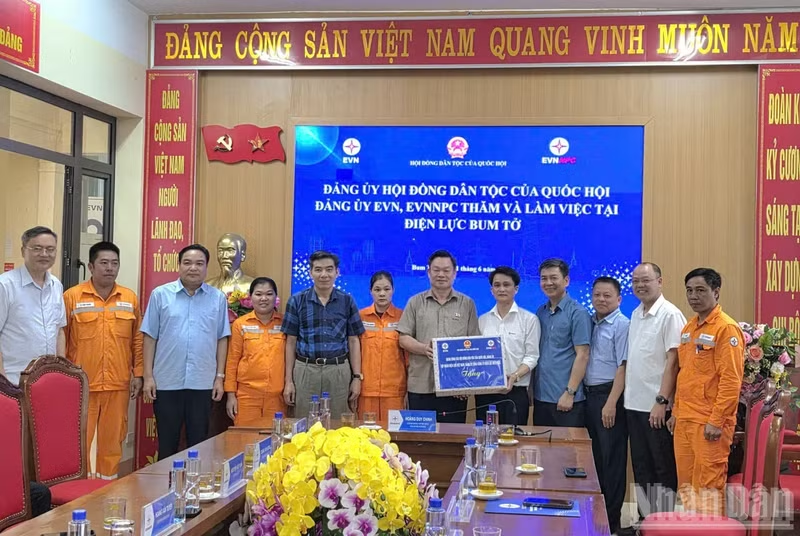
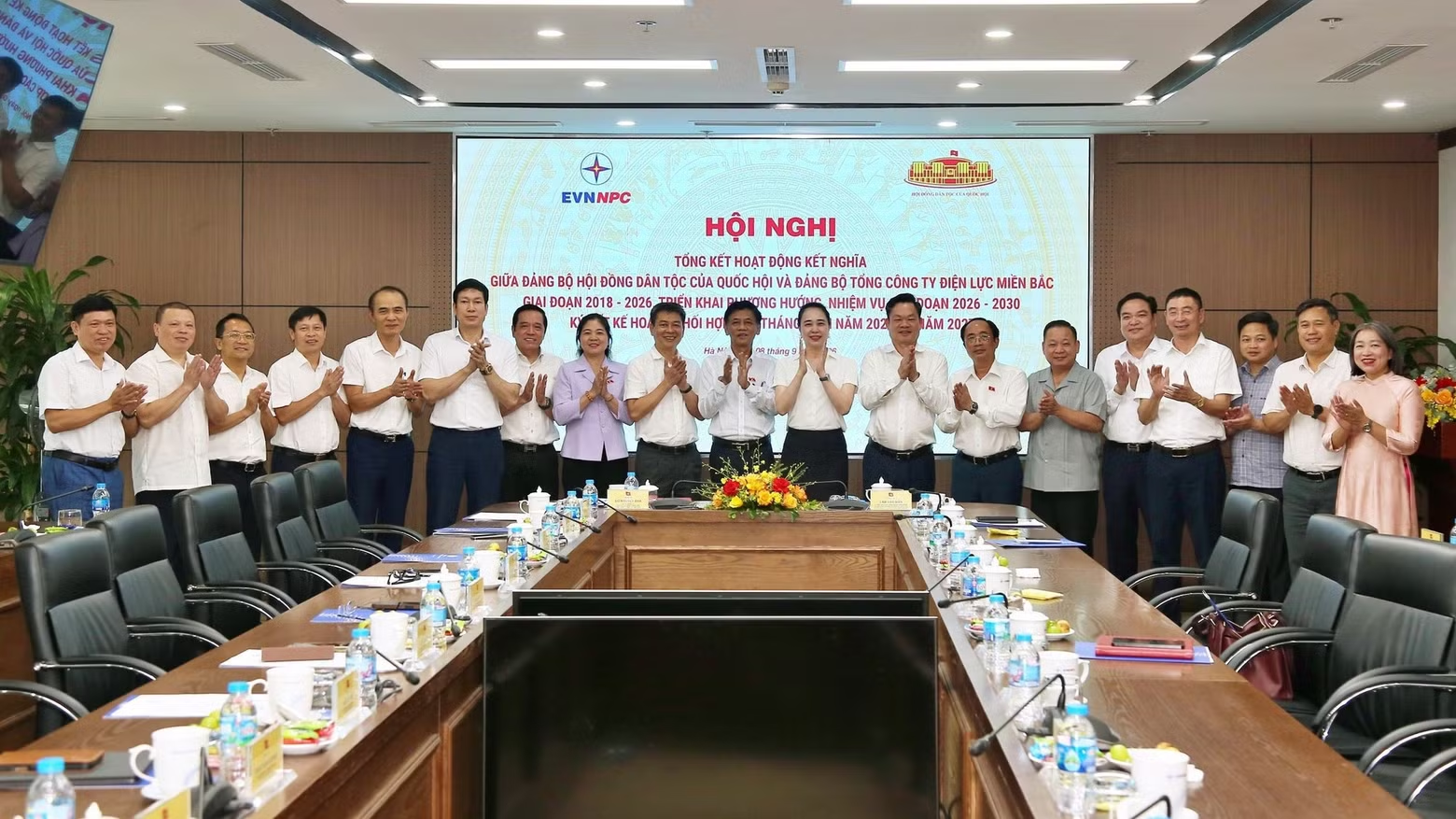
The Party Committee of the National Assembly’s Ethnic Council and the Party Committee of the Northern Power Corporation held a conference at the headquarters of the Northern Power Corporation (EVNNPC) to review cooperation activities for the 2018-2026 period, set out directions and tasks for the 2026-2030 period, and sign a cooperation plan for the remaining months of 2026 and for 2027.
Many activities directly focused on the grassroots level
Presenting the review report at the conference, Vu The Nam, Deputy Secretary of the Party Committee and member of the Members’ Council of the Northern Power Corporation, said that during the 2018-2026 period, the two sides maintained various forms of cooperation and exchanged experience in Party affairs and in leading the implementation of political tasks.
During the 2020-2022 period, the two units shared information on the results of their Party congresses, sent representatives to attend the 12th Congress of the Party Committee of the Northern Power Corporation and the 2020 annual review conference; and organised political activities, visits to revolutionary historical sites and thematic exchanges. The “Journey to the Source” programme in Tuyen Quang was combined with political and ideological education, reviewing revolutionary traditions, and visiting and supporting families who had made contributions to the revolution. In December 2020, the two sides held a meeting and exchange and reached agreement on a number of areas of cooperation; at the end of 2021, they continued working together to identify key activities for early 2022 and set directions for cooperation during the year.
Notably, since June 2026, the scope of cooperation has been expanded to link exchanges on Party building with monitoring the implementation of Programme No. 13-CTr/DU of the EVNNPC Party Committee in implementing Politburo Resolution No. 70-NQ/TW and Programme No. 04-CTr/DU of the EVN Party Committee at power units in the north-western region. The activities have been combined with grassroots surveys, visits and gifts for localities and poor households.
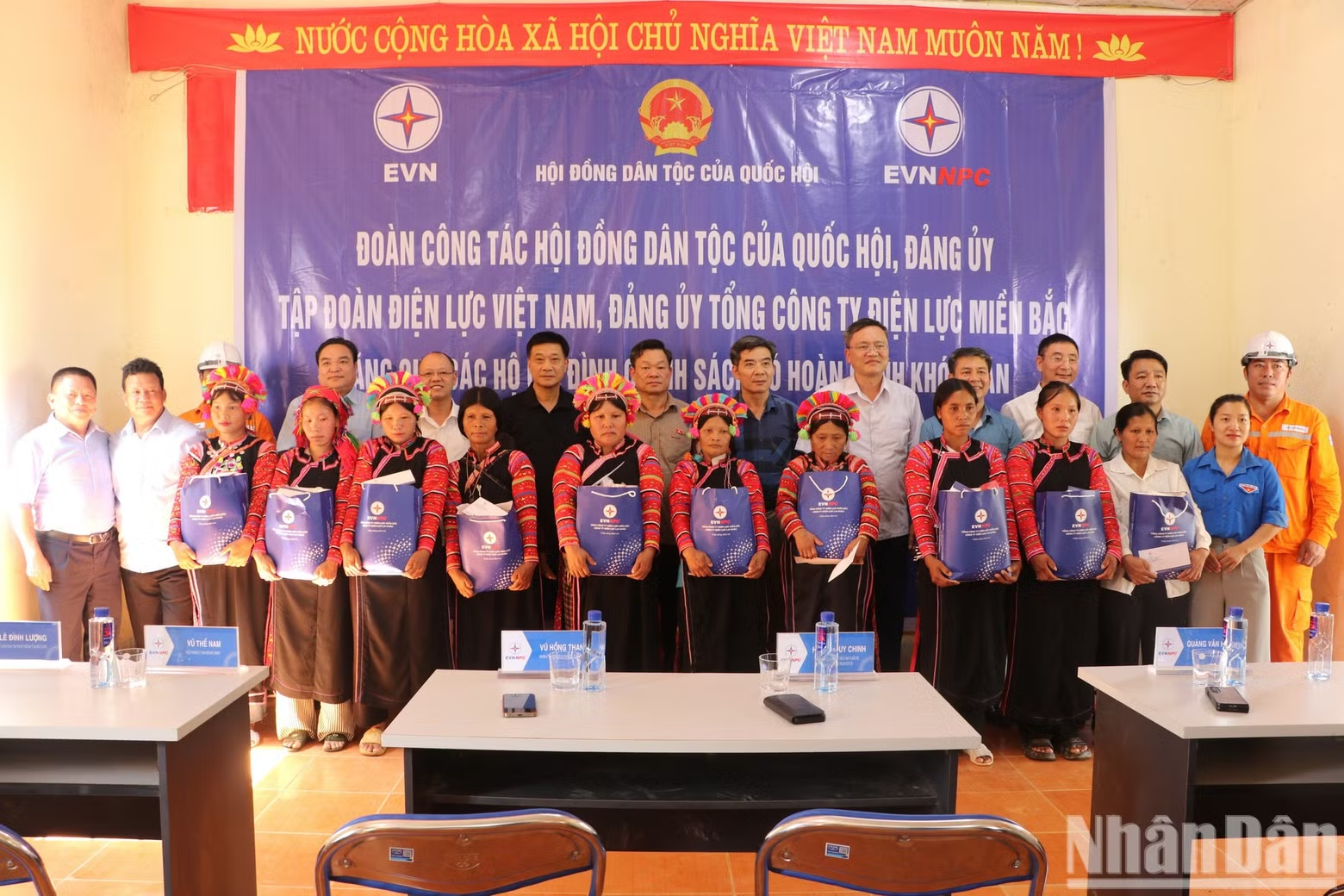
Regarding ethnic affairs and ethnic policies in ethnic minority and mountainous areas and border areas, activities have been implemented in relatively specific ways, with clearly identified locations and beneficiaries. In Cao Bang in 2019, the two sides visited veteran revolutionaries, border guard stations, the provincial Border Guard Command and power units; they also presented gifts to 30 exemplary households in the protection of national sovereignty and border security. In 2020, as part of the visit to revolutionary historical sites in Tuyen Quang, the Northern Power Corporation provided 20 gifts worth a total of 20 million VND to families who had made contributions to the revolution. In 2022, in Ba Vi, the two sides combined a thematic session with a review of cooperation activities and support for the Study Promotion Fund.
A notable achievement was the construction and inauguration of a boarding house and a domestic water supply system for an ethnic minority boarding school in Chieng Cong Commune, Muong La District, Son La Province, with a total investment of 6.5 billion VND in 2022, contributing to improving the living and learning conditions of students in mountainous areas.
Through activities at the grassroots level, officials and Party members from both sides have directly exchanged views with Party committees, local authorities, functional forces and residents, contributing to strengthening consensus in the implementation of policies and guidelines. At the same time, EVNNPC has shared information on production and business activities, investment in developing the power grid, rural electrification, ensuring electricity supply, and difficulties in investment, management and operation in remote, isolated, border and mountainous areas.
Identifying bottlenecks from practical experience
Speaking at the conference, Lam Van Man, member of the Party Central Committee, member of the Standing Committee of the National Assembly Party Committee, Secretary of the Party Committee and Chairman of the Ethnic Council, stressed the need to further improve the effectiveness of cooperation in the coming period. According to the direction set out at the conference, ensuring electricity supply for ethnic minority, mountainous and border areas needs to be placed within the broader context of socio-economic development, thereby creating conditions for people to gain better access to the fruits of development, particularly amid digital transformation and the development of the digital economy.
From the perspective of the agency directly managing and operating the power system in the northern region, Do Nguyet Anh, member of the Party Committee Executive Board of Vietnam Electricity, Secretary of the Party Committee and Chairwoman of the Members’ Council of EVNNPC, said that the requirements facing the northern power sector are becoming increasingly demanding. EVNNPC currently manages the power grid in 17 northern provinces and cities, serving around 40 million people, equivalent to 33.6% of the country’s population, with more than 26,200 employees. This is also an area where operating conditions are difficult due to complex terrain and which is directly affected by storms and floods in the north.
In 2026, pressure on electricity supply will continue to rise, with demand expected to increase by as much as 12%. Meanwhile, on-site power generation capacity in the north remains limited; the regional power supply is heavily dependent on hydropower and thermal power, while weather conditions also pose challenges to the development of solar power.
Against this backdrop, Do Nguyet Anh proposed a number of issues to the National Assembly and the Ethnic Council that need attention in order to remove long-standing bottlenecks in ensuring electricity supply for mountainous areas.
First, there needs to be a special mechanism to eliminate “electricity dead zones”. According to EVNNPC leaders, more than 4,000 households in remote and isolated areas still do not have access to the conventional power grid. In particularly difficult areas, the investment required to bring electricity to individual groups of households can be very high, with some projects requiring up to 100 billion VND to serve only a small number of households. Therefore, appropriate public investment or socialisation mechanisms should be studied to address these areas.
Second, difficulties in site clearance, compensation and resettlement for power projects need to be removed. Based on practical implementation, EVNNPC proposed coordinated solutions from the National Assembly to local authorities; at the same time, the role of village elders and hamlet leaders should be promoted in communicating with and mobilising residents to reach consensus and hand over sites for the implementation of energy projects.
Third, communications on electrical safety, protection of power grid corridors and energy security should be strengthened. EVNNPC is ready to work alongside the Ethnic Council in local working programmes, bringing communications activities to the grassroots level with the participation of respected members of the community.
Fourth, sustainable power-sector human resources should be developed for mountainous areas. EVNNPC said it was ready to provide scholarships at the College of Electricity for children of ethnic minority communities, with a view to training a local workforce. After completing their training, young people from local villages could return to their hometowns to work and participate in managing and operating the power system in their local areas.
EVNNPC leaders also affirmed that the corporation was ready to provide electricity supply plans and strategies so that the Ethnic Council would have additional information to support its oversight activities and policy development.
In addition, the two sides will strengthen surveys and exchanges of data and practical information on investment, electricity supply, access to electricity and electrical safety in ethnic minority, mountainous and border areas; on that basis, they will identify specific difficulties and obstacles for research and recommendations to improve policies and enhance the effectiveness of implementation.
Regarding information mechanisms, the EVNNPC Party Committee will focus on providing information on plans to implement key Politburo resolutions directly related to the power sector; and share information on investment plans, electricity supply, service business activities, access to electricity and ensuring electrical safety in relevant areas.
The Party Committee of the National Assembly’s Ethnic Council will provide information on plans to advise on and propose ethnic policies to the National Assembly and its Standing Committee; activities to appraise legal documents; and programmes to survey and oversee the implementation of policies and state management work in accordance with its assigned functions and tasks.
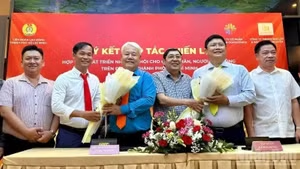
At the conference, the two sides signed a cooperation plan for the remaining months of 2026 and for 2027.