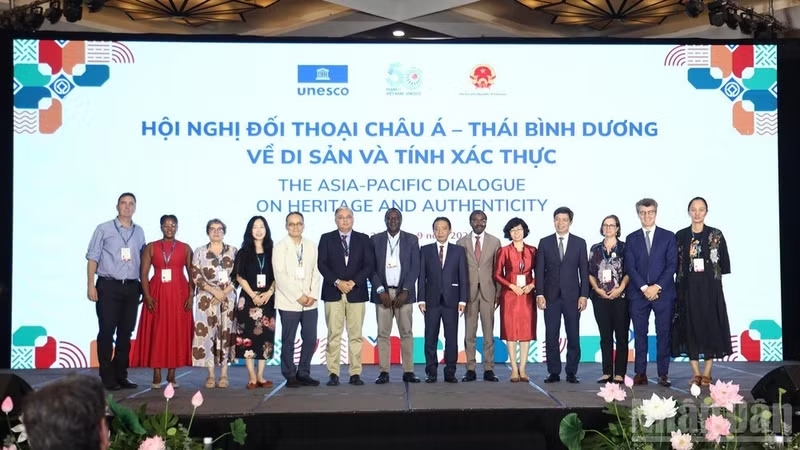
After three days of work, the Asia-Pacific Dialogue on Heritage and Authenticity held its closing session in Ha Noi on September 30. Delegates adopted the Ha Noi Document with a high level of consensus, building on and further developing the foundational values of the Venice Charter (1964), the Nara Document on Authenticity (1994), and the Nairobi Outcome Document (2025).
The document further clarifies the distinctive perspective of the Asia-Pacific region, where heritage is vibrant and diverse and closely connected with the spiritual life, traditional knowledge, and livelihoods of communities.
The document affirms that change and adaptation do not necessarily diminish authenticity and can be a positive means of maintaining and transmitting heritage across generations. It highlights cultural diversity and the role of people, artisans, and local communities as key actors in directly participating in the identification, assessment, management, and safeguarding of the authenticity of heritage.
Speaking at the closing session, Lazare Eloundou Assomo, Director of the UNESCO World Heritage Centre, affirmed that the adoption of the Ha Noi Document marks an important milestone in the international community's shared commitment to implementing the 1972 Convention in an inclusive, rigorous manner that respects cultural diversity. The document provides the global heritage community with a clear perspective bearing the distinctive characteristics and identity of the Asia-Pacific region.
He pledged that the World Heritage Centre would fully convey the outcomes and recommendations of the Ha Noi Document to the international discussion process, under the guidance of the World Heritage Committee and in close coordination with international advisory bodies.
Also at the closing session, Hoang Dao Cuong, Deputy Minister of Culture, Sports and Tourism and Vice Chairman of the Viet Nam National Commission for UNESCO, spoke highly of the conference's contribution of valuable regional knowledge and experience to the international community's broader dialogue on authenticity.
Building on the success of the conference, Deputy Minister Hoang Dao Cuong affirmed that Viet Nam will proactively coordinate with UNESCO, member states, and international organisations to focus on promoting key areas of cooperation, including continuing to maintain and expand dialogue on authenticity in diverse cultural contexts; strengthening experience sharing and conducting international comparative studies; while stepping up training programmes and enhancing professional capacity for management officials, experts, and local communities, gradually translating the research findings and recommendations of the Ha Noi Document into specific policies and management tools, ensuring their compatibility with the 1972 Convention and its Operational Guidelines.
The successful Asia-Pacific Dialogue in Ha Noi affirmed Viet Nam's position, organisational capacity, and role in the global cultural cooperation network, laying an important foundation for submitting the recommendations of the Ha Noi Document to the 49th session of the World Heritage Committee, scheduled to take place in Istanbul, Türkiye, in 2027.