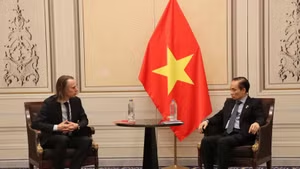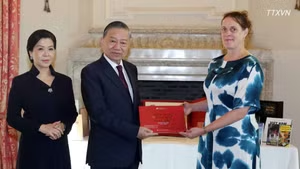
Through close engagement with the world’s leading innovation ecosystems, the diplomatic sector is creating strong momentum to facilitate the country’s socio-economic development.
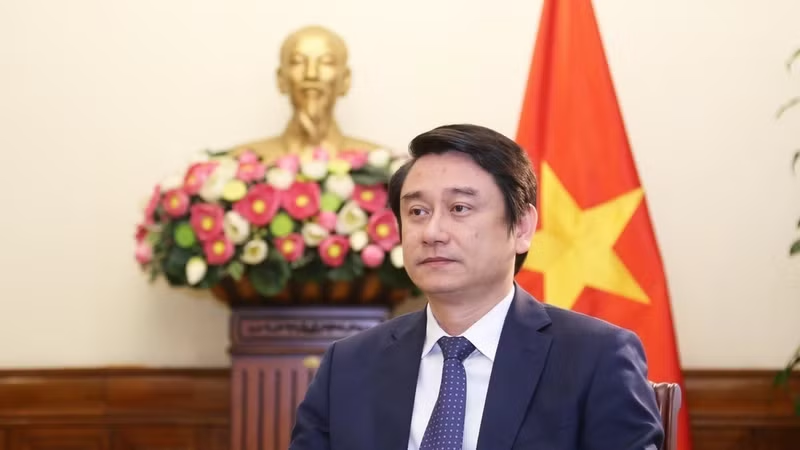
This was shared by Deputy Minister of Foreign Affairs Le Anh Tuan ahead of the upcoming 33rd National Diplomatic Conference and the 22nd National Conference on Foreign Affairs.
Digital transformation: Progress and achievements
According to the Deputy Minister, in the context of the Fourth Industrial Revolution, which is profoundly reshaping governance, cooperation and competition among nations, science, technology, innovation and digital transformation have become crucial drivers of development and decisive factors in national competitiveness.
The 14th National Party Congress reaffirmed the development of science, technology, innovation and digital transformation as one of the principal engines for rapid and sustainable national progress.
The directives of Party General Secretary and State President To Lam have also emphasised the need to create breakthroughs in science, technology, innovation and digital transformation, considering this a task of strategic importance for the country’s advancement in the new era.
In this context, the Ministry of Foreign Affairs defines digital transformation not merely as the application of technology to daily work, but as a comprehensive process of renewing governance methods, improving the quality of strategic advice, enhancing the effectiveness of external affairs and better serving citizens and enterprises.
The Ministry of Foreign Affairs defines digital transformation not merely as the application of technology to daily work, but as a comprehensive process of renewing governance methods, improving the quality of strategic advice, enhancing the effectiveness of external affairs and better serving citizens and enterprises.
In recent years, the ministry has implemented digital transformation in a coordinated manner across multiple fields and achieved significant initial results.
First, the ministry has actively integrated cooperation in science, technology, innovation and digital transformation into high-level external affairs and international collaboration, focusing on strategic technologies such as artificial intelligence (AI), semiconductors, digital infrastructure and the development of high-quality human resources.
Vietnamese representative missions abroad have proactively monitored technology trends, participated in international forums on technology governance and digital transformation, and connected partners, businesses, experts and overseas Vietnamese intellectuals to mobilise knowledge, technology and resources for national development.
At the same time, the ministry is gradually applying AI in professional work in a safe and effective manner. It has moved from the research phase to piloting AI applications in report drafting and information processing, while exploring wider uses in information collection, classification, retrieval, translation, knowledge management and document processing support.
He noted that under the principle that AI is only a tool to improve productivity and work quality, issues with high political, legal and strategic content still require human judgement, with people retaining the decisive role and ultimate responsibility.
Digital transformation in internal administration has also yielded many positive outcomes. He reported that all administrative procedures under the ministry’s management within the country, and several procedures abroad, are now conducted online, handling more than 90,000 applications annually; more than 90% of non-classified official correspondence is processed digitally.
Systems for document management, task monitoring, international treaties and agreements, together with the development of specialised databases, are gradually forming a foreign affairs data ecosystem, helping to improve leadership, administration and the quality of strategic advice.
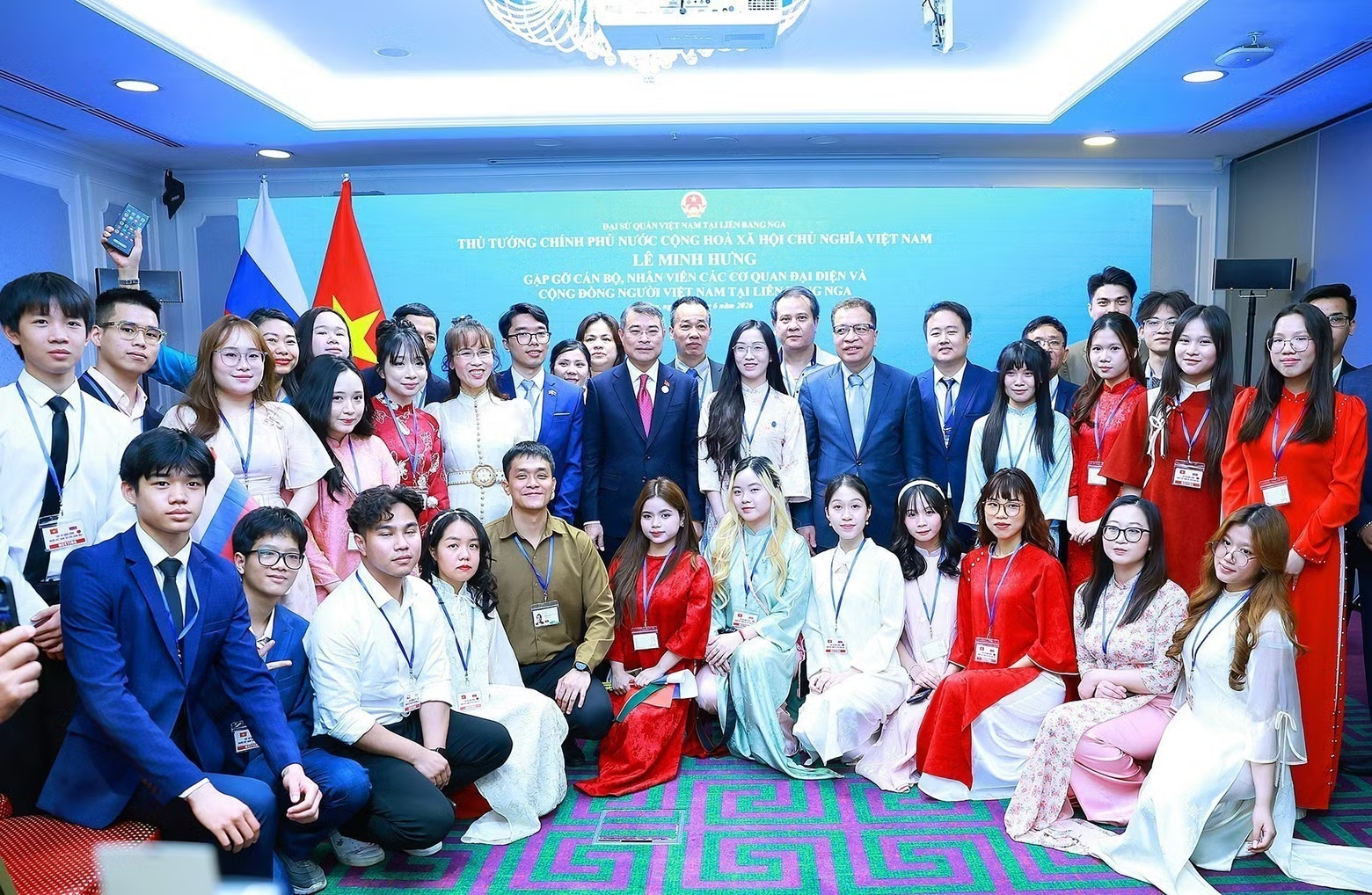
In external communications, the Ministry of Foreign Affairs and Vietnamese missions abroad have expanded their presence on digital platforms, built an official multi-platform external information system, strengthened interaction with citizens at home and abroad, promoted the country’s image, enhanced public diplomacy and proactively addressed misinformation, thereby protecting national reputation and interests in cyberspace.
The ministry identifies cyber safety, cybersecurity and data sovereignty as cross-cutting requirements throughout the digital transformation process, reflected in key documents already issued such as the Digital Architecture Framework, Data Architecture Framework, Digital Transformation Strategy and Data Strategy to 2030.
It can be affirmed that the initial results of digital transformation have generated positive changes in governance methods, improved strategic advisory quality, enhanced the effectiveness of external affairs and strengthened the service capacity of the diplomatic sector.
More importantly, digital transformation is enabling the diplomatic sector to better promote its pioneering role in connecting international knowledge, technology and resources, thereby making a practical contribution to the successful implementation of the country’s development goals in the spirit of the 14th National Party Congress.
Future pathways to comprehensive, modern and professional diplomacy
The 14th Party Congress Resolution for the first time affirmed the regular and essential role of external affairs in the cause of national construction and development from the outset.
Party and State leaders, particularly Party General Secretary and State President To Lam, have provided profound guidance on advancing science, technology, innovation and digital transformation within the diplomatic sector.
Harnessing and applying the achievements of science and technology, innovation and digital transformation is not only a global trend but also a breakthrough driver for realising the goal of building a comprehensive, modern and professional diplomacy.
Harnessing and applying the achievements of science and technology, innovation and digital transformation is not only a global trend but also a breakthrough driver for realising the goal of building a comprehensive, modern and professional diplomacy. In this regard, the sector will focus on four key solutions.
First, it will pioneer the promotion of “technology diplomacy”, building cooperation frameworks in technology, especially innovation, digital transformation, AI, quantum technology and strategic minerals, connecting with the world’s leading innovation centres and effectively serving the country’s socio-economic development. The diplomatic sector will act as a “pathfinder”, maximising external resources to support domestic digital transformation and innovation.
Vietnamese missions abroad will serve as sensitive “antennas”, intensifying efforts to identify, connect and attract high-quality investment, core technologies and green technologies, as well as bringing leading global R&D centres to Viet Nam.
At the same time, the sector will pay special attention to mobilising intellectual resources, expert networks and overseas Vietnamese scientists to contribute to the national innovation ecosystem.
Second, it will decisively pursue comprehensive digitalisation, moving towards building a “Digital Ministry of Foreign Affairs”. Modern diplomacy requires modern thinking and modern tools. The ministry has accelerated digital transformation in the diplomatic sector, digitising work processes, developing databases and big data analysis, and advancing digital diplomacy, digital citizenship and digital communications to improve analytical, forecasting and strategic advisory capacity for external affairs.
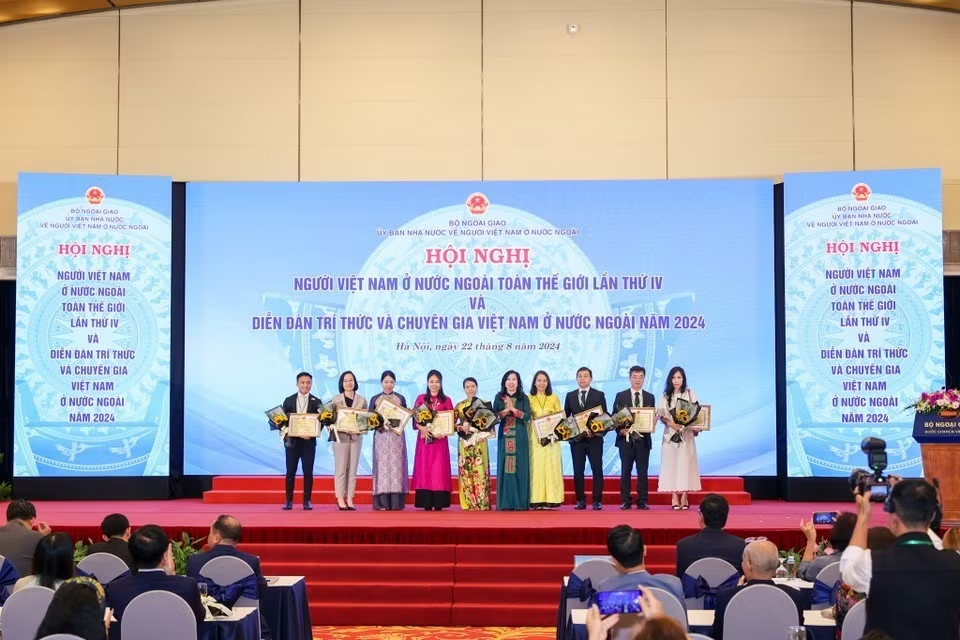
It will also modernise public information through global digital platforms to amplify the story of a resilient, innovative Viet Nam and strengthen strategic trust; and build and implement a synchronised AI ecosystem in diplomacy by 2030, with a vision to 2045, aligned with national development requirements and the characteristics of external affairs.
In particular, the diplomatic sector is consistently pursuing a people- and business-centred approach, substantially upgrading online public services, especially in consular affairs and citizen protection, while ensuring transparency, speed and maximum convenience.
In addition, it will continue improving institutions, mechanisms and the roadmap for digital transformation in the diplomatic sector; develop digital infrastructure, shared platforms and a foreign affairs data ecosystem as a foundation for building digital diplomacy; complete mechanisms to ensure cyber safety, cybersecurity, data sovereignty and AI risk governance; develop digital human resources and innovate working methods, enhancing digital capacity for staff, with tangible outcomes as the benchmark for evaluating science, technology and digital transformation work.
Third, the sector will participate in shaping global legal frameworks for technology and cyberspace, including proactively negotiating and helping to define new rules on data and AI. Promoting the pioneering role of external affairs, Viet Nam must not only be a recipient country but must also take part in shaping the rules.
Deep integration of science and technology, innovation and digital transformation is key to enabling the diplomatic sector to take the lead and play a constructive role in the process of deep and comprehensive international integration.
The diplomatic sector will actively engage in bilateral and multilateral mechanisms and forums to contribute Viet Nam’s voice to the creation of new mechanisms and global standards on cybersecurity, AI, cross-border data governance and the digital economy. This proactive approach is essential to protecting national security and interests in cyberspace.
Fourth, it will renew training and development for a new generation of “digital diplomats”. No matter how advanced technology becomes, the human factor remains decisive. The Ministry of Foreign Affairs is reviewing and comprehensively updating training programmes for staff.
A Vietnamese diplomat in the new era, in addition to firm political courage and strong professional expertise, must also be equipped with technological thinking, adaptability and the skills to use digital tools in research, negotiation and external communications.
It can be said that the deep integration of science and technology, innovation and digital transformation is key to enabling the diplomatic sector to take the lead and play a constructive role in the process of deep and comprehensive international integration.
Deputy Foreign Minister Le Anh Tuan expressed his belief that, upholding the spirit of the 14th National Party Congress, with close guidance from the Party and State leadership and the unity of the entire sector, Vietnamese diplomacy will fulfil its important, regular role, successfully implement the Congress’s guidelines and policies, raise Viet Nam’s standing and prestige internationally, and effectively serve the country’s rapid and sustainable development in the new era.