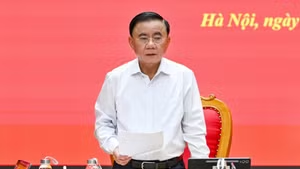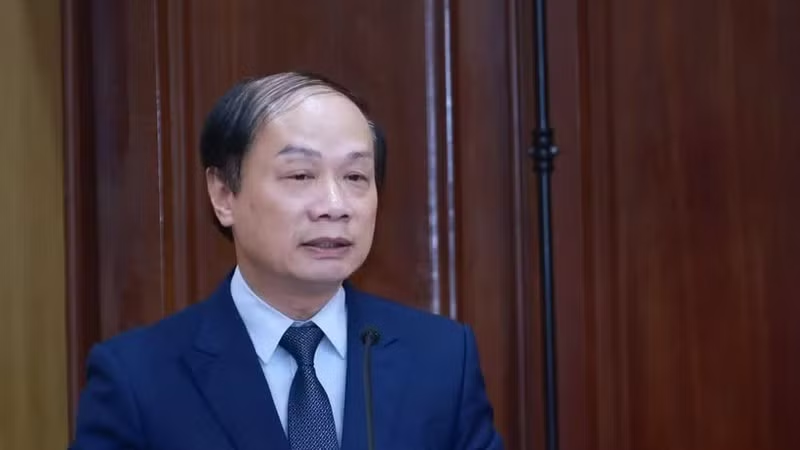
These were the views shared by Pham Tat Thang, Member of the Party Central Committee and Standing Deputy Head of the Party Central Committee's Commission for Information, Education and Mass Mobilisation, in an interview with Nhan Dan Newspaper on the occasion of the 96th anniversary of the Party's Information and Education Sector Traditional Day (August 1, 1930 – August 1, 2026).
Q: Over the past 96 years of development, the Party's information and education sector has consistently fulfilled its role of "leading the way, accompanying implementation, and drawing lessons afterwards." As the country enters a new era of development marked by ambitious growth targets and continued reform of the political system, what core values do you believe the sector must continue to uphold and promote in order to fulfil its historic mission?
A: Throughout its 96 years of development, the Party's information and education sector has accompanied every stage of the Vietnamese revolution. At each historical juncture — from the struggle for national independence and reunification to the process of renewal, nation-building, and national defence — its work has played a particularly important role in fostering unity within the Party, building social consensus, and strengthening public confidence in the Party and the socialist system. These are values forged through nearly a century of practice and remain the foundation for the sector to fulfil its mission in the new stage of national development.
Today, Viet Nam is entering a new era of development with the aspiration to achieve rapid and sustainable economic growth, successfully implement the Resolution of the 14th National Party Congress, and advance a series of major initiatives on organisational restructuring, scientific and technological development, innovation, and national digital transformation. In this context, the information and education sector must not only continue to perform its role in providing ideological guidance but also enhance the quality of its strategic advice, accurately assess emerging developments, and contribute to building unity in both awareness and action across the entire political system.
In my view, one of the core values that must continue to be preserved is steadfast political resolve, absolute loyalty to the Party's goals and ideals, and unwavering commitment to safeguarding the Party's ideological foundation, while continuously renewing our approach to meet the demands of changing realities. Information and education work must always stay one step ahead in the ideological sphere, promptly guide public opinion, address issues of public concern, and build consensus both within the Party and across society, thereby bringing together the strength of the entire political system and all sections of the people to accomplish the country's development goals.
At the same time, the information and education sector must continue to uphold its tradition of staying close to the people, understanding their concerns, and maintaining the close bond between the Party's will and the people's aspirations. The Party's guidelines and policies can only truly take root when they garner the support and active participation of the public.
Therefore, information and education work must not only communicate Party policies effectively but also proactively understand the thoughts and aspirations of the people and promptly report them to the Party so that policies can be further refined. Only in this way can the sector continue to serve as a vital bridge between the Party and the people, strengthen public confidence, and inspire the nation's aspirations for development in the new era.
Q: Today's information environment is evolving rapidly with the rise of artificial intelligence, social media, and digital platforms. In your view, how should the information and education sector renew its thinking, methods and approaches to ensure effective guidance while also building social consensus and reinforcing public trust?
A: The rapid development of artificial intelligence, social media, and digital platforms is bringing about profound changes to the information environment. Whereas information and education work once focused primarily on disseminating information, it now operates within a multidimensional communications landscape in which information spreads at remarkable speed, while misinformation and distorted narratives can directly influence public perception and confidence. This requires the information and education sector to fundamentally renew its thinking, methods, and tools in order to meet the demands of the digital age.
The initial priority is therefore to reform policy communication by taking a more proactive approach and staying one step ahead. Every major policy and guideline of the Party and State should be communicated from the earliest stages of its formulation, with clear, accessible, and timely explanations to foster public consensus. At the same time, communication must move away from one-way messaging towards dialogue, interaction, listening, and persuasion. People should be placed at the centre of communication efforts, with building public trust and social consensus serving as the overarching objective of ideological work.
Alongside these changes, the information and education sector must accelerate the application of science and technology — particularly artificial intelligence and big data — in monitoring, analysing, and forecasting ideological trends and public opinion. Digital transformation is not simply about adopting new technologies, it also requires modernising governance approaches in ideological work. This will enable the early identification of emerging issues, strengthen forecasting capabilities, and support timely strategic advice to the Party so that potential risks to social stability can be addressed at an early stage.
In today's environment, the challenge is no longer merely to manage information but to cultivate and sustain public trust. To achieve this, authoritative information must always come first: it must be timely, accurate, and sufficiently persuasive to guide public opinion. The information and education sector must therefore continue to innovate its content, methods, and approaches; maintain its leading role in providing ideological guidance; strengthen the close bond between the Party's will and the people's aspirations; and thereby build a strong spiritual foundation for the country's rapid and sustainable development in the new era.
Q: In the current context, the information and education sector is expected not only to disseminate information and provide guidance but also to foster unity in understanding, inspire aspirations for national development, and strengthen the great national solidarity. In your view, in what areas should the sector continue to innovate in order to meet these demands?
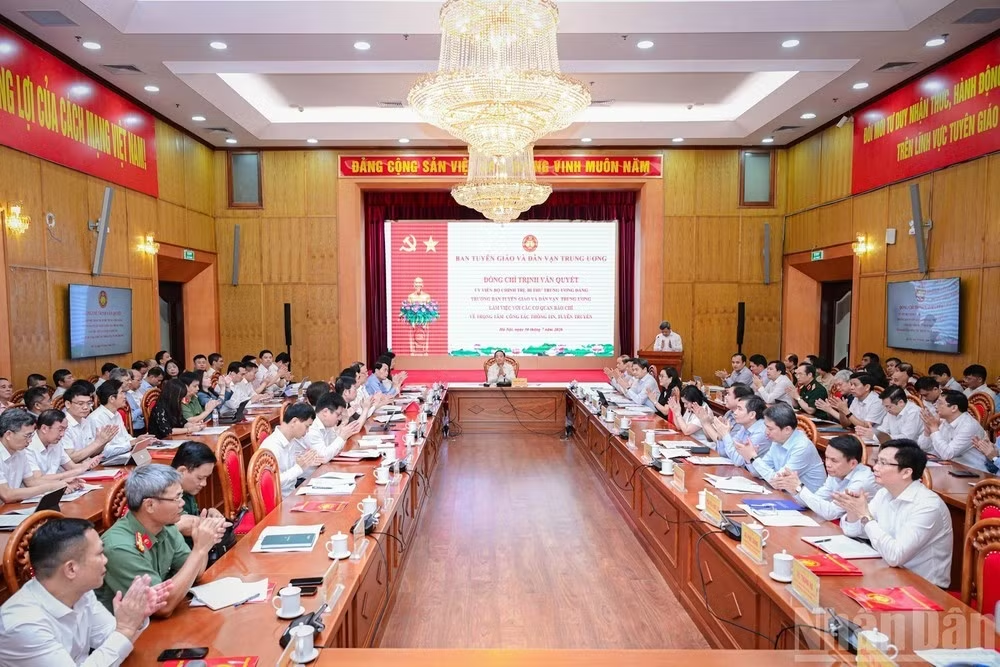
A: The country is entering a new stage of development that demands high economic growth, a renewed development model, accelerated digital transformation, advances in science and technology, and deeper international integration. In this context, the information and education sector must further affirm its role as a force that "leads the way", fostering unity in both awareness and action across the Party, the people, and the armed forces. In other words, its role extends beyond communicating the Party's policies and resolutions; it must transform them into the understanding, confidence, determination, and actions of society as a whole.
To achieve this, the foremost priority is to continue fundamentally renewing ideological work and policy communication. Every major policy and decision of the Party and State should be communicated proactively and from the earliest stages of both formulation and implementation. At the same time, the theoretical basis, practical rationale and expected benefits of these policies must be clearly explained so that people understand them correctly, support them, and actively participate in their implementation. This should be accompanied by greater dialogue with grassroots communities, attentive listening to public opinion, and prompt responses to issues of public concern, while ensuring that information gaps do not create opportunities for false or distorted narratives to influence the perceptions of Party members, officials, and the public. This is one of the key directions we are determined to pursue more vigorously in the period ahead.
Another important requirement is for the information and education sector to continue renewing its methods of operation by remaining closely connected to realities on the ground, placing people at the centre of its work, and making full use of the combined strengths of theory, communications, journalism, publishing, culture, the arts, as well as networks of lecturers and propagandists, while effectively leveraging digital communication platforms. Beyond promoting positive information, the sector must also inspire patriotism, self-reliance, resilience, a spirit of dedication, and aspirations for a prosperous and happy nation. In doing so, it will strengthen the great national solidarity and generate the spiritual momentum needed to achieve the country's development goals.
At the same time, it is essential to further enhance the sector's capacity for researching, forecasting, and monitoring ideological trends and public opinion. In an era when information changes rapidly, it must be able to identify emerging issues at an early stage and provide timely recommendations to the Party on appropriate responses, preventing minor issues from escalating into more complex challenges.
Experience in recent years has shown that where authoritative information is provided fully and promptly, it helps foster unity of understanding; strengthens the confidence of officials, Party members, and the public in the Party's policies and guidelines; and builds the social consensus necessary for the effective implementation of development tasks at the local, sectoral, and national levels. The information and education sector must therefore continue to innovate its content and methods of operation and improve the quality of ideological guidance, forecasting, and policy communication, thereby reinforcing public trust, strengthening the bond between the Party and the people, and laying a solid spiritual foundation for the country's rapid and sustainable development.
Q: Given the increasingly demanding requirements of ideological work in the new context, what qualities, capabilities and working methods do you believe officials engaged in information and education work should cultivate in order to stay close to the people, understand their concerns, and enhance the effectiveness of communication and public engagement?
A: At every stage of development, people remain the decisive factor in determining the quality and effectiveness of any undertaking, particularly information and education work. The rapid advances in science and technology, artificial intelligence, and digital communications have placed increasingly demanding requirements on those engaged in ideological work. Alongside firm political conviction and absolute loyalty to the Party, every information and education official must continuously renew their thinking; enhance their political awareness, theoretical knowledge, professional expertise, and practical skills; and strengthen their ability to adapt to the modern communications environment.
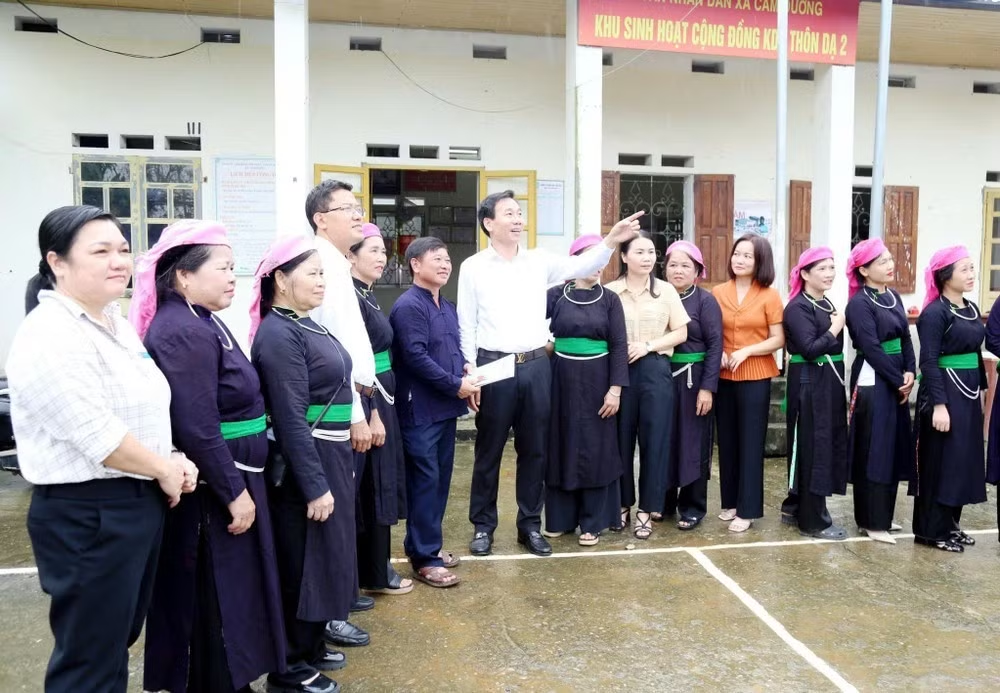
Above all, officials must remain closely connected to realities on the ground, stay close to the people, understand their concerns, listen to their views, and provide them with timely, comprehensive, and persuasive information. Ideological work can only be convincing when it is rooted in real life, addresses the issues that concern the public, and is supported by accurate, objective, and well-founded information. Every information and education official should therefore maintain close links with grassroots communities; keep abreast of the thinking, aspirations, and concerns of Party members, officials, and the public; and provide timely, well-informed advice. At the same time, they must accurately reflect realities back to the Party in order to contribute to the continual refinement of its policies and guidelines.
The sector's workforce must also master digital technologies and strengthen its ability to apply artificial intelligence, big data, and digital platforms in researching, analysing, and forecasting public opinion. It should move decisively from responding to events to anticipating them, from reacting to preventing potential issues, and from providing operational advice to offering strategic counsel.
Beyond professional expertise and technological competence, information and education officials must continuously improve their skills in dialogue and persuasion, while enhancing their ability to engage effectively in the online environment. They should proactively promote positive information and counter false or distorted narratives with sound arguments, verified facts, and professional conduct. Above all, they must uphold high ethical standards, maintain a people-centred working style, match words with actions, and measure the quality of their work by its practical results. Only by building a cadre of officials who are politically steadfast, theoretically well grounded, professionally capable, technologically proficient, and closely connected with the people can the information and education sector continue to fulfil its pioneering role, strengthen public confidence, foster social consensus, and inspire the nation's aspirations for development in the new era.
Thank you very much for your time.