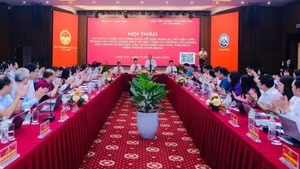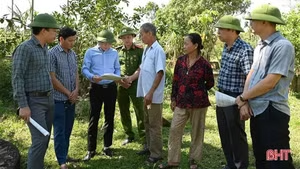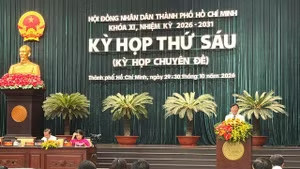
Furthermore, the Government has issued Decree No. 147/2026/ND-CP, providing guidelines for the implementation of these specific mechanisms and policies aimed at resolving issues for such projects.
Local authorities have been actively engaged, taking decisive action to address violations, prevent the waste of resources, and lay the groundwork for economic growth.
Decisive action at the local level
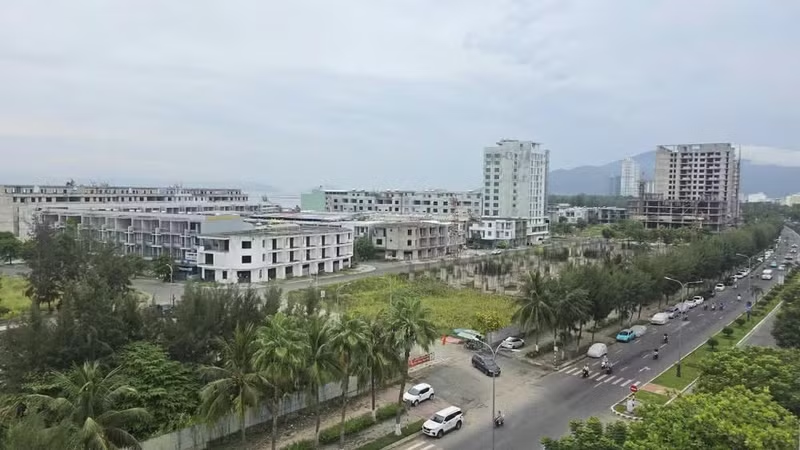
Immediately following the issuance of central-level policies designed to resolve difficulties and obstacles for long-stalled or delayed projects, the city of Da Nang took a proactive approach by implementing and establishing its own specific mechanisms and policies.
The city’s consistent stance is to “support the resolution of project-related difficulties and obstacles, without legitimising past violations”. To date, the City People’s Committee has issued a decision identifying a list of 354 projects and land plots subject to these specific mechanisms and policies; of these, 206 have been addressed and resolved, representing a completion rate of 58.2%.
To date, 1,985 out of 2,035 long-standing, stalled projects have been resolved—a completion rate of 97.5%—in accordance with Conclusion No. 77-KL/TW dated May 2, 2024, of the Politburo; Resolutions No. 170/2024/QH15 and No. 29/2026/QH16 of the National Assembly; and Government Decree No. 147/2026/NĐ-CP.
The city is currently actively addressing obstacles for several other projects, including the Nam Hoi An Resort in Duy Nghia Commune and the Da Phuoc International Urban Area in Hai Chau Ward.
Le Ngoc Quang, Member of the Party Central Committee and Secretary of the Da Nang City Party Committee, noted that a significant workload remains, with some projects still facing hurdles related to urban planning, site clearance, and land issues. Consequently, relevant agencies and units must prioritise project progress, shifting their focus from mere administrative procedure management to active implementation to ensure tangible results and concrete outcomes.
“Stakeholders must identify potential delays early on, pinpoint the underlying causes and bottlenecks, and devise solutions accordingly. It is particularly important to rectify any tendencies toward avoiding responsibility, hesitation, or passing the buck, while simultaneously protecting officials who demonstrate initiative and a willingness to take action,” emphasised Quang.
Many other localities are also actively working to resolve long-standing, stalled projects. According to Report No. 117-BC/UBKTTW dated August 10, 2026, from the Central Inspection Committee, many localities had actively addressed long-standing issues by July.
For instance, Hai Phong City resolved obstacles for 239 out of 249 long-stalled projects; similarly, Hue City addressed 161 out of 177 such projects, and Tuyen Quang Province resolved 51 out of 56.
These localities implemented decisive measures to clear bottlenecks related to land, infrastructure, and site clearance—thereby preventing waste and unlocking capital resources that had previously been “frozen” within these stalled projects.
Thorough resolution of obstacles
In Ho Chi Minh City, the progress in addressing stalled projects has yet to meet requirements. As of September 5, the city had 1,338 projects facing long-standing difficulties and obstacles, covering an area of over 30,691 hectares with a total investment value of 658,084 billion VND.
Of these, 417 projects—encompassing 17,000 hectares of land and a total investment of 206,000 billion VND—have been addressed in accordance with Plan No. 34/KH-UBND. The remaining 921 projects are currently under review, with 233 of them (25.3%) having already been cleared of obstacles.
Tran Van Bay, Vice Chairman of the Ho Chi Minh City People’s Committee, noted that some agencies and units remain overly cautious and struggle to provide advice or propose solutions for handling complex cases. Most of the stalled projects involve intricate legal issues that have persisted over long periods and span multiple sectors; consequently, resolving them cannot rely on a single specialised agency alone.
Instead, it requires interdisciplinary and cross-level coordination—at times even necessitating conclusions or decisions from competent central-level authorities. Furthermore, determining land valuations and financial obligations related to land for certain projects continues to present significant challenges.
Nguyen Van Duoc, Chairman of the Ho Chi Minh City People’s Committee, has directed relevant units to fully leverage the new legal framework. He instructed departments, agencies, and local authorities to strictly adhere to core principles—ensuring clear, distinct processes—and cautioned against using any excuses for delays, emphasising that projects must be brought into operation promptly to serve the public.
Ha Noi is another locality with numerous non-budget-funded projects involving land use that have been slow to progress. Recently, the Hanoi People’s Committee took decisive action by revoking 24 projects, including several large-scale land-use ventures.
The Committee has required project developers to proactively review all legal documentation, urgently coordinate with relevant departments, agencies, and local (commune/ward-level) authorities to complete the necessary regulatory procedures, and concentrate resources on advancing projects that have already been approved, in accordance with their established schedules.
Bui Duy Cuong, Vice Chairman of the Hanoi People’s Committee, stated that the city’s consistent policy is to remove obstacles and provide maximum support to capable investors who demonstrate a genuine commitment to executing their projects and putting the land to use.
Conversely, the city remains resolute in taking action—including the revocation of projects—where investors deliberately refuse to cooperate or coordinate. The city has directed its departments and agencies to categorise projects into five distinct groups, assigning specific responsibilities to the relevant authorities for each project, thereby ensuring tailored solutions for those experiencing implementation delays.
The Office of the Party Central Committee recently issued Official Dispatch No. 5315-CV/VPTW, dated September 27, 2026, conveying the directives of General Secretary and President To Lam regarding the efforts to resolve difficulties and obstacles affecting long-stalled or delayed projects.
The dispatch underscores the urgent need for a thorough review of all such projects, ensuring that no stalled project is overlooked or left unaddressed, in line with the Political Bureau’s mandates. Many citizens and businesses view this as a guiding framework that empowers local authorities to confidently implement appropriate policies to accelerate the progress of long-stalled and delayed projects.