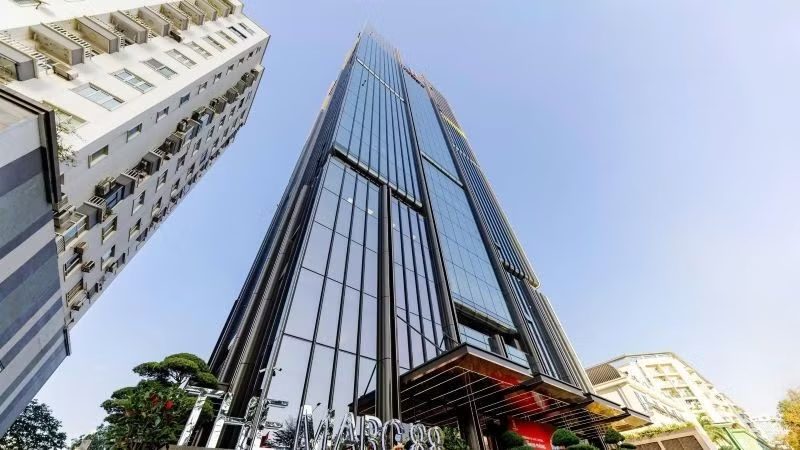
Assessing the market overall, Nguyen Quoc Anh, Deputy CEO of Batdongsan.com.vn, said that based on developments in late 2025, the market is expected to move onto a more substantive footing in 2026, as policies to enhance data transparency and introduce property identification take effect, with real value gradually replacing short-term speculative expectations.
Real estate rebounds after interest-rate volatility
After a slowdown in November due to interest-rate fluctuations, the real estate market in December 2025 saw a recovery in both demand interest and supply.
According to experts from Batdongsan.com.vn, a key factor helping the market stay on a steady track despite higher funding costs was a relatively positive macroeconomic backdrop in 2025.
Viet Nam’s full-year GDP growth reached 8.02%, among the highest in the region. Disbursed FDI was estimated at 27.6 billion USD, up 9% from 2024, while international arrivals exceeded 21 million, up more than 20%. Industrial production grew by over 10%, and newly registered businesses surged by 71.6%. These figures are significant for real estate as manufacturing, services and tourism recover, demand for housing, commercial premises and rental properties also improves.
Beyond macro factors, December 2025 also saw notable policy moves. As deposit interest rates rose again, the Ministry of Construction proposed many groups of solutions to control real estate prices, focusing on completing the legal framework, increasing supply — especially social housing — and tightening speculation.
Notably, Decree 357 stipulates that each property will be assigned a single nationwide electronic identification code from March 1, 2026. This is seen as an important step in making the market more transparent, laying the groundwork for managing transactions, pricing and the legal status of real estate.
Positive growth in both supply and demand
According to the technology platform Batdongsan.com.vn, in December 2025 the real estate market posted several recovery signals after deposit interest-rate volatility in November.
Previously, commercial banks, including the Big4 (Agribank, BIDV, VietinBank and Vietcombank), raised deposit rates due to a shortage of credit sources, fuelling concerns about corporate funding costs and lending rates in the period ahead.
However, actual data from the leading real estate technology platform Batdongsan.com.vn showed that both nationwide interest levels and the number of real estate listings rose compared with November. Specifically, interest in properties for sale increased by around 10%. The number of for-sale and for-rent listings also improved by about 8% and 10%, respectively.
The recovery was fairly broad-based. Ha Noi, Ho Chi Minh City (old and new), and other provinces and cities all recorded positive growth in both listing volume and interest levels, although the pace varied.
December 2025 also saw a rebound in two property types that had faced heavy pressure earlier: villas and street-front houses.
Based on Batdongsan.com.vn data, interest in street-front houses in December 2025 rose by about 16%, while villas increased by around 15% compared with November. Listing volumes in both segments also grew at double-digit rates.
This indicates that attention is gradually returning to high-value products in prime locations with the potential to generate cash flow. Meanwhile, apartments, private houses and land plots maintained steady growth, showing that real demand remains the market’s “backbone”.
Over the longer term, nationwide asking prices have continued to rise over the past two years. Apartments posted the strongest gains, reflecting supply constraints while demand remains high — especially in major cities. By the fourth quarter of 2025, the average nationwide asking price for apartments had increased by 56% compared with the first quarter of 2024.
By area, Ha Noi recorded a number of positive indicators in December. After a pause in November amid interest-rate volatility, interest in for-sale properties in Ha Noi rose by around 11% month on month. Villas, private houses and street-front houses in the capital all saw double-digit growth in interest.
The Ho Chi Minh City (old) housing market also grew in December, but at a slower pace than the capital. Specifically, searches for properties for sale rose by 6% compared with the previous month.













![[Infographic] VN-Index rises 0.34% on October 6](https://en-cdn.nhandan.vn/images/j0QNt7m_5iy1OXpnUKiwG61aYhTv_B140GWhfriF26IM-hJLr-YyB-igcHJ7cLRKshCXmgI3hJXGVRYJMfGPzA/chung610-8460.jpg.avif)