According to Paul Tostevin, Director of Savills World Research, the economic outlook will remain the single biggest factor shaping real estate markets in the coming year. Interest rates trending down towards neutral levels are supporting both investment activity and leasing demand. However, the new interest rate level is still higher than the pre-2020 period, keeping the cost of capital elevated and putting pressure on the launch of new projects.
Even so, as markets have partly adapted to the new rate regime, investment capital is returning more visibly, alongside a recovery in demand from corporate tenants. Savills forecasts that total global real estate investment transaction volume could exceed 1,000 billion USD in 2026 — its highest level since 2022.
Trends shaping the global real estate market in 2026
Technology — particularly AI — has risen to second place among the factors shaping global real estate. AI is not only influencing workforce structures and corporate office strategies, but is also driving a strong wave of development in data centres and digital infrastructure. In property management, AI is accelerating smart operations, predictive maintenance and automation solutions, helping improve operating efficiency and optimising long-term costs.
Alongside technology, people remain central. Young populations and continued urbanisation are sustaining growth momentum in many emerging markets such as India, Saudi Arabia and Viet Nam, while global hubs like Dubai and Abu Dhabi benefit from migration and wealth accumulation. Shifts in consumer behaviour are also reshaping demand for experiential retail, high-quality offices and housing products aligned with modern lifestyles.
Environmental pressures and the emissions-related regulatory frameworks continue to intensify. New rules on energy performance and climate reporting in Europe, Australia and other markets are expected to raise compliance costs, while widening the divide between assets that meet standards and those that do not.
Amid ongoing geopolitical volatility, trade tensions and protectionist policies continue to weigh heavily on industrial and logistics real estate. Warehousing and logistics demand is being boosted in a number of emerging markets, including Southeast Asia.
Viet Nam: internal strengths in a new growth cycle
The year 2025 marked an important turning point for Viet Nam’s economy as GDP growth exceeded 8%, with industry and high technology serving as the primary engines. This growth reflects a restructuring process as Viet Nam gradually moves away from labour-intensive manufacturing towards higher value-added industries.
Sectors such as electronics, semiconductors, renewable energy and high-tech industry are attracting higher-quality foreign direct investment (FDI), helping to upgrade production value chains. Internationally, Viet Nam is increasingly viewed as a strategic manufacturing hub within ASEAN — not only due to cost advantages, but also because of its stability, adaptability and broad network of trade agreements.
According to Matthew Powell, Director of Savills Ha Noi, this shift provides a solid foundation for the real estate market, which has shown a clear recovery since late 2025. Moving into 2026, industrial real estate and housing are expected to continue leading the market.
In the industrial segment, demand is concentrating on industrial park land in key manufacturing centres such as Bac Ninh, Hai Phong, Binh Duong and Dong Nai. Alongside this is the strong expansion of ready-built factories, modern warehousing, and logistics zones linked to seaports, airports and expressway networks.
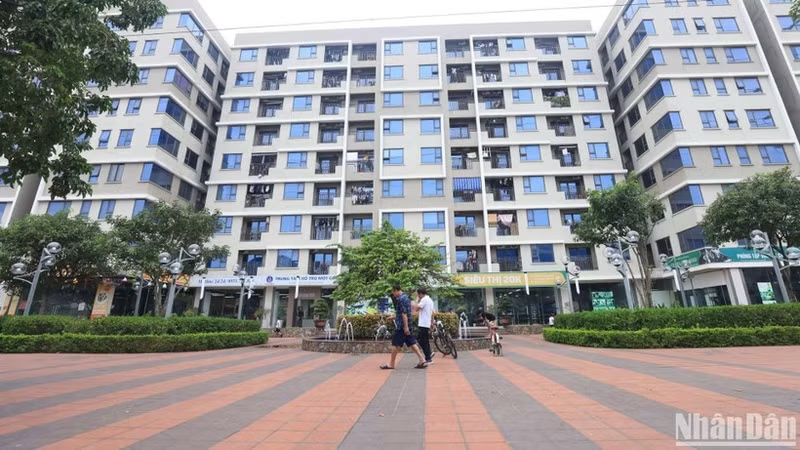
In the housing segment, products serving genuine housing needs are seen as the most sustainable growth driver, including mid-range apartments, affordable housing and satellite urban area projects along new infrastructure corridors. These segments benefit directly from urbanisation and a growing workforce at industrial hubs.
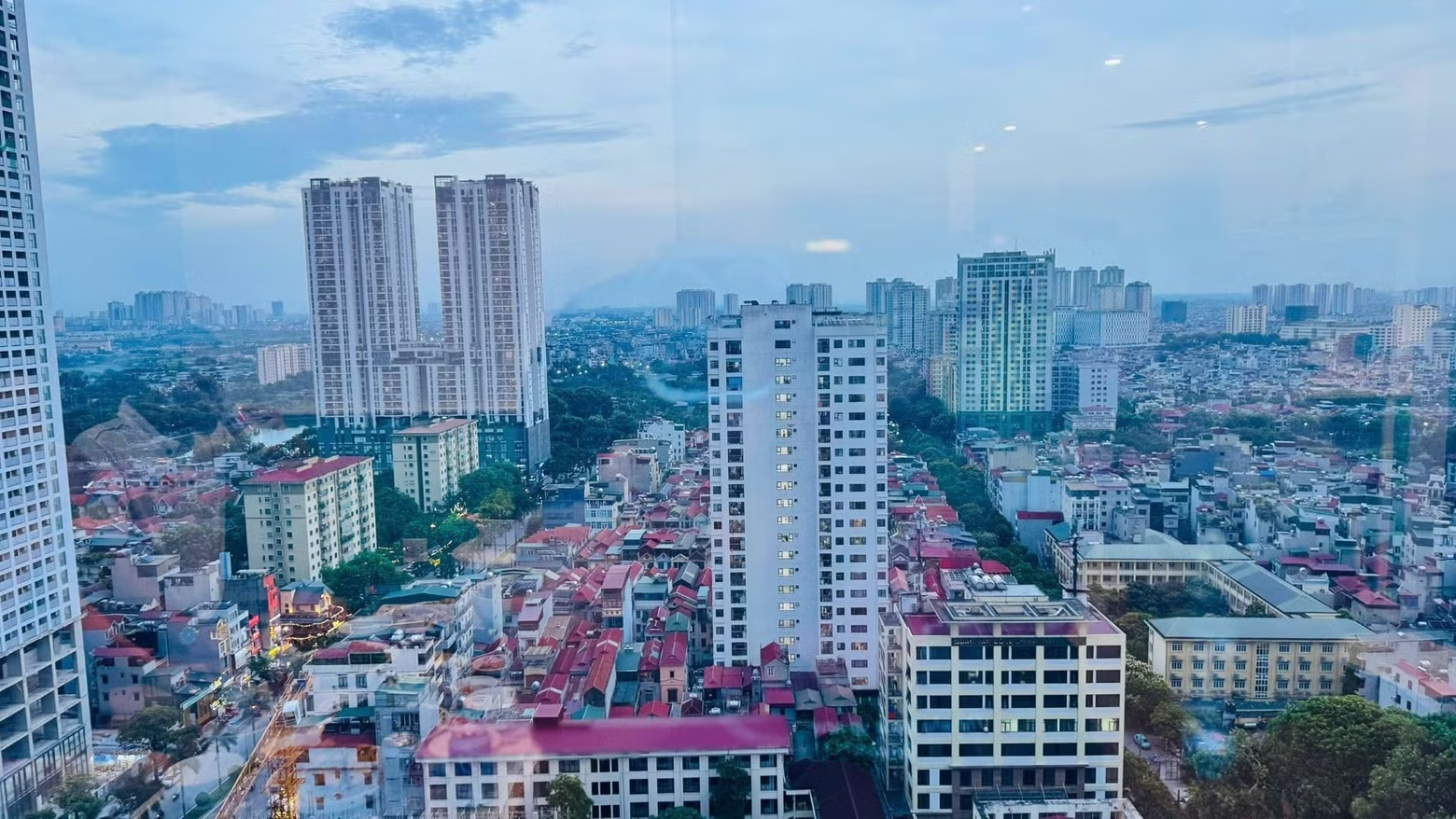
However, rapid growth also raises the risk of localised “hotspots”, particularly in major cities where housing prices tend to rise faster than incomes. Risk control requires coordinated measures: transparent land policies, expanded supply of suitable housing, credit oversight, and development orientation towards satellite areas.
From a policy perspective, the rollout of resolutions on private-sector development — especially Resolution No. 68 — is creating significant opportunities for domestic enterprises to participate more deeply in large-scale infrastructure and industrial park projects. Reforms in administrative procedures, land access and capital diversification are expected to unlock private resources, strengthen project delivery capacity and reinforce investor confidence.
To sustain strong and sustainable growth in 2026 and beyond, Viet Nam needs to continue attracting high-quality FDI, particularly in green manufacturing. This calls for a clear policy framework for green development, targeted incentives, stronger investment in renewable energy, green industrial park infrastructure, and improved human capital quality.