According to the dossier submitted to the Ministry of Justice, the Ministry of Finance is drafting a decree to amend the preferential import tariff schedule for certain petroleum products and raw materials used in fuel production. The schedule was originally issued together with Government Decree No. 26/2023/ND-CP (dated May 31, 2023) on export tariffs, preferential import tariffs, commodity lists, and specific, mixed, and out-of-quota import tax rates.
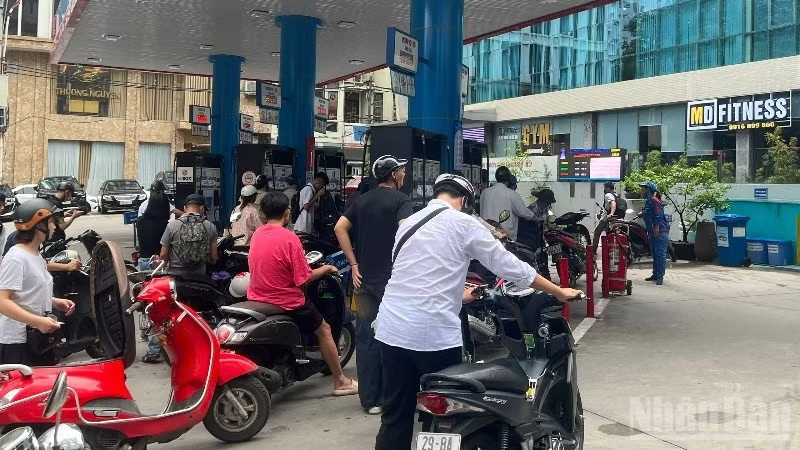
The Ministry of Finance noted that the global situation has recently become increasingly complex, particularly due to conflict in the Middle East, which has caused significant volatility in energy prices, especially oil and gas. Global petroleum supply has shown signs of disruption, driving crude oil prices higher and directly affecting the domestic fuel market.
According to the drafting agency, tensions involving the US, Israel, and Iran have significantly affected global fuel trading activities as well as the market in Viet Nam. Notably, the closure of the Strait of Hormuz has prevented around 20 million barrels of crude oil per day from the Middle East from being transported to refineries, particularly those in Asia.
Consequently, many refineries in the region have had to cut output, rely on crude oil reserves, and restrict exports of refined petroleum products, increasing the risk of supply shortages and pushing fuel prices higher.
At present, most petroleum products imported into Viet Nam originate from ASEAN countries and the Republic of Korea, where import tariffs are largely set at 0% under free trade agreement (FTA) commitments. However, amid global supply disruptions, accessing refined petroleum products from these markets could become more difficult.
The Ministry of Finance said that if current MFN tariff rates are maintained, efforts to diversify petroleum imports from other markets would face significant constraints, potentially affecting the ability to ensure supply and stabilise domestic fuel prices.
On that basis, the Ministry of Industry and Trade has proposed lowering the MFN import tariff on certain petroleum products to 0% and has submitted the proposal to the Ministry of Finance for consolidation and inclusion in the draft decree. The policy is expected to be applied until April 30, 2026.
According to estimates by the drafting agency, if the new tariff rates were applied based on import turnover in 2025, state budget revenue could decrease by around 1.024 trillion VND.
The decree is expected to take effect from the date of signing until April 30, 2026.
Should an extension be necessary, the Ministry of Industry and Trade will propose that the Ministry of Finance compile and submit the matter to the government for consideration.
The Ministry of Finance stated that the objective of the proposed tariff adjustment is to ensure national energy security, diversify supply sources, balance short-term energy demand with long-term energy reserves, and contribute to macroeconomic stability while supporting the goal of achieving double-digit economic growth.
The draft decree has been prepared under an expedited procedure in accordance with the Law on Promulgation of Legal Normative Documents.