Vietnamese businesses cannot remain on sidelines
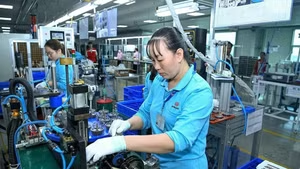
Creating meaningful linkages cannot depend solely on foreign-invested enterprises. According to Assoc Prof, Dr Hoang Van Cuong, Vice Chairman of the Viet Nam Economic Science Association, Vietnamese businesses themselves must take the initiative to strengthen their governance capacity, technological capabilities, and workforce quality in order to participate more deeply in global supply chains.
“Vietnamese enterprises cannot simply step into the supply chains of major corporations unless they are able to meet the required standards,” he said.
In truth, limited internal capacity remains a major bottleneck for domestic firms. Many surveys indicate that between 60 and 70 per cent of Vietnamese enterprises are still using outdated technologies, operating on a small scale, and lacking the resources needed for upgrading. Pham Xuan Hoe, former Deputy Director of the Banking Strategy Institute, cited the example of Samsung’s supplier requirements. To qualify for participation in the company’s supply chain, businesses often need to invest hundreds of billions of dong in advanced production lines. Yet not every enterprise has sufficient capital or collateral to secure bank financing.
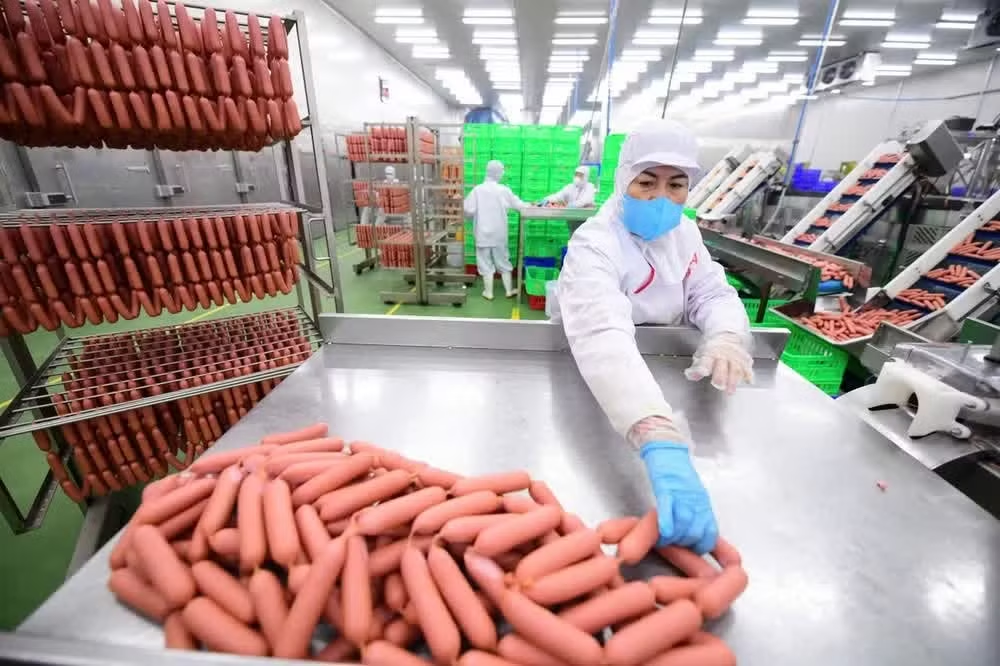
This highlights the crucial role of the state in helping businesses enhance their capabilities, gain access to finance, science and technology, innovation opportunities, and high-quality human resources.
Experts argue that Viet Nam should clearly identify sectors in which domestic enterprises possess competitive advantages and focus investment accordingly, rather than spreading resources too thinly. At the same time, the country must develop a workforce with the skills and expertise required for higher value-added positions, gradually replacing foreign specialists in highly technical roles.
From a long-term growth perspective, experts also emphasise the need to attract more FDI into sectors serving the domestic market. At present, foreign investment in these areas remains relatively modest compared with export-oriented manufacturing. Improving this balance would not only allow Viet Nam to make better use of foreign capital but also help diversify the growth model, reduce dependence on exports and strengthen the resilience of the economy.
Creating synergies for new growth momentum
Within the broader picture of attracting high-quality FDI, many foreign-invested enterprises are increasingly moving beyond a purely investment-focused approach and embracing long-term partnerships with Vietnamese businesses.
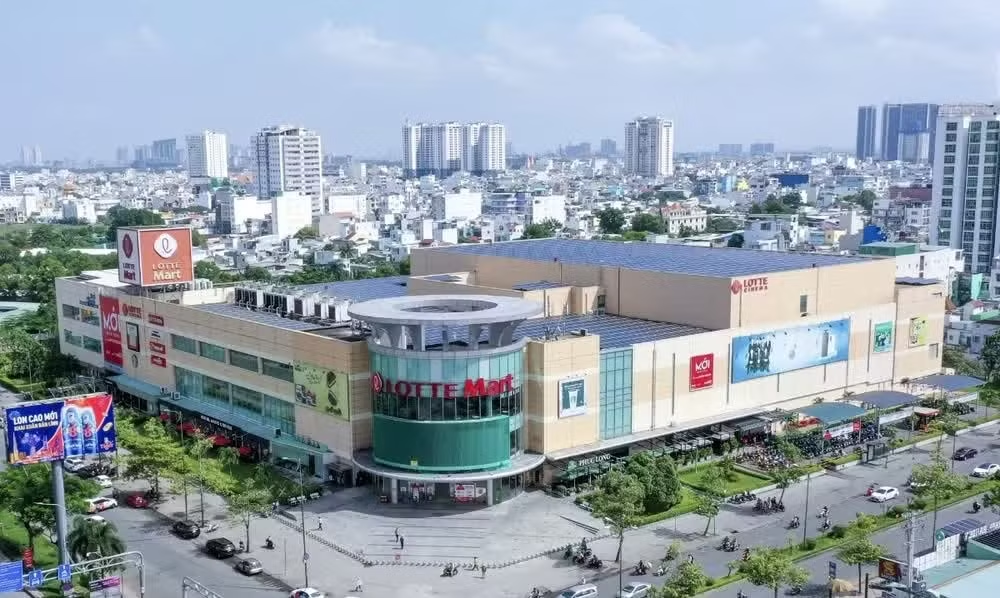
Drawing on LOTTE MART Viet Nam’s experience, Shin JuBack, the company’s General Director, argued that the essential condition for creating genuine synergy between FDI enterprises and the domestic private sector is the establishment of mutual trust and shared development goals.
In this context, FDI should not be viewed merely as a source of capital. It should also be seen as a bridge for technology transfer, management expertise, operational standards, and access to international markets. At the same time, Vietnamese enterprises possess significant strengths in their understanding of local markets, adaptability, and entrepreneurial spirit.
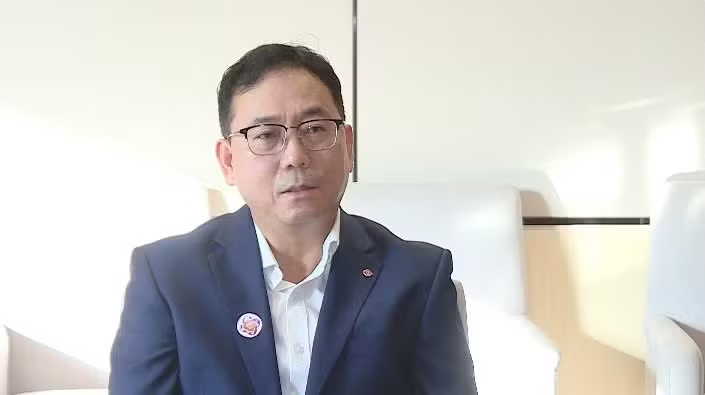
For such synergy to generate real momentum, the most important factor is establishing substantive linkages within value chains. LOTTE MART, for example, has prioritised cooperation with domestic suppliers, especially small and medium-sized enterprises operating in essential sectors such as agricultural products, fresh food, and fast-moving consumer goods.
The company not only sources products from Vietnamese suppliers but also works alongside them to improve product standards, food safety, traceability systems, packaging, logistics, and operational capabilities to meet the increasingly demanding requirements of modern retail networks.
Notably, as green transformation becomes an inevitable global trend, LOTTE MART is also prioritising partners that meet environmental standards. This includes encouraging lower-emission logistics, reducing the use of single-use plastics, promoting sustainable consumption, and gradually building greener and more transparent supply chains.
Such cooperation models demonstrate that, when designed effectively, FDI can become a powerful catalyst for helping Vietnamese enterprises mature and move up the value chain rather than remaining confined to the roles of contract manufacturers or low-cost suppliers.
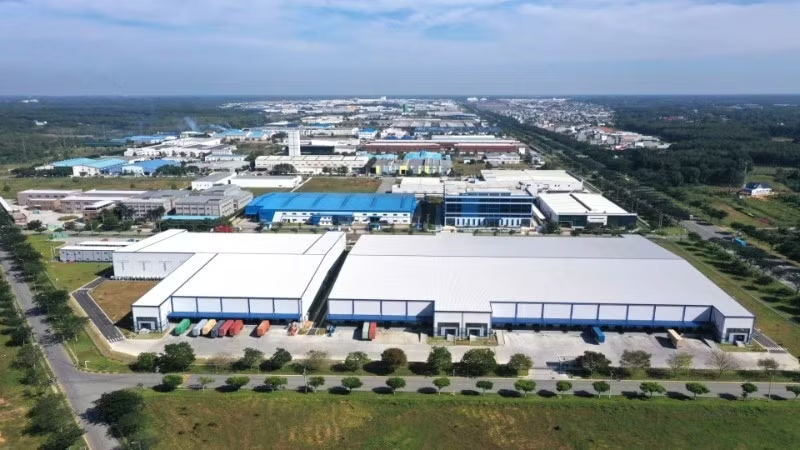
After nearly four decades of opening its doors to foreign investment, Viet Nam now stands at a new strategic crossroads. If the country continues to attract FDI under the old model — relying primarily on low-cost labour and broad-based incentives — then the economy will struggle to achieve significant gains in productivity and value creation.
However, if Viet Nam boldly embraces a new approach — prioritising high-quality investment, with technology, innovation, green transformation and domestic business linkages at its core — then the FDI sector will become more than just a driver of growth. It will serve as a launchpad for strengthening the economy’s internal capabilities.
In that scenario, the door being opened is not merely one that welcomes new investment capital. It is also a gateway to knowledge, science and technology, and enhanced national competitiveness in a rapidly changing world.