From “attracting investment at all costs” to selecting high-quality capital flows
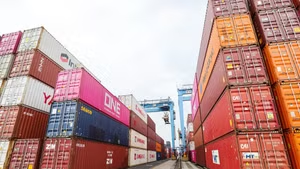
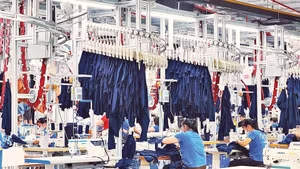
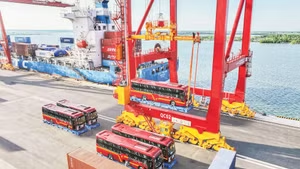
To date, Viet Nam has more than 46,500 valid foreign direct investment (FDI) projects, with total registered capital exceeding 543 billion USD and cumulative realised capital of around 357.6 billion USD. The FDI sector currently contributes more than 20% of GDP, around 70% of export turnover and creates jobs for millions of workers.
As Viet Nam targets high and sustainable growth during the 2026-2030 period, the role of the FDI sector continues to be identified as one of the key drivers of the economy. According to experts, to achieve the new growth targets, Viet Nam requires enormous investment resources, with the FDI sector and the domestic private sector expected to contribute around 80% of the total social investment demand.
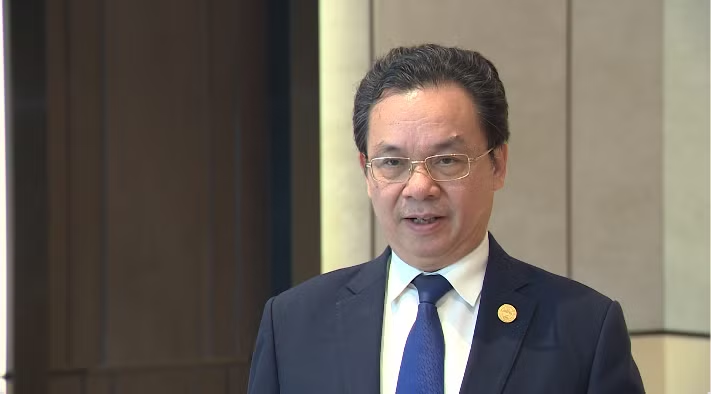
However, the important issue now is no longer how much FDI can be attracted, but rather what kind of capital flows are being attracted. Assoc Prof, Dr Hoang Van Cuong, Vice Chairman of the Viet Nam Economic Association, said that in the past, Viet Nam’s main objective in attracting FDI was to mobilise foreign capital to promote production and take advantage of cheap labour. However, this model is gradually revealing its limitations.
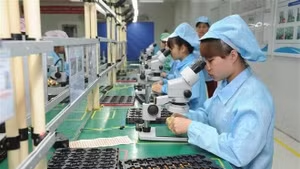
“If we continue with the old method of attracting investment, domestic enterprises will forever stand beside foreign-invested enterprises, while Vietnamese workers will mainly participate only in low value-added stages. That cannot create breakthroughs in labour productivity or growth quality,” Cuong observed. According to him, Viet Nam needs to shift to a new-generation investment attraction model, meaning not only attracting capital, but also advanced technology, modern governance, innovation, and spillover effects to the domestic business sector.
More importantly, the FDI sector and domestic enterprises must be placed in a relationship of partnership and co-development, rather than existing as two separate sectors within the same economy. This is also the spirit emphasised by many economists: the FDI sector and the domestic private sector need to become strategic partners, sharing benefits, creating new value, and forming momentum for sustainable growth.
The lack of substantive linkages - The biggest bottleneck
Although the FDI sector has developed strongly over many years, the reality is that connections between FDI enterprises and domestic enterprises remain rather weak. The country currently has more than 1 million operating enterprises, but only around 5,000 have direct links with global supply chains or multinational corporations. Notably, the number of Vietnamese enterprises that have become tier-1 suppliers to major corporations is only around 100 — a very modest figure.
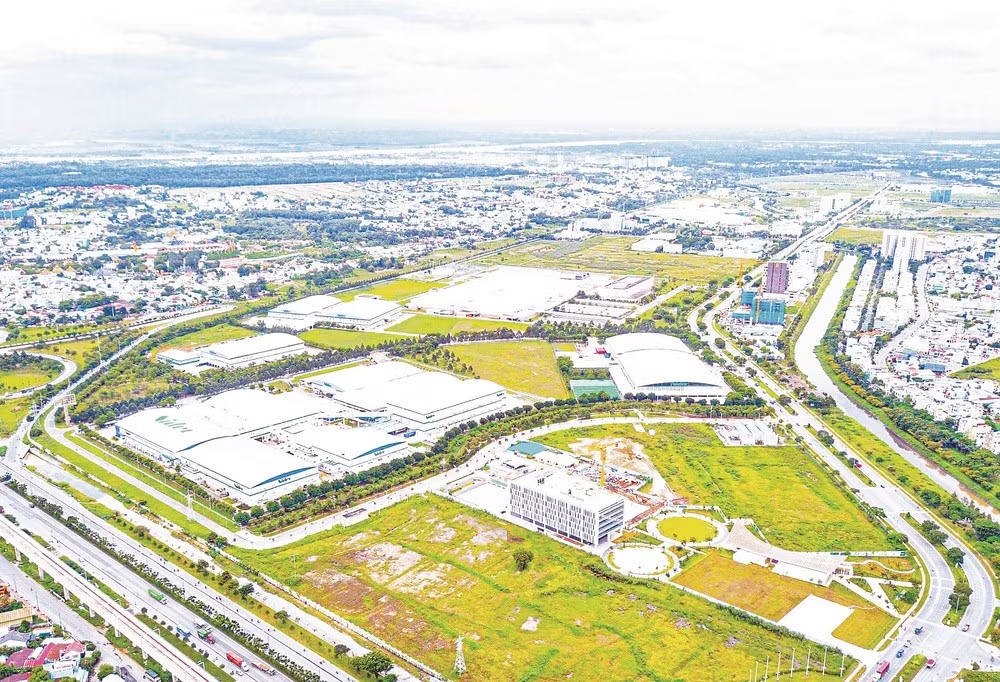
This shows that although FDI has grown rapidly, spillover effects to the domestic business sector remain limited. According to Dr Le Duy Binh, Director of Economica Viet Nam, in the coming period, Viet Nam not only needs more FDI but also “new-generation FDI”, focusing on high technology, environmental friendliness, modern governance, and deeper linkages with domestic enterprises.
Assoc Prof, Dr Hoang Van Cuong also argued that in order to change this situation, a fundamental adjustment in the approach to investment incentive policies is needed. Instead of incentives being based mainly on investment capital scale as before, policies should be based on the substantive results created by FDI enterprises. These may include the level of technology transfer, localisation rates, the number of Vietnamese enterprises participating in supply chains, or the effectiveness of training high-quality human resources.
“FDI enterprises should receive incentives only to the extent that they fulfil their commitments. If they fail to meet deadlines or do not create the promised linkages, support policies should not continue to apply,” Cuong proposed. Many experts regard this approach as suitable in the current context of competition for investment attraction, in which Viet Nam can no longer continue relying mainly on low-cost advantages but instead needs to build competitive advantages through institutional quality, human resource quality, and innovation capacity.
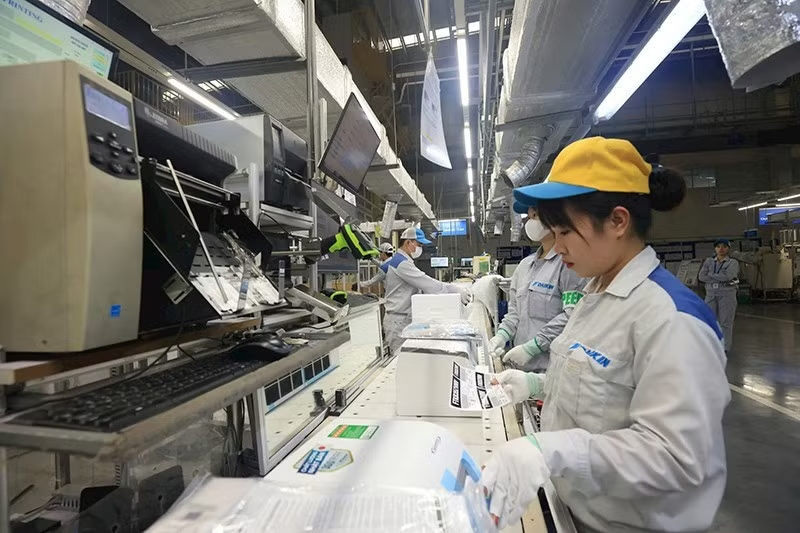
According to experts, Viet Nam needs to redesign its investment incentive system in a direction based on output results rather than relying solely on tax incentives or registered capital scale. At the same time, the country needs to promote new pilot mechanisms, improve the investment environment, and build ecosystems for high technology, the green economy, artificial intelligence, and innovation.