In recent years, the demand for goods transportation between Viet Nam and China has continuously increased. Besides road and sea transport, rail transport is gradually asserting its advantages thanks to its ability to transport large volumes, stable delivery times, minimal impact from weather, and competitive costs.
In particular, the development of cross-border e-commerce and the trend of diversifying supply chains are opening up significant opportunities for rail logistics.
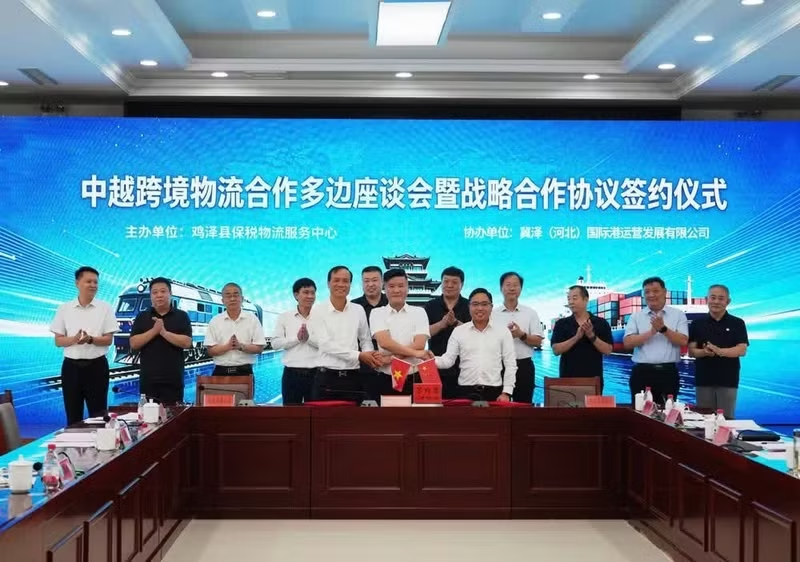
A clear example is the international rail transport route connecting Hebei (China) with Viet Nam. After more than a year of operation, the line has run 43 trips, transporting goods worth approximately 34.1 million USD.
Transportation time has been shortened from over 20 days to about 5-7 days; the range of goods transported has also expanded to more than 30 product groups, creating more options for import and export businesses in both countries.
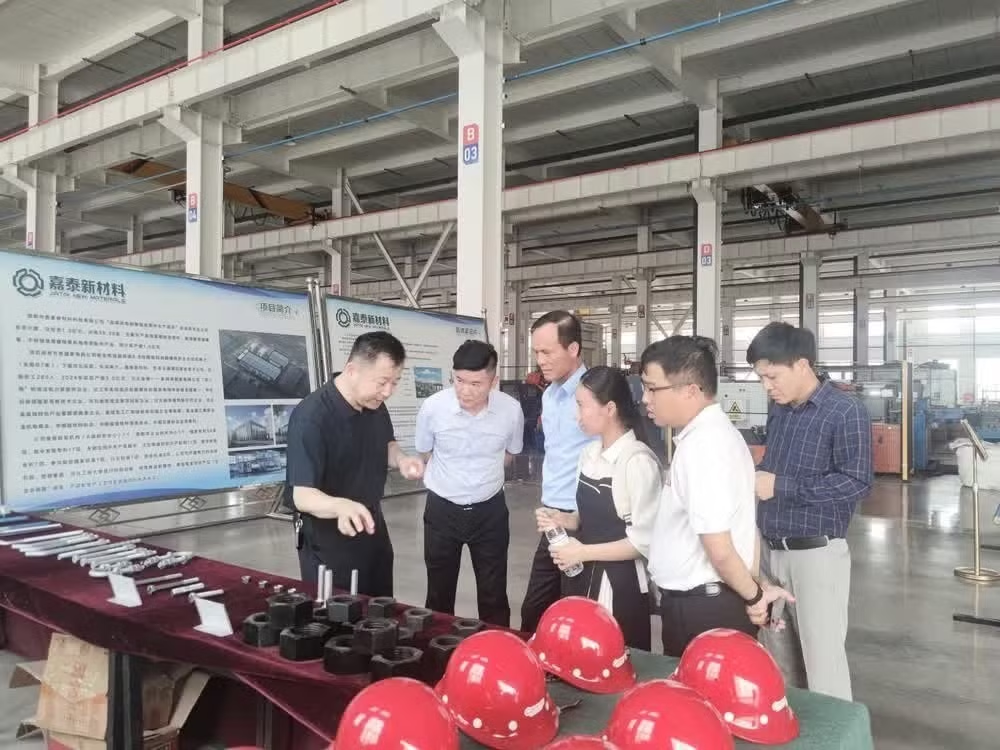
According to Do Anh Hung, Deputy General Director of Viet Nam Railway Transport Joint Stock Company (Traravico), the efficiency of the transport route lies not only in reducing logistics time and costs but also in contributing to the formation of a stable connection chain between Viet Nam and the North China region.
“Railways have the advantage of stability, are less affected by weather and congestion at border crossings, and are particularly suitable for transporting containers, machinery, components, raw materials, and goods serving e-commerce. The Hebei-Viet Nam route is gradually becoming an important logistics corridor connecting Viet Nam with the North China market and further afield to Asia-Europe”, Hung said.
To meet the growing demand, Traravico and its Chinese partners are aiming to handle approximately 1,500 containers annually. According to Do Anh Hung, the company will expand its cargo sources, improve logistics service quality, optimise train schedules, and explore extending the transportation range from Yen Vien station to the central and southern regions. This is seen as a solution to expand the service area and create opportunities for more businesses to access international rail transport services.
However, practical experience also showed that the potential for development has not been fully exploited. Traravico’s report indicates that in the first six months of 2026, the volume of international intermodal transport reached 8,310 vehicles, equivalent to 67% compared to the same period last year.
The volume of goods reached over 269,000 tonnes, with revenue exceeding 36.3 billion VND, equivalent to 98% compared to the same period in 2025. The decline in many traditional commodities continues to affect production growth, despite improved operational efficiency.
According to Hung, the major bottleneck currently is that the management mechanism for international intermodal rail transport is not truly suitable for the specific characteristics of operation; the system of stations with customs inspection and supervision locations is limited; CFS warehouses and bonded warehouses do not meet requirements.
In addition, the list of goods allowed to be cleared through railway border crossings is still limited compared to road transport, while the two-way flow of goods is not yet balanced.
Based on practical experience, businesses recommend that the relevant authorities of both countries continue to improve the customs mechanism to suit the specific characteristics of rail transport; promote digitalisation and implement electronic declarations between the railway and customs sectors of both countries.
Simultaneously, research is being conducted to expand the list of goods permitted for import, export, and transit through international railway border crossings.
In the context of Viet Nam promoting the development of modern logistics services and strengthening connections with regional economic corridors, removing bottlenecks in mechanisms, infrastructure, and procedures will not only create conditions for businesses to improve operational efficiency but also contribute to enhancing the role of railways in cross-border supply chains, aiming to reduce logistics costs and improve the competitiveness of the economy.