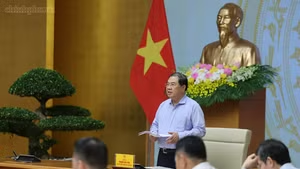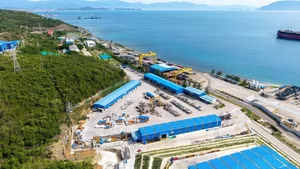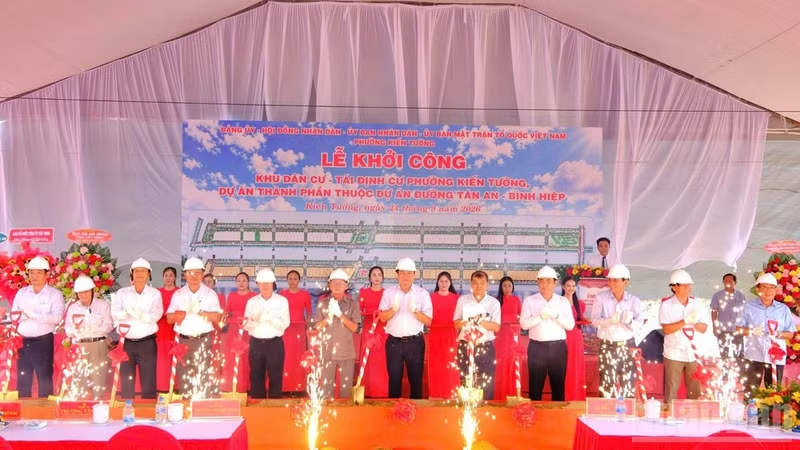
From the beginning of the year, the Department of Finance coordinated with departments, sectors, and localities to advise the Provincial People's Committee on issuing a number of directives and documents regarding the allocation and disbursement of public investment capital, linking the responsibilities of heads of agencies and units to implementation results. Two working groups were established to urge progress and resolve difficulties. They have regularly worked with investors and conducted field inspections at construction sites, focusing on removing bottlenecks affecting nationally important, inter-regional and provincial key projects.
By mid-September 2026, Tay Ninh had allocated 36,470.619 billion VND and disbursed 17,649.8 billion VND, equivalent to 48.37% of the provincial capital plan and 56.85% of the plan assigned by the Prime Minister. According to the Ministry of Finance, as of September 3, 2026, Tay Ninh's disbursement rate stood at 59.3% of the plan assigned by the Prime Minister, ranking eighth among 34 provinces and centrally run cities nationwide.
Notably, capital has been concentrated on projects with strong spillover effects, particularly those improving regional connectivity. Compensation, support, and resettlement work for the Ho Chi Minh City Ring Road 4 Project has made a significant contribution to the disbursement results. The Ho Chi Minh City-Moc Bai Expressway Project has paid nearly 95% of the compensation costs and handed over nearly 98% of the site length, while the main construction packages of Ring Road 3 are entering the completion stage.
These results are reflected not only in the amount of capital disbursed, but, more importantly, in the creation of new infrastructure capacity, stronger regional connectivity, expanded development space and better conditions for attracting investment from non-budgetary sources.
Despite these positive results, disbursement progress remains uneven among investors and project groups. Most of the disbursed capital has been concentrated on site-clearance projects, while many construction projects, newly launched projects and projects in the investment preparation stage remain behind schedule.
Notably, science and technology, innovation, and digital transformation projects have low disbursement rates. More than 1,000 billion VND is expected to be allocated to public investment projects in these areas in 2026, but by the end of September, disbursement had not met requirements. The bottlenecks do not lie in funding, but mainly in investment preparation, completion of technical dossiers, appraisal, approval, and contractor selection.
There are also difficulties related to site clearance, resettlement, relocation of technical infrastructure, and the supply of construction materials. The financial capacity, human resources, equipment, and construction organisation of some contractors have not met requirements. In some projects, the quality of investment preparation remains inadequate, coordination among agencies and units is not sufficiently close, and acceptance procedures and payment documentation are progressing slowly.
Truong Van Liep, Director of the Tay Ninh Department of Finance, said that, to achieve the target of disbursing 100% of the 2026 capital plan, during the remaining months, the province will conduct a detailed review of each project, construction package and investor; build monthly schedules; and strictly implement the principle of "clear people, clear tasks, clear deadlines, clear responsibilities, clear products, and clear authority". Heads of agencies and units must take direct responsibility for disbursement progress and results.
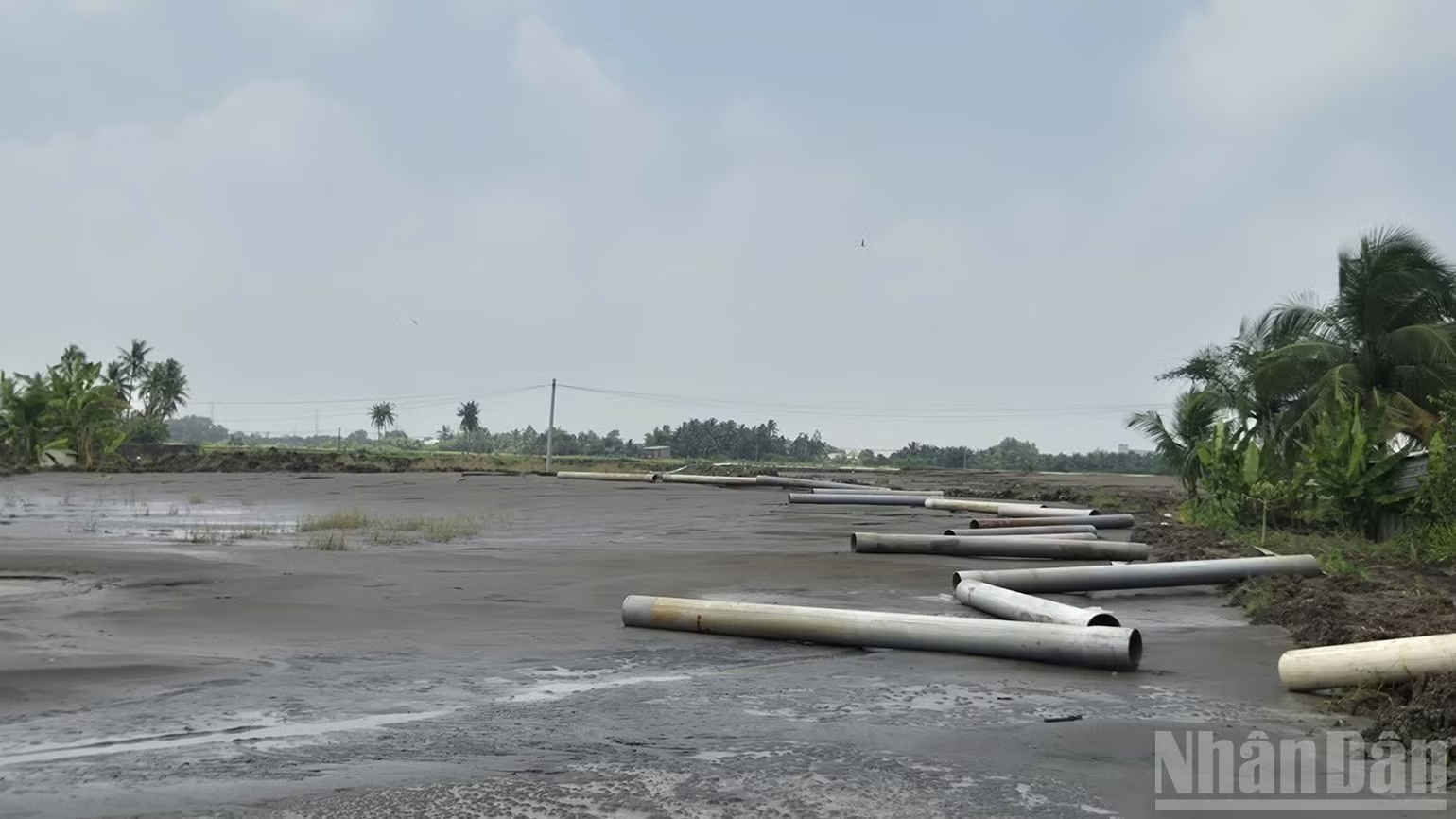
At the same time, the province needs to focus on completely resolving site clearance and resettlement issues, relocating technical infrastructure and ensuring sufficient supplies of construction materials; accelerate investment preparation, appraisal, approval, and contractor selection, particularly for projects in science and technology, digital transformation, healthcare, education, and agriculture. Completed work volumes must be promptly accepted and paid for, while capital from projects unable to achieve disbursement should be transferred to projects with better progress.
In practice, the effectiveness of public investment is measured not only by the disbursement rate, but, more importantly, by its ability to turn budgetary resources into projects, infrastructure, and new development capacity. When allocated to the right priorities, implemented on schedule and managed closely, public investment will continue to serve as an important resource leading social investment, promoting growth, improving people's quality of life, and creating a foundation for Tay Ninh to achieve its development targets for the 2026-2030 period.