Creating the foundation through strategic breakthroughs
The Resolution of the First Tay Ninh Provincial Party Congress for the 2025-2030 term sets the goal of developing the province into a dynamic and sustainable economy, a regional connectivity hub linking the Southeastern region with the Mekong Delta, and a trade gateway with Cambodia and the ASEAN region.
Under the action motto "Solidarity-Democracy-Discipline-Breakthrough-Development", the province is focusing on administrative reform, improving the investment environment, removing bottlenecks, and creating favourable conditions for businesses and residents.
After one year of implementing the resolution through key programmes, plans, and tasks, Tay Ninh has achieved positive initial results. GRDP growth rate reached 10.12%, exceeding the target of 10% and ranking eighth among Viet Nam's 34 provinces and centrally governed cities and first in the southern region. State budget revenue exceeded 50.878 trillion VND, equivalent to 94.5% of the central government's estimate and 92.6% of the provincial estimate.
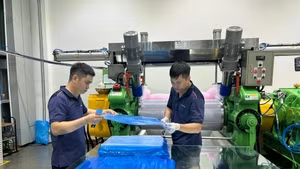
The business community continues to play an important role in driving growth. Many businesses have proactively adopted new technologies, improved product quality and pursued green production, and sustainable development. They have invested in GMP, ISO, and FDA-standard systems to better meet international market requirements and participate more deeply in global value chains.
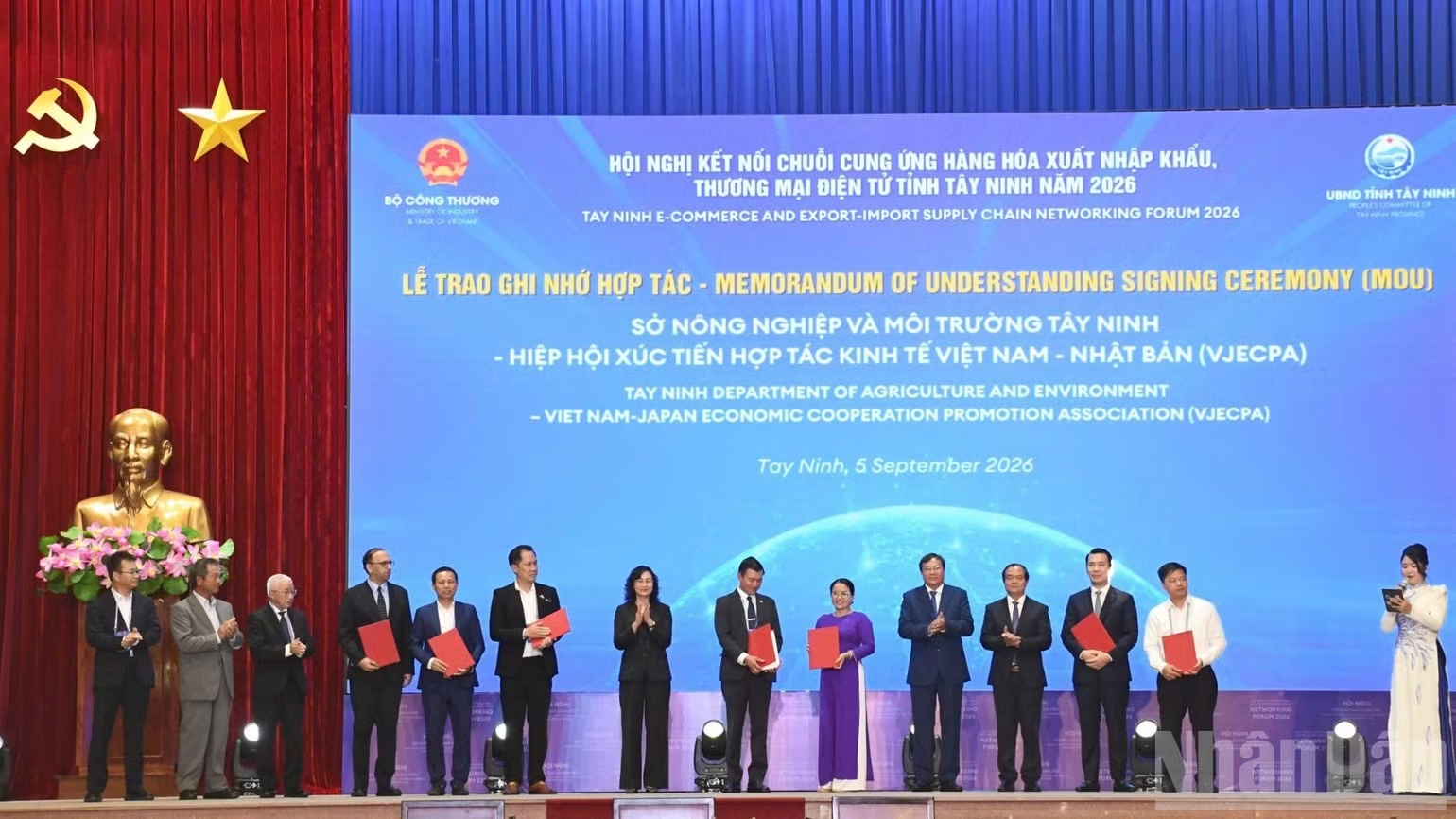
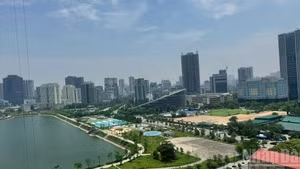
Alongside industrial production, investment in urban development, trade, services, and infrastructure has continued. Social housing projects, trade centres, water supply systems serving industrial production, and new urban areas are being developed, contributing to improving infrastructure and expanding development space.
Tay Ninh has identified three strategic breakthroughs: administrative reform and improvement of human resources; development of science and technology, innovation, digital transformation, green transformation, and the circular economy; and effective mobilisation of investment resources for infrastructure, particularly inter-regional transport infrastructure.
By 2030, the province aims to achieve an average GRDP per capita of 210-225 million VND, average annual per capita income of about 94 million VND, and a 50% increase in state budget revenue during the 2025-2030 period compared with the previous period. It also aims to have more than 57,000 operating businesses, contributing over 60% of GRDP.
Nguyen Van Quyet, Secretary of Tay Ninh Provincial Party Committee, stressed that Party building and rectification and the strengthening of the political system remain key tasks, with the development of a cadre of officials with the necessary qualities, capacity, and credibility being crucial to achieving the province's development goals.
Leveraging industrial, border-gate and transport advantages
Tay Ninh has abundant land and a large number of planned industrial parks and clusters, creating favourable conditions for attracting new investment amid the restructuring of global supply chains. During the 2025-2030 term, the province will prioritise energy, textiles and garments, and processing and manufacturing industries, while expanding industrial parks, increasing production capacity, creating jobs, and generating greater value.
The Moc Bai Border Gate Economic Zone continues to play an important role in the province's development strategy. With its strategic links to Ho Chi Minh City and Cambodia, the area has favourable conditions for developing border trade, logistics, and services and strengthening its role as a link along the East-West Economic Corridor.
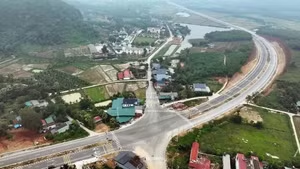
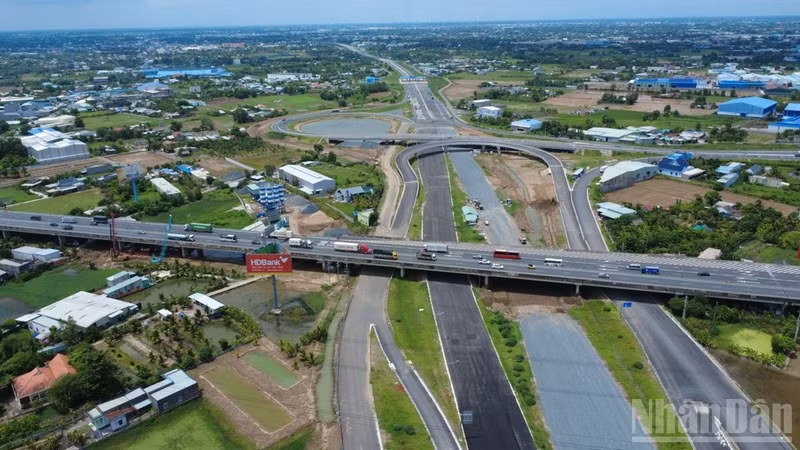
Transport infrastructure development has been identified as a key breakthrough to expand development space and connect Tay Ninh with major economic centres. Total investment capital demand for transport infrastructure during the 2025-2030 period is estimated at more than 150 trillion VND from the state budget and socialised investment. Expressway, ring road, strategic transport route, and inter-regional connection projects will be prioritised.
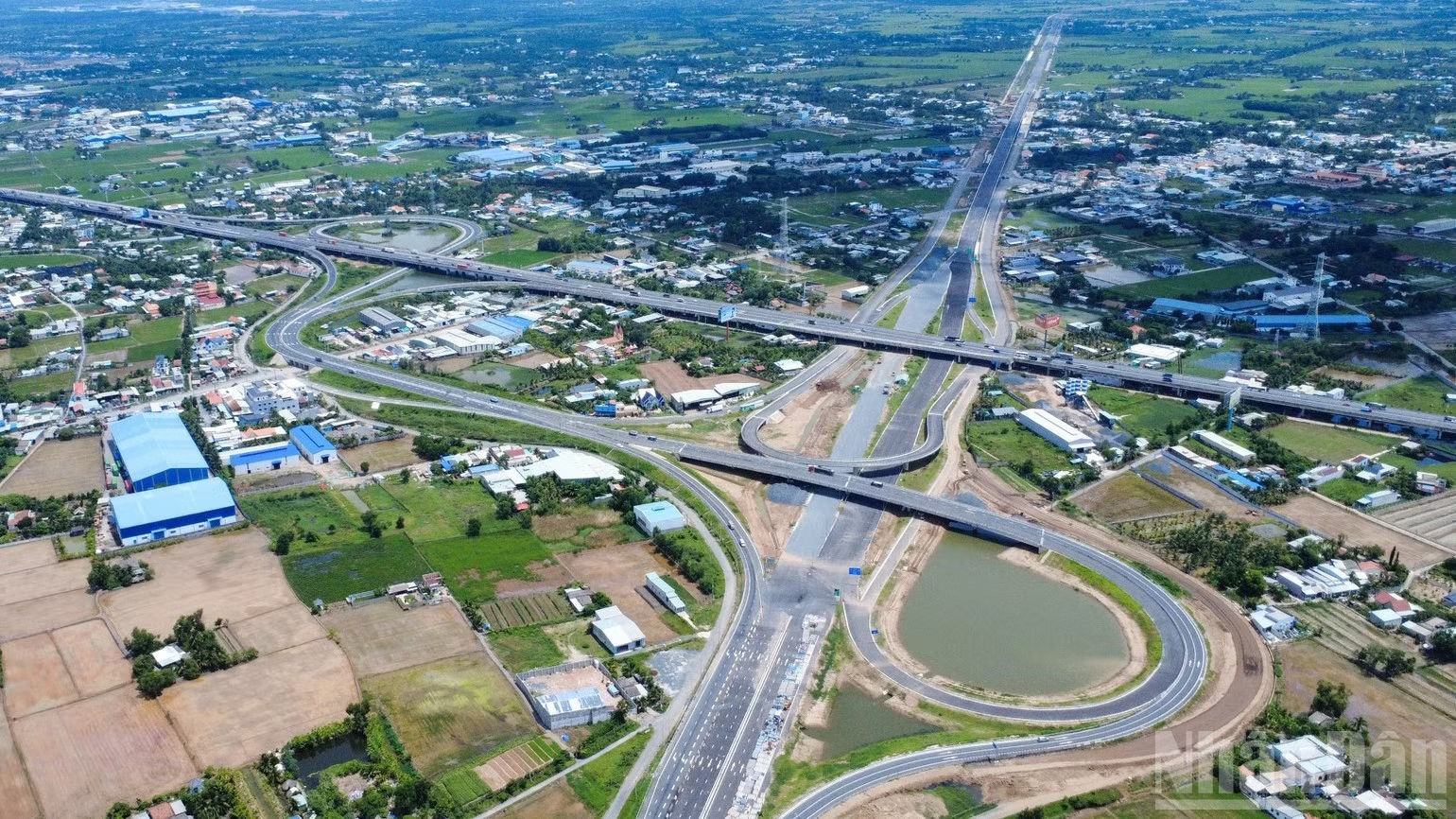
Alongside infrastructure investment, the province will continue to reform administrative procedures, shorten project preparation times, improve mechanisms and policies, and accelerate digital transformation in management and operations.
With these key orientations and solutions, Tay Ninh is laying the foundations for a new phase of development. Leveraging its advantages, unlocking resources, improving the quality of growth, and strengthening regional connectivity will provide a basis for the province to gradually strengthen its role as a dynamic growth pole in southern Viet Nam.