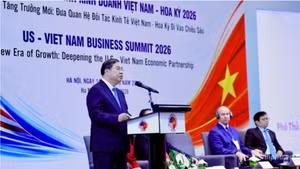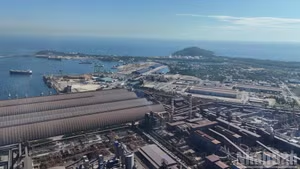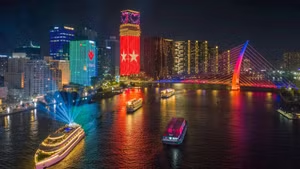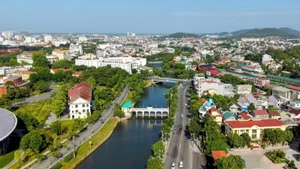
Speaking at the conference, Nguyen Van Quyet, Member of the Party Central Committee and Secretary of the Tay Ninh Provincial Party Committee, said that following the merger, the province has gained greater space and room for development while more effectively leveraging its strategic location, creating a foundation for new growth drivers.
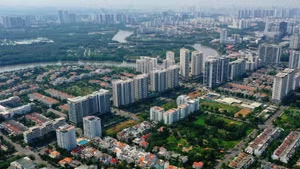
According to Secretary of the Provincial Party Committee Nguyen Van Quyet, the provincial master plan for the 2021-2030 period, with a vision to 2050, has been adjusted towards a multi-centre, multi-polar model, with the formation of economic corridors and key development axes, and stronger connectivity with Ho Chi Minh City, the southeastern region, the Mekong Delta and Cambodia.
This provides a foundation for Tay Ninh to develop industry, urban areas, logistics, high-tech agriculture, deep processing, border-gate economy, cross-border trade, tourism and clean energy in a coordinated manner.
The province has identified continued administrative reform, removal of bottlenecks, and the creation of an open environment for investment, production and business as priorities, while focusing on developing transport and energy infrastructure and strengthening inter-regional and international connectivity.
At the same time, Tay Ninh is focusing on training and attracting high-quality human resources; promoting science and technology, innovation and digital transformation; and prioritising projects in high technology, green industry, logistics, high-tech agriculture, deep processing, modern urban services and high-quality tourism.
Speaking on behalf of the Government and the Prime Minister, Deputy Prime Minister Le Tien Chau commended Tay Ninh for its achievements, including 10.12% GRDP growth in the first six months of the year, the highest rate in the southern region, while State budget revenue, public investment disbursement and FDI attraction were among the country’s leading performers.
Notably, more than 90 projects and developments, with total capital of around 900 trillion VND, were commenced, announced and committed to at the conference, demonstrating the growing confidence of the business community and investors in the province’s development environment.
Tay Ninh needs to continue making substantive improvements to its investment environment, shifting decisively from a management mindset to one focused on enabling and serving, while ensuring that the 50% reduction in the time and costs of administrative procedures is reflected in concrete results. Every proposal from a business or investor must have a designated contact point, a clear processing deadline and a clear response.
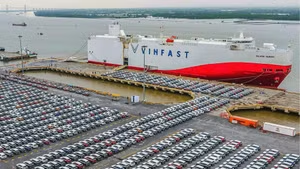
The Deputy Prime Minister also asked the province to focus resources on developing strategic transport infrastructure and strengthening inter-provincial, inter-regional and international connectivity, using public investment to lead and attract private investment. At the same time, the province should modernise the Moc Bai Border Gate Economic Zone and establish a logistics chain connecting the border gate, production areas and industrial parks with Long An International Port and the region’s seaport system.
Investment attraction must be linked to renewing the growth model, improving productivity and technological capacity, developing local businesses and supporting industries, training human resources, and transferring technology. The development of the border-gate economy must be associated with ensuring national defence and security and building a peaceful, stable, cooperative and developing border.
The Deputy Prime Minister emphasised that what the Government and the Prime Minister expect from Tay Ninh is not only a higher growth rate but, more importantly, a qualitative shift in its growth model, turning its potential, advantages and internal capabilities into new development drivers and making a practical contribution to the country’s overall development goals.
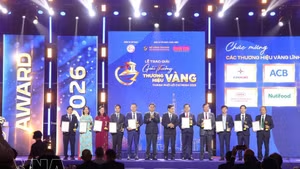
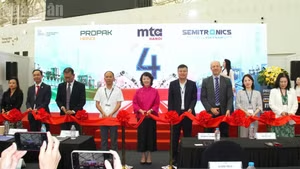
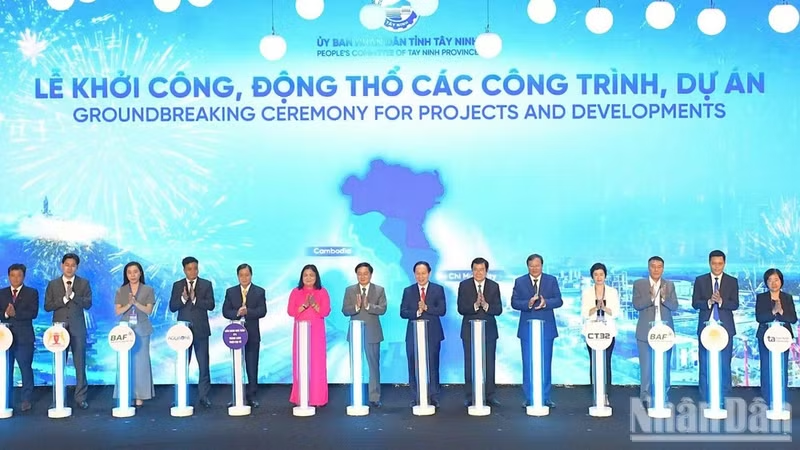
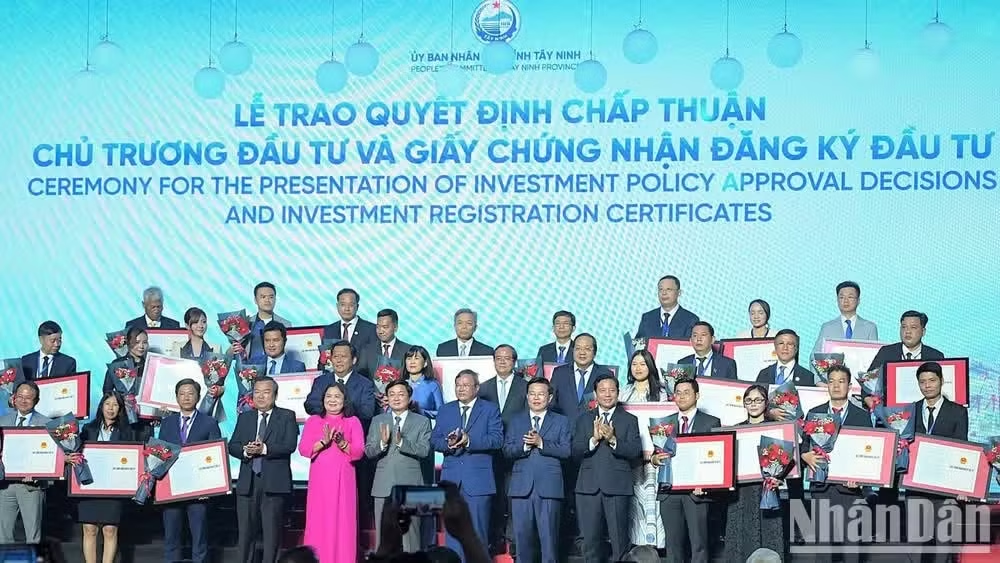
At the conference, the Tay Ninh Provincial People’s Committee presented decisions approving investment policies and investment registration certificates to 27 businesses for the implementation of 31 projects, with total investment capital of nearly 3 billion USD. It also held ceremonies to announce and commence construction of projects and developments.