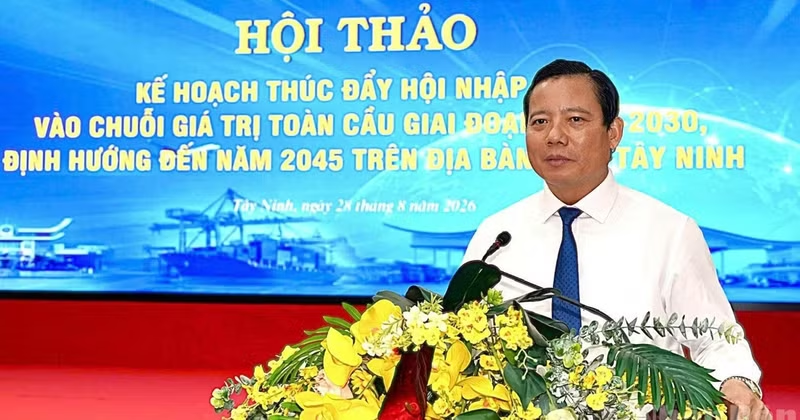
Speaking at the workshop, Vice Chairman of the Tay Ninh Provincial People’s Committee Pham Tan Hoa emphasised that amid accelerating globalisation, supply chain shifts, green transition, and digital transformation, Tay Ninh is facing strategic opportunities for development.
With 17 free trade agreements signed and implemented, including new-generation FTAs such as the CPTPP, EVFTA, UKVFTA, and RCEP, Viet Nam’s international economic integration has significantly expanded. This establishes highly favourable conditions for localities and businesses to enhance their competitiveness, broaden their markets, and participate more deeply in global value chains.
According to provincial leaders, following the merger, Tay Ninh has unlocked expansive new development space, bolstered by significant advantages in geo-economic location, logistics infrastructure, and its production and business ecosystem. In 2025, the province’s total import-export turnover reached 31.4 billion USD, including 17.8 billion USD in exports. Goods produced by local businesses have been exported to 150 countries and territories.
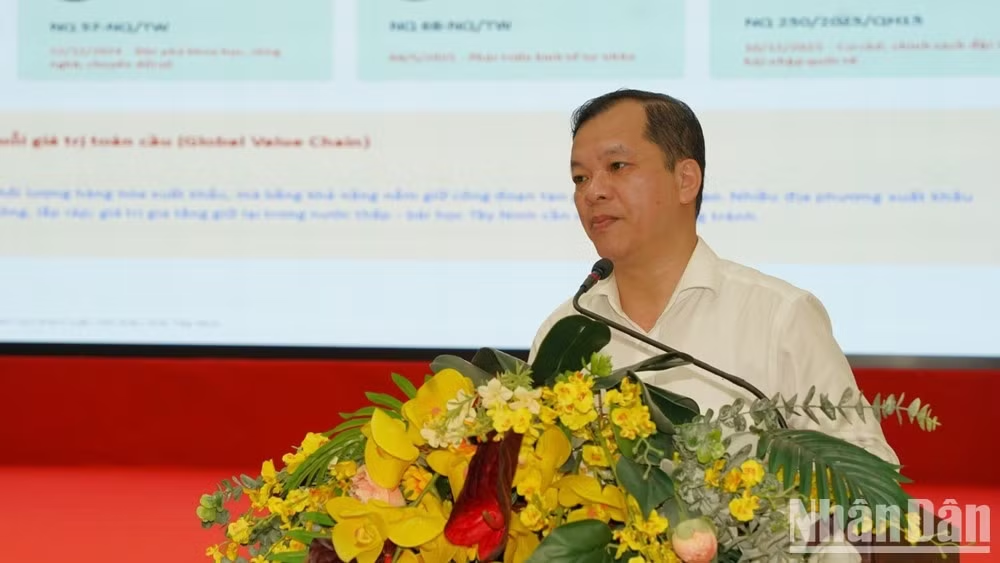
However, deeper integration continues to pose formidable challenges. The added value of some products remains relatively low, while localisation rates are limited. Small and medium-sized enterprises face difficulties in adapting to green standards, emissions regulations, and technical barriers. Linkages between domestic enterprises and the foreign-invested sector remain stubbornly weak, while the utilisation of preferential treatment under FTAs has yet to match its potential.
At the workshop, delegates focused their discussions on decisive solutions to dismantle bottlenecks in mechanisms and policies, restructure industries and product groups, and enhance business competitiveness. They also proposed establishing cooperation models linking local authorities, businesses, and multinational corporations.
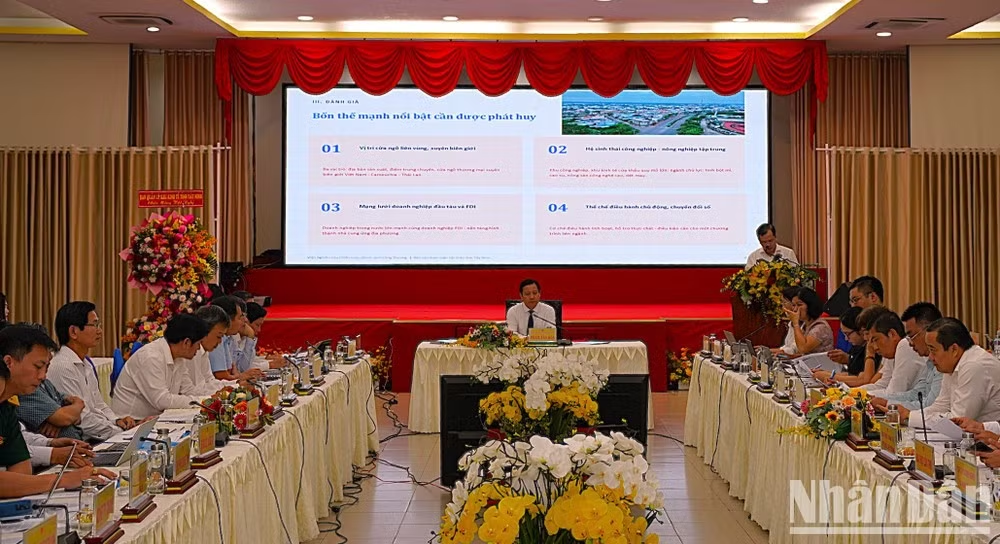
In his closing remarks, Vice Chairman Pham Tan Hoa emphasised that the workshop marked an initial step towards putting the proposed solutions into practice. The provincial Department of Industry and Trade was assigned to take the lead in consolidating the outcomes and incorporating recommendations to finalise the draft plan. Provincial departments and agencies were also tasked with proactively proposing policies to support export industries, accompany businesses, and help address their difficulties.
Tay Ninh also strongly urged the business community to accelerate digital and green transformation, align operations with international standards, strengthen governance capacity, and proactively integrate more deeply into regional and global supply chains.